The Decision Before Every Other Decision
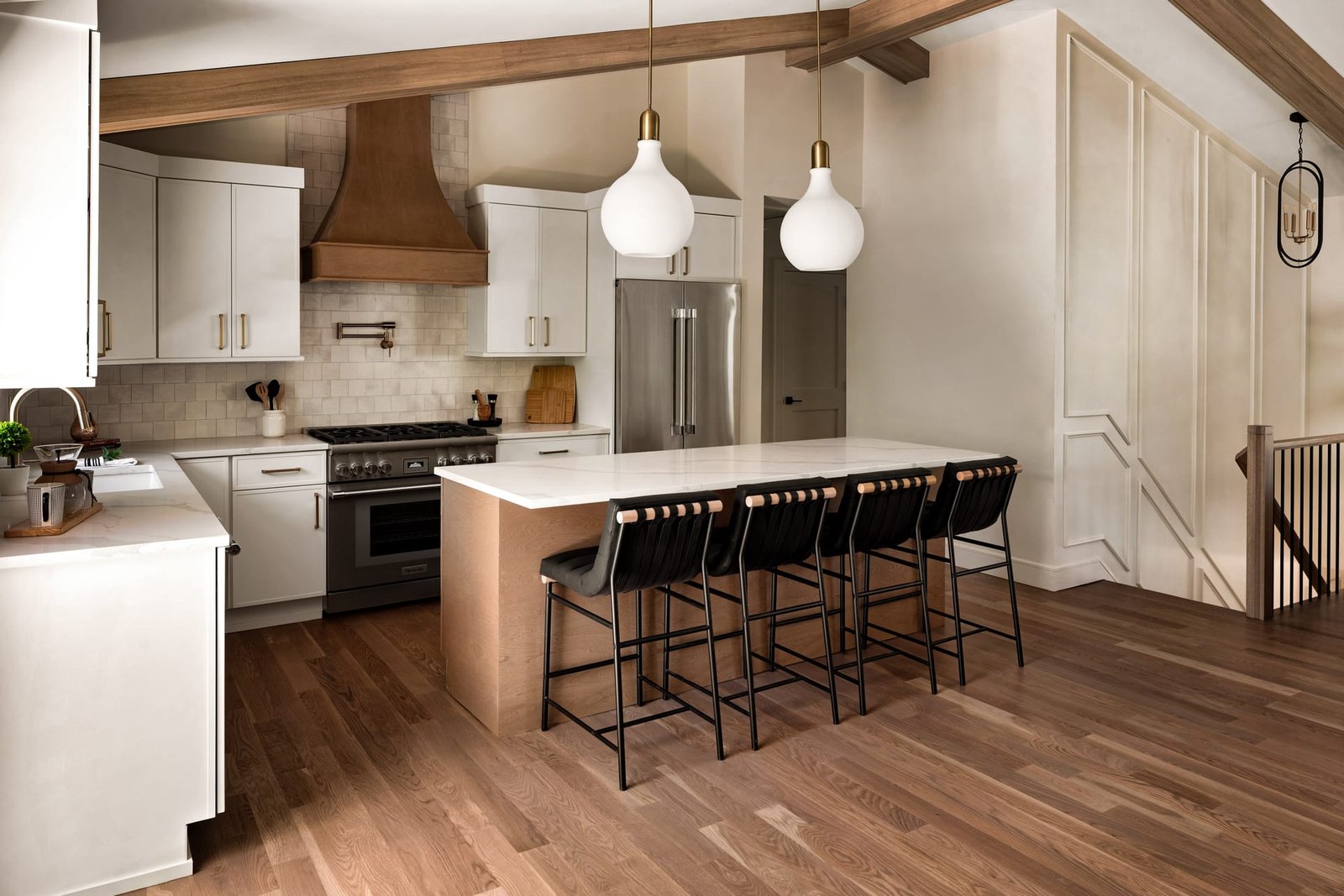
Before light is considered, before a single surface is styled, before the lens is chosen, one question quietly determines the entire outcome of an image: where does the camera stand. In architectural photography and interior photography alike, the vantage point is the first and most consequential decision. It establishes what the viewer will understand about a room, a facade, or a sequence of spaces. Everything else refines a choice that has already been made.
Design professionals often think of a photograph as a record of a space. It is closer to an argument. The camera cannot show everything at once, and so it must choose. From one position a room reads as generous and composed; from another, the same room feels cramped or incidental. The space has not changed. The vantage point has.
The camera cannot show everything at once, and so it must choose.
Reading a Room for Its Natural Position
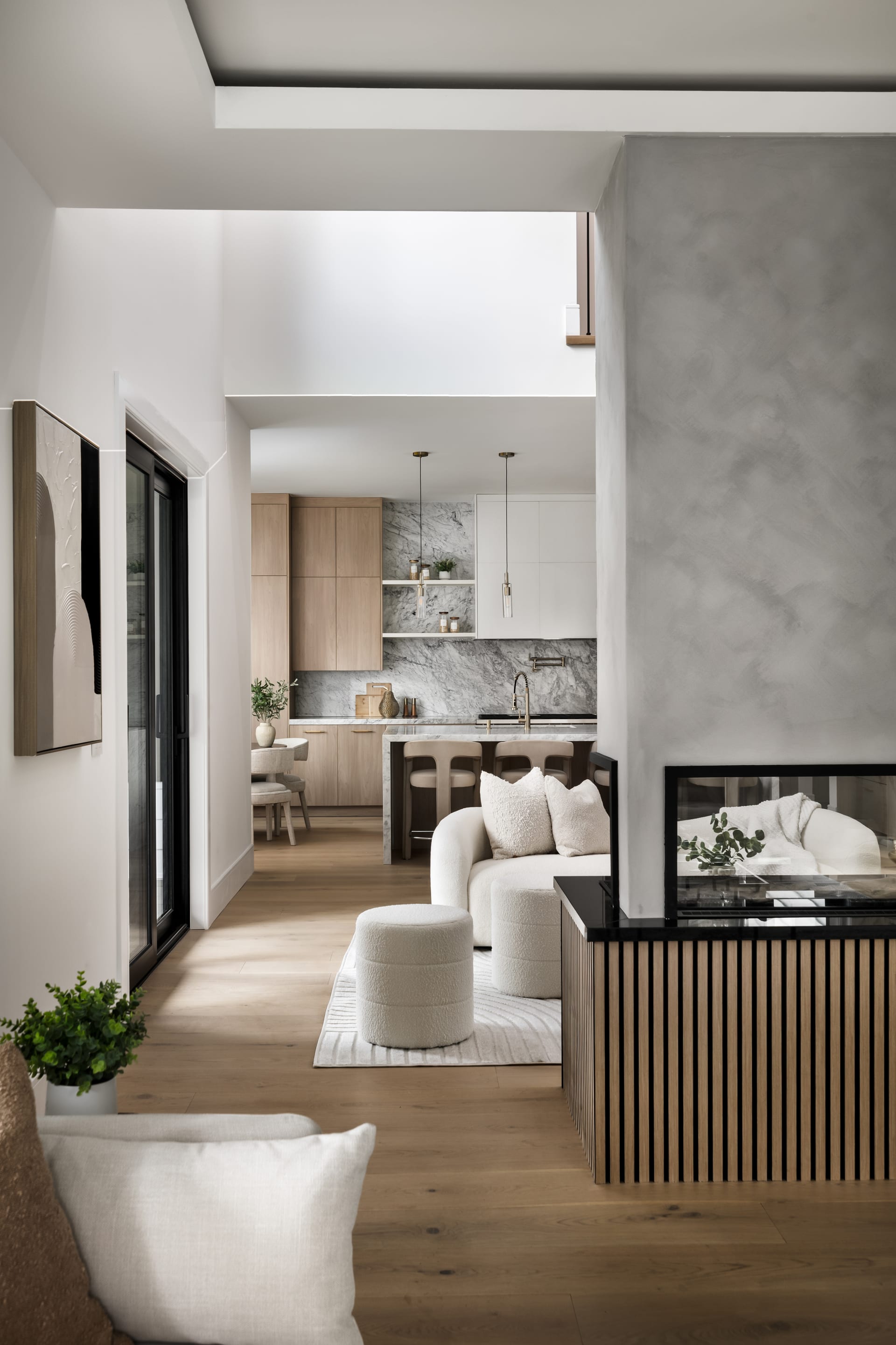
Every space has a position from which it wants to be seen. Finding it is a matter of patience rather than formula. The photographer walks the room, watches how walls resolve into corners, notices where sightlines open and where they collapse. Often the strongest vantage point sits in a doorway or just inside a threshold, where the eye is given a clear path into the space and the architecture organizes itself around a single axis.
For interiors, this usually means standing back far enough to let the room breathe while keeping a foreground element that anchors the frame. A corner view, taken from one quadrant of the room looking diagonally across it, tends to convey depth and volume more honestly than a flat, straight-on composition. The diagonal invites the eye to travel, and travel is how we perceive scale.
The Height of the Lens
Vantage point is not only where the camera stands but how high it sits. This single variable alters the character of an image more than most people expect. A camera placed too high looks down on a room with a faintly clinical detachment. Placed too low, it exaggerates the floor and loses the ceiling. The reliable starting point for interior photography is roughly the height of a seated or standing eye, somewhere between forty and sixty inches depending on the subject.
- Lower positions emphasize floors, furniture, and the human scale of a room.
- Higher positions reveal layout, circulation, and the relationship between zones.
- Mid positions, most of the time, feel the most natural because they match how we actually occupy space.
There is no universal correct height, only a correct height for the story the image needs to tell. A boutique hotel suite photographed for a sense of intimacy may call for a lower camera that settles into the room. A loft photographed to show its volume may ask the lens to rise.
Vantage Point and Architectural Honesty
For architects and builders, the stakes of vantage point extend beyond aesthetics into accuracy. A facade shot from too close distorts proportion; a wide lens pressed into a corner stretches a room beyond its true dimensions. The most trustworthy architectural photography resists the temptation to flatter through distortion. It finds a position that renders the building as it is, with its proportions intact and its geometry calm.
This often means stepping back further than instinct suggests, then using a longer focal length to compress the view gently. The result reads as composed rather than exaggerated. A straight-on elevation has its place when the architecture is symmetrical and the intention is formal. More often, an oblique vantage point that catches two planes of a building at once reveals how volumes meet and how the structure sits in its site.
The most trustworthy image finds a position that renders a building as it is, with its proportions intact.
Standing Where the Space Resolves
There is a moment, when moving the tripod a few inches at a time, when a frame suddenly resolves. Lines that were fighting each other fall parallel. A window aligns with the edge of a wall. The clutter of overlapping forms separates into clean layers. This is the vantage point the space was waiting for, and it is rarely more than a small distance from the positions that did not work. Precision at this stage repays itself many times over.
Letting the Program Guide the Position
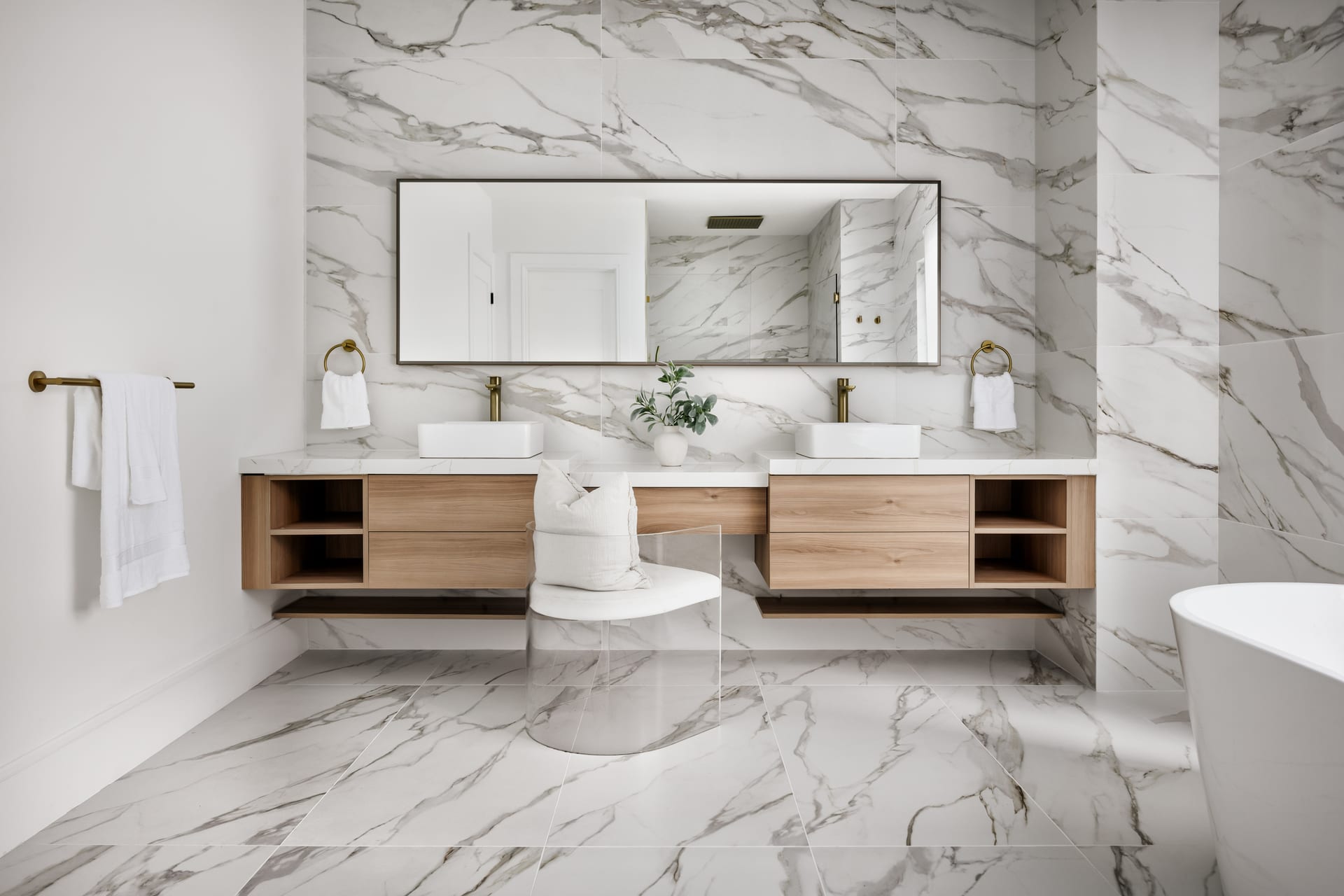
The purpose of a space should inform where the camera stands. A kitchen designed around an island wants a vantage point that honors that center of gravity. A hotel lobby built around a reception moment should be photographed from the position a guest first occupies on arrival. When the camera stands where the design intends people to stand, the photograph carries the architect’s or designer’s logic without needing to explain it.
- For realtors, choose positions that communicate flow and how rooms connect.
- For hoteliers, consider the guest’s point of entry and the first impression it creates.
- For interior designers, favor vantage points that show how pieces relate rather than isolating them.
- For architects, prioritize positions that keep geometry true and reveal spatial relationships.
The Discipline of Fewer Positions
A common instinct is to photograph a room from every possible angle and sort it out later. The more considered approach is to commit. One well-chosen vantage point, fully resolved and carefully lit, communicates more than six hurried ones. Restraint here is a form of respect for the space and for the viewer, who should never feel the room was searched rather than understood.
When a sequence does call for multiple views, each vantage point should earn its place by showing something the others cannot. A wide establishing position, a medium view that develops a particular relationship, a tighter frame that rewards closer attention. Together they form a reading of the space rather than a catalogue of it.
A Practical Way to Begin
Before setting the tripod, walk the room slowly with the camera held loosely, looking through it as you move. Notice where the frame calms and where it tightens. Pay attention to the edges, not only the center, because the edges are where distortion and clutter announce themselves. When a position feels settled, set the tripod and refine from there in small increments. The best vantage point is usually discovered by feel first and confirmed by the frame second.
Vantage point rewards the time it is given. It cannot be fixed afterward, and it quietly shapes how a design is understood long after the shoot has ended.
If you would like your spaces photographed from positions chosen with this kind of care, Matthew Lekker Photography would be glad to hear from you.
Add us as a preferred source on Google
Add as preferred source