The Opening That Shapes Everything
Every interior has a source. Before the finishes, the furniture, or the proportions announce themselves, there is light arriving from somewhere, and that somewhere is almost always a window. In architectural photography, the window is rarely the subject, yet it governs nearly every decision the camera makes. It sets the direction of the light, the contrast of the scene, and the mood that settles across a floor. To photograph a room well, you have to understand the window that feeds it.
Design professionals tend to think about windows in terms of views, glazing, and sightlines. All of that matters. But in interior photography, a window performs a second, quieter role. It is the instrument through which the room is lit, and it behaves differently at every hour, in every season, and in every orientation. Reading that behavior is the first task of anyone hoping to make a space look the way it was meant to feel.
Direction Before Decoration
A north-facing window gives soft, even light that holds detail gently across a room. An east or west window delivers drama in the morning or evening, raking across surfaces and revealing texture. A south-facing opening can flood a space with brightness that flattens as easily as it flatters. None of these is better than another. Each asks for a different approach.
Knowing a room’s orientation tells you when it is at its best. A breakfast room photographed in late afternoon may feel lifeless, while the same room at nine in the morning can glow with purpose. For builders and interior designers who have agonized over how light moves through a plan, this is the moment that logic becomes visible.
A window is not a hole in the wall; it is the clock by which a room keeps time.
The Balance Problem
The central technical challenge of photographing windows is dynamic range. The eye adapts effortlessly between a bright exterior and a shaded interior. A camera does not. Left unmanaged, a window becomes a blown-out white rectangle or the room collapses into shadow. Neither serves the architecture.
There are two honest ways to handle this, and both have their place:
- Exposure blending. Several frames are captured at different exposures and combined so that both the room and the view beyond read naturally. Done with restraint, it looks like what you remember rather than what the sensor recorded.
- Timing the ambient balance. At certain hours, the interior light and exterior light sit close enough in brightness that a single exposure holds both. This is one of the quiet advantages of shooting early or shooting at dusk.
The goal is never to show off technique. The goal is believability. A window should feel like a window, with a legible view and light that falls convincingly into the space.
The View Beyond
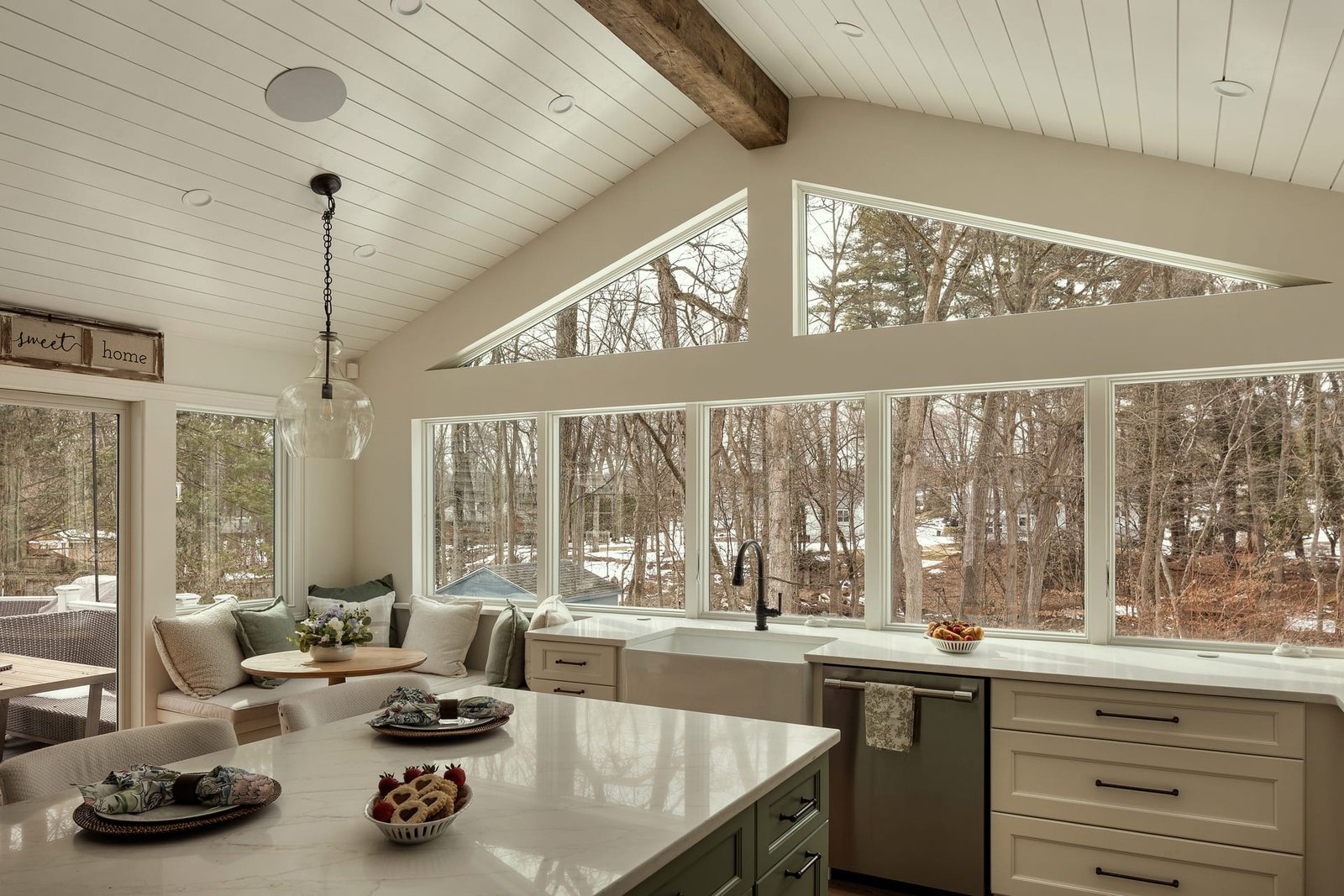
What lies outside the glass is part of the composition whether you want it to be or not. A considered view adds depth and context, anchoring a room in its place. A cluttered or unflattering view competes with everything indoors. Part of the work is deciding how much of the exterior to include and how sharply to render it.
For hoteliers and realtors, the view is often the asset itself. A room that overlooks water, a skyline, or a garden is selling that outlook as much as the furnishings. In those cases, the exposure must protect the view at all costs, and the composition should lead the eye toward it rather than fight it. For a city interior with a plain neighbor across the street, the softer approach is often to let the glass glow gently and keep attention inside.
Sheers, Blinds, and the Art of Diffusion
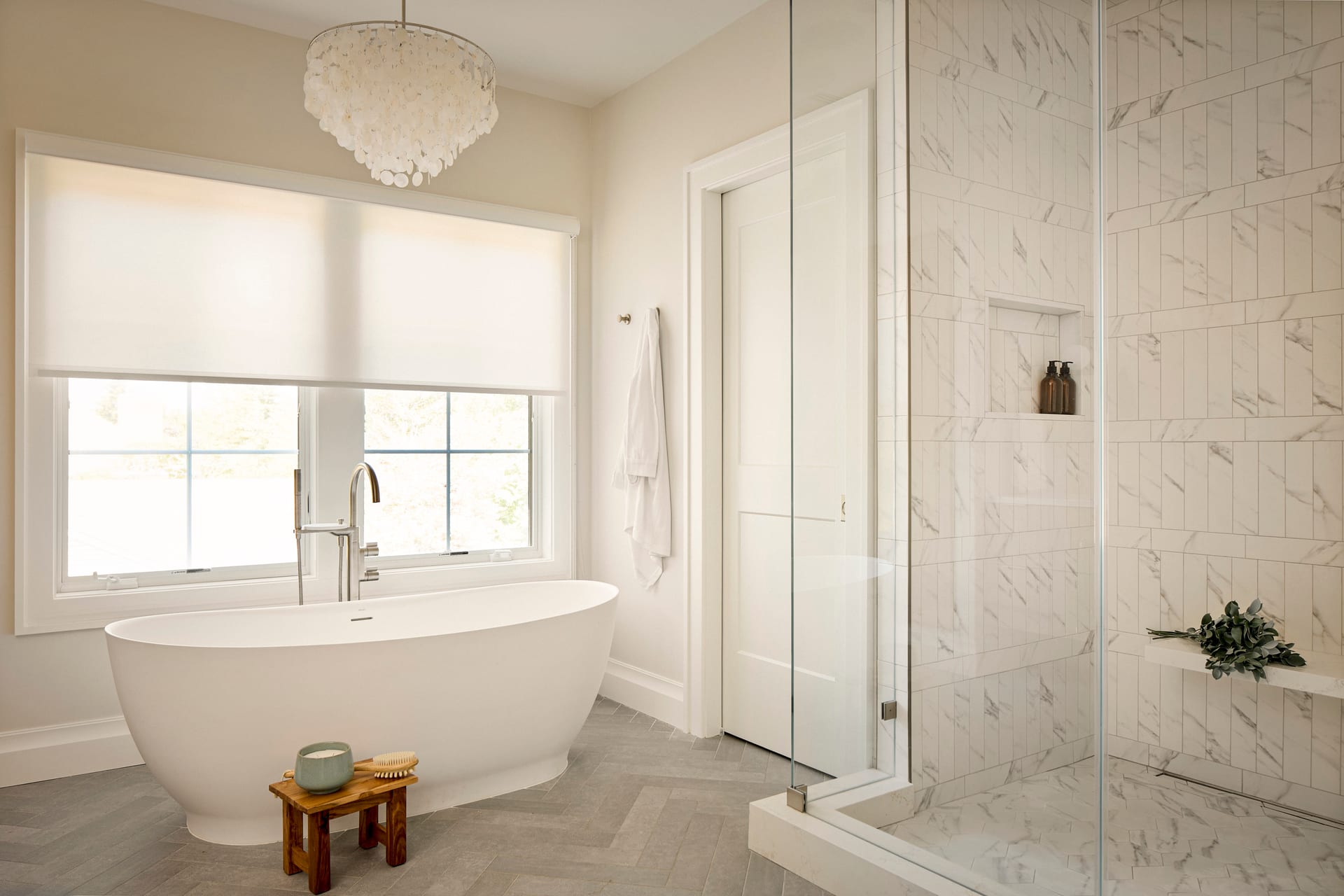
Window treatments are not only decorative. They are light modifiers. A sheer curtain turns a harsh beam into a wash of diffused glow. A blind, half drawn, can shape the light into bands that give a surface rhythm. Part of preparing a room is deciding how these elements sit.
In practice, this means asking a few questions on site:
- Does the sheer soften the light in a way that flatters the room, or does it dull it?
- Should blinds be fully open for brightness, or partly closed to control glare and add structure?
- Are the treatments hanging evenly, breaking the vertical lines the architecture worked so hard to establish?
These are small decisions with outsized effects. A crooked blind or an unevenly bunched curtain reads immediately in a photograph, pulling attention away from the design.
Light as It Lands
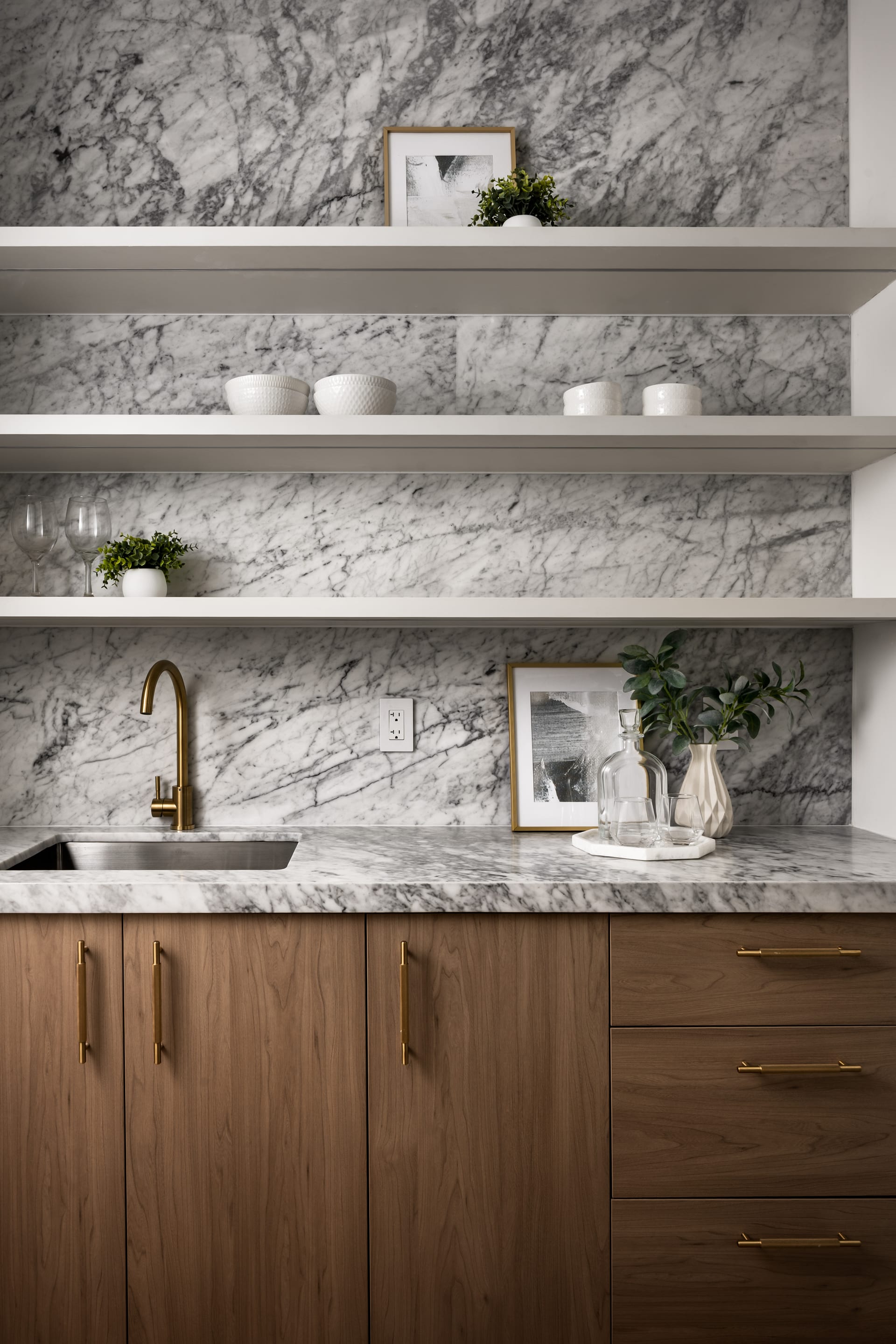
Once light enters through a window, the interesting part begins. It strikes a floor, grazes a wall, pools on a table. Where it lands is as important as where it comes from. A shaft of morning sun across a timber floor can become the emotional center of an image. A soft gradient down a plaster wall can give the whole frame its calm.
The most memorable interiors are not the brightest ones; they are the ones where light has somewhere to rest.
This is why patience matters. Waiting twenty minutes for a patch of light to move into the right position can transform an ordinary composition into one that feels inevitable. Architects who have designed for a particular quality of light will recognize these moments as the realization of their intent.
Working With, Not Against, the Glass
Reflections, flare, and distortion all live at the window. A camera positioned carelessly will catch its own reflection in the glass or pick up a stray highlight that distracts. Adjusting the vantage point by even a few degrees often resolves it. When sun strikes the lens directly, a flag or a slight change in angle keeps the frame clean.
There is also the question of what the window reveals about the hour. A dark exterior tells the viewer it is night, which may or may not be the story you want. Matching the mood of the interior to the mood beyond the glass keeps the image coherent. A bright room with a black window often feels uneasy; the two should agree on what time it is.
A Short Checklist for the Space
- Know the orientation and the hour the room looks best.
- Decide how much of the view to include, and protect it in the exposure.
- Dress window treatments evenly and intentionally.
- Watch for reflections and flare at the glass.
- Let incoming light land somewhere that gives the image a center.
Handled with care, a window stops being a technical obstacle and becomes the quiet author of the whole photograph. It is where the room’s light begins, and where the story of the space quietly starts to tell itself.
If you are preparing to photograph a space defined by its light, Matthew Lekker Photography would welcome the conversation.
Add us as a preferred source on Google
Add as preferred source