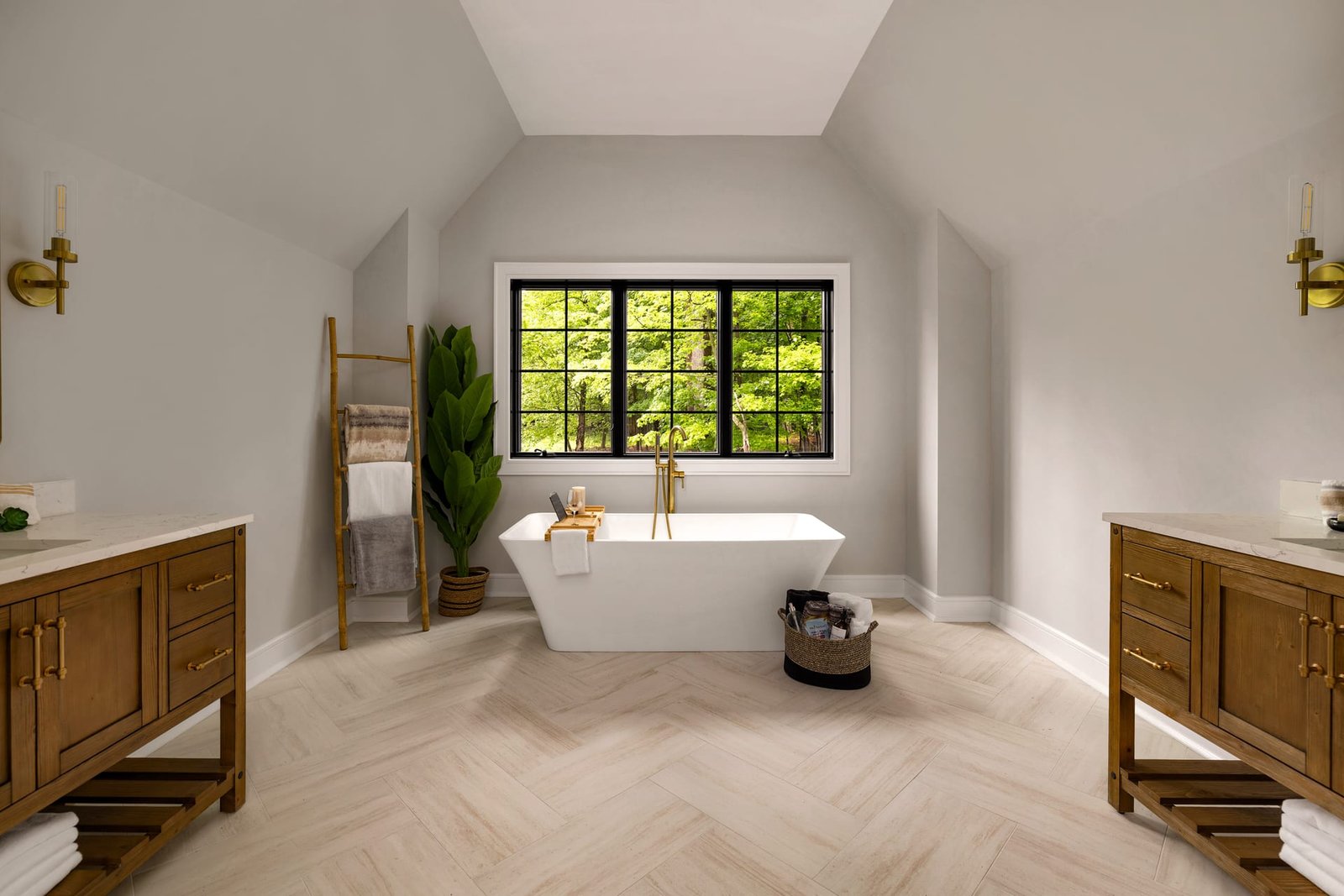
Of all the decisions made before the shutter is pressed, the choice of lens is among the least visible and the most consequential. Where the camera stands determines the vantage point, but the lens determines what the space becomes in the final frame. It controls proportion, compression, the sense of depth, and ultimately whether a photograph tells the truth about a room or quietly distorts it. In architectural photography and interior photography alike, focal length is not a technical afterthought. It is a decision about meaning.
What Focal Length Actually Does
Focal length, measured in millimetres, describes the angle of view a lens captures and the way it renders the relationship between near and far objects. A wide lens gathers a broad sweep of the room and exaggerates the distance between foreground and background. A longer lens narrows the view and compresses that distance, pulling the back of a space closer to the front.
These are not neutral effects. A sofa photographed with a wide lens from close range will loom, its nearest cushion swelling toward the viewer while the far wall recedes. The same sofa, framed with a longer lens from further back, sits in calmer proportion. Both are accurate recordings of light. Only one is faithful to how the room feels to a person standing in it.
Focal length is not a technical afterthought; it is a decision about meaning.
The Wide Lens and Its Temptations
Wide lenses are the workhorses of interior photography, and for good reason. Rooms are enclosed, and the photographer rarely has the luxury of stepping back far enough to see the whole space. A wide field of view lets a modest room read as generous and lets a generous room read as complete.
The temptation is to go wider than the space warrants. An ultra-wide lens can make a bathroom feel like a ballroom, but it does so at a cost. Lines near the edges of the frame bow outward. Furniture at the margins stretches and leans. The proportions that a designer laboured over are quietly rewritten. For realtors this may seem a useful exaggeration, but experienced buyers and clients read the distortion instinctively, and trust erodes with it.
The disciplined approach is to choose the widest lens the room genuinely requires and no wider. A space should look convincingly itself, not inflated beyond recognition.
The Longer Lens and What It Preserves
Longer focal lengths are underused in interior work, often because the shooting distance they demand is hard to find indoors. Yet when the room allows it, a longer lens rewards the patience. Compression tightens the composition, layering elements into a considered relationship rather than scattering them across an exaggerated depth.
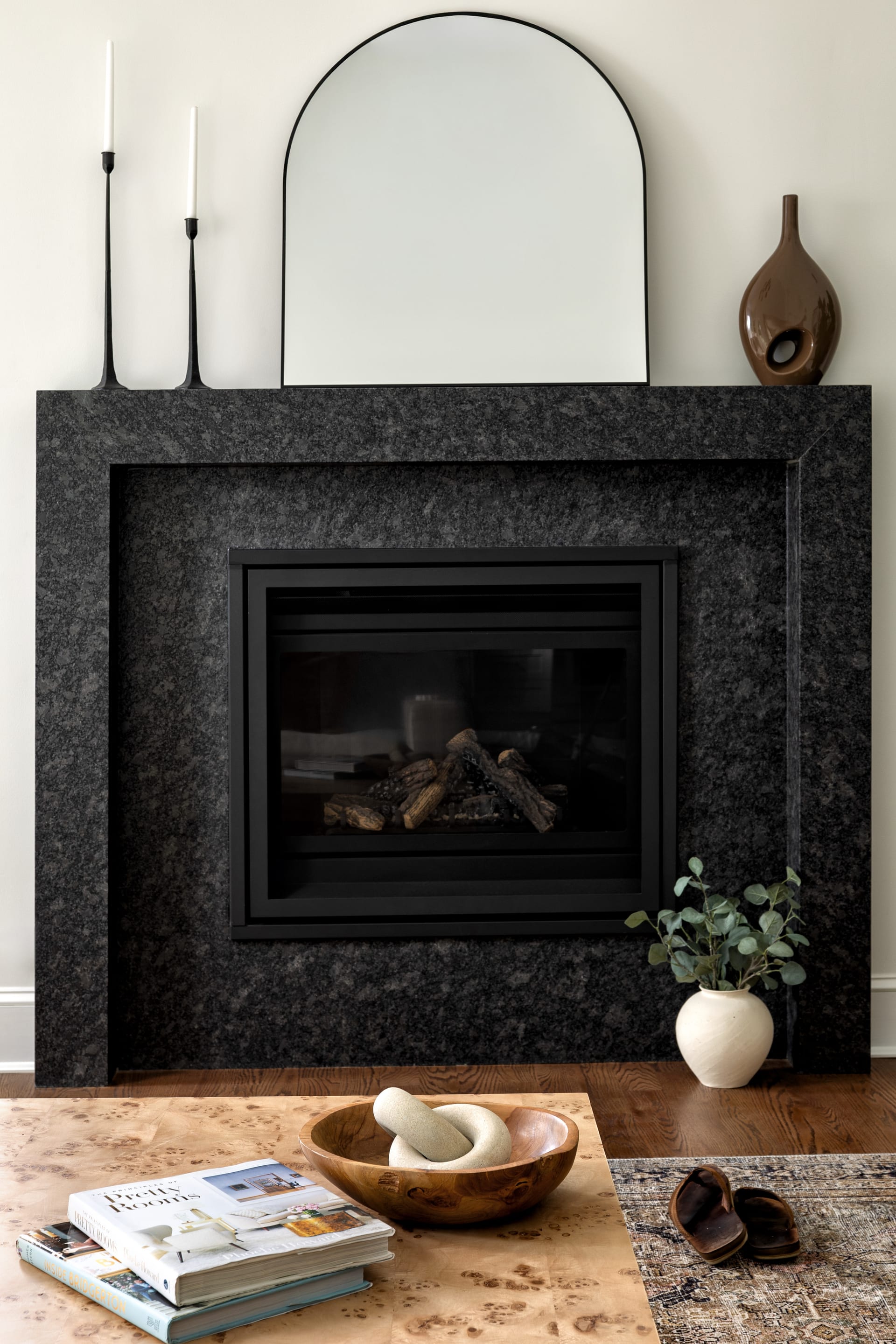
This is the lens of the detail and the vignette: a reading nook seen from across an open plan, a run of joinery framed so its rhythm reads cleanly, a dining setting gathered into an intimate arrangement. Longer lenses flatter materials and finishes because they hold proportion steady, letting texture and tone speak without the pull of perspective.
- Wide lenses describe the whole and emphasise space.
- Standard focal lengths render proportion closest to human perception.
- Longer lenses isolate, compress, and dignify detail.
The Standard View and the Human Eye
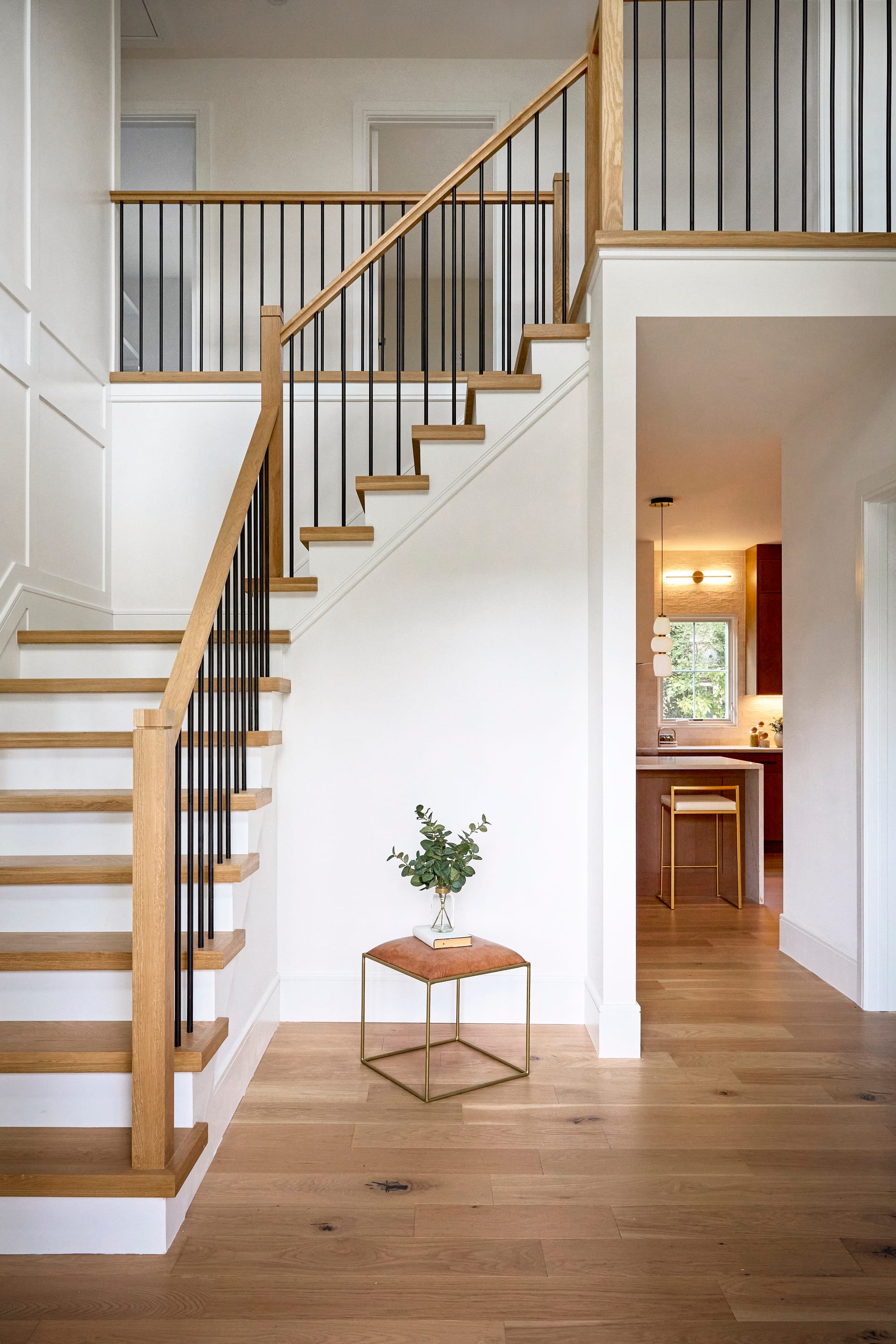
Between the extremes sits the standard focal length, the range that most closely matches how we perceive a room. Photographs made here feel natural because they are. Furniture holds its true scale, walls meet at honest angles, and the viewer is placed in the space as a guest rather than as an observer of a distorted model.
For architects and interior designers who want a portfolio that reads as calm and credible, this range deserves more attention than it usually receives. A sequence built largely on standard views, with wider frames used deliberately for context and longer frames reserved for detail, carries an unforced authority. The work looks like the space, not like a lens.
Focal Length and the Story of a Space
A thoughtful shoot uses focal length as a form of pacing. The establishing frame may open wide, setting the room within its walls and light. The middle frames settle into standard proportions, letting the viewer inhabit the space. The closing frames draw in with a longer lens, resting on the decisions that reward a second look.
This range of focal lengths gives a body of work variety without resorting to gimmicks. It mirrors how a person moves through architecture, first taking in the whole, then dwelling on the parts. For hoteliers in particular, this pacing matters, because a guest’s expectation is shaped entirely by images before arrival, and a well-paced set of photographs sets a promise the property can keep.
A room photographed well should look like itself, not like the lens that recorded it.
The Question of Honesty
There is an ethical dimension to focal length that professionals should not overlook. Every image is a representation, and representation carries responsibility. A builder whose work is photographed with integrity will find that clients arrive with accurate expectations and leave satisfied. A designer whose spaces are rendered truthfully builds a reputation that compounds over time.
Distortion flatters in the moment and disappoints on arrival. The gap between a wildly wide photograph and the real room is the gap where trust is lost. Choosing focal length with restraint is, in the end, a way of respecting both the space and the person who will one day stand in it.
Practical Guidance for Design Professionals
When reviewing photography of your own projects, or briefing a photographer, a few considerations help:
- Look at how corners and edges behave. Stretched furniture and bowed lines signal a lens pushed too wide.
- Ask whether the proportions match your memory of the space. Honest scale is the surest sign of a well-chosen focal length.
- Expect a range of focal lengths across a finished set, not a single wide view repeated.
- Value the longer-lens details. They often carry the craft that distinguishes your work from the ordinary.
Lens choice is quiet work. It rarely announces itself in the finished frame, which is precisely the point. A room photographed well should feel inevitable, as though it could have been rendered no other way. That inevitability is the result of countless small decisions, and focal length sits near the centre of them.
If you are preparing to photograph a space and want images that hold true to its proportions and intent, we would welcome a conversation at Matthew Lekker Photography.
Add us as a preferred source on Google
Add as preferred source