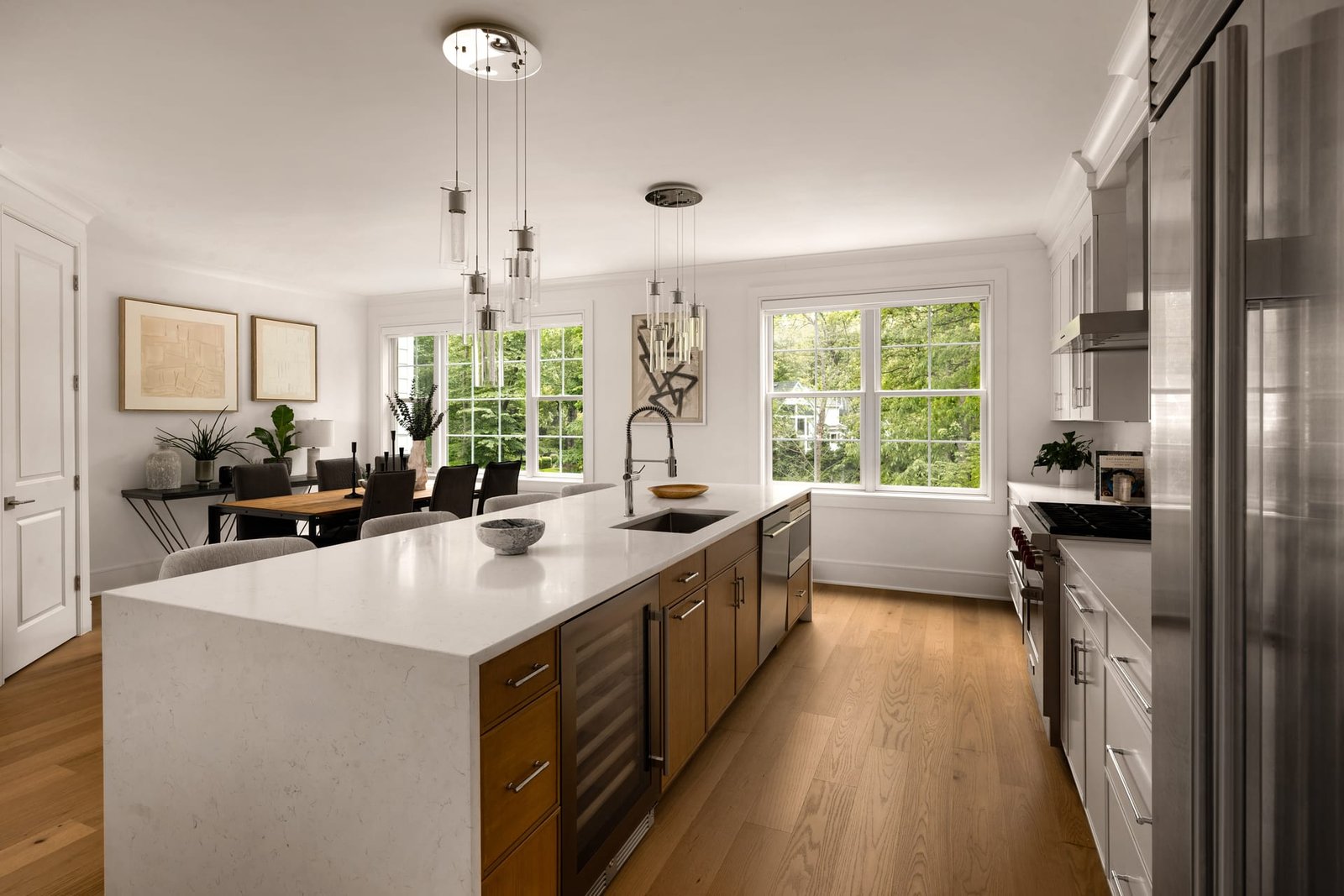
Every space has dimensions that exist on a plan, and dimensions that are felt in the body. A ceiling reads as generous or oppressive. A corridor invites you forward or holds you at arm’s length. When a room is translated into a photograph, those felt dimensions must survive the transition to two dimensions, and this is one of the most underappreciated challenges in architectural photography. A technically flawless image can still fail if it leaves the viewer unsure of how large a room actually is, or how a body would move through it.
Scale is not a single setting on a camera. It is the accumulation of decisions about lens choice, viewpoint, framing, and the objects allowed into the frame. For architects, interior designers, builders, and hoteliers, understanding how scale is constructed helps you brief a photographer with precision and recognise when an image is telling the truth about your work.
Why Scale Is So Easily Lost
The human eye takes in a space through movement, binocular depth, and constant reference to the size of our own bodies. A camera collapses all of that into a flat rectangle. Without deliberate intervention, a photograph can make a soaring atrium feel modest, or inflate a compact apartment into something the client will not recognise when they arrive.
This matters commercially as much as aesthetically. A hotel guest who books a room based on an image that exaggerated its size arrives disappointed. A realtor who under-represents a generous living area leaves value on the table. Interior photography that misjudges scale erodes trust, and trust is the currency of every design professional.
A photograph that misjudges scale does not merely look wrong; it quietly breaks a promise to the person who eventually stands in the room.
The Role of the Lens
Focal length is the first lever. Wide-angle lenses are indispensable for interiors because they gather more of the room into a single frame, but they also stretch the space nearest the camera and compress what lies beyond. Used carelessly, a wide lens turns a balanced room into a distorted cavern with looming foreground furniture and a distant, shrunken far wall.
The skill lies in restraint. A moderately wide lens, positioned thoughtfully, preserves the relationship between near and far. Longer focal lengths, meanwhile, can be used for detail views and for exterior architectural photography where compression flatters proportion and emphasises rhythm across a facade. The right lens is always the one that keeps the space honest.
Anchoring the Frame With Human Reference
The most reliable way to communicate scale is to give the viewer something whose size they already understand. We read a room by comparing its elements to familiar objects, and a photographer can use this instinct deliberately.
- A dining chair tells us the height of a table and, by extension, the ceiling above it.
- A door, with its universally understood proportions, calibrates the wall it sits within.
- A stair tread suggests the rhythm of ascent and the volume of the void beside it.
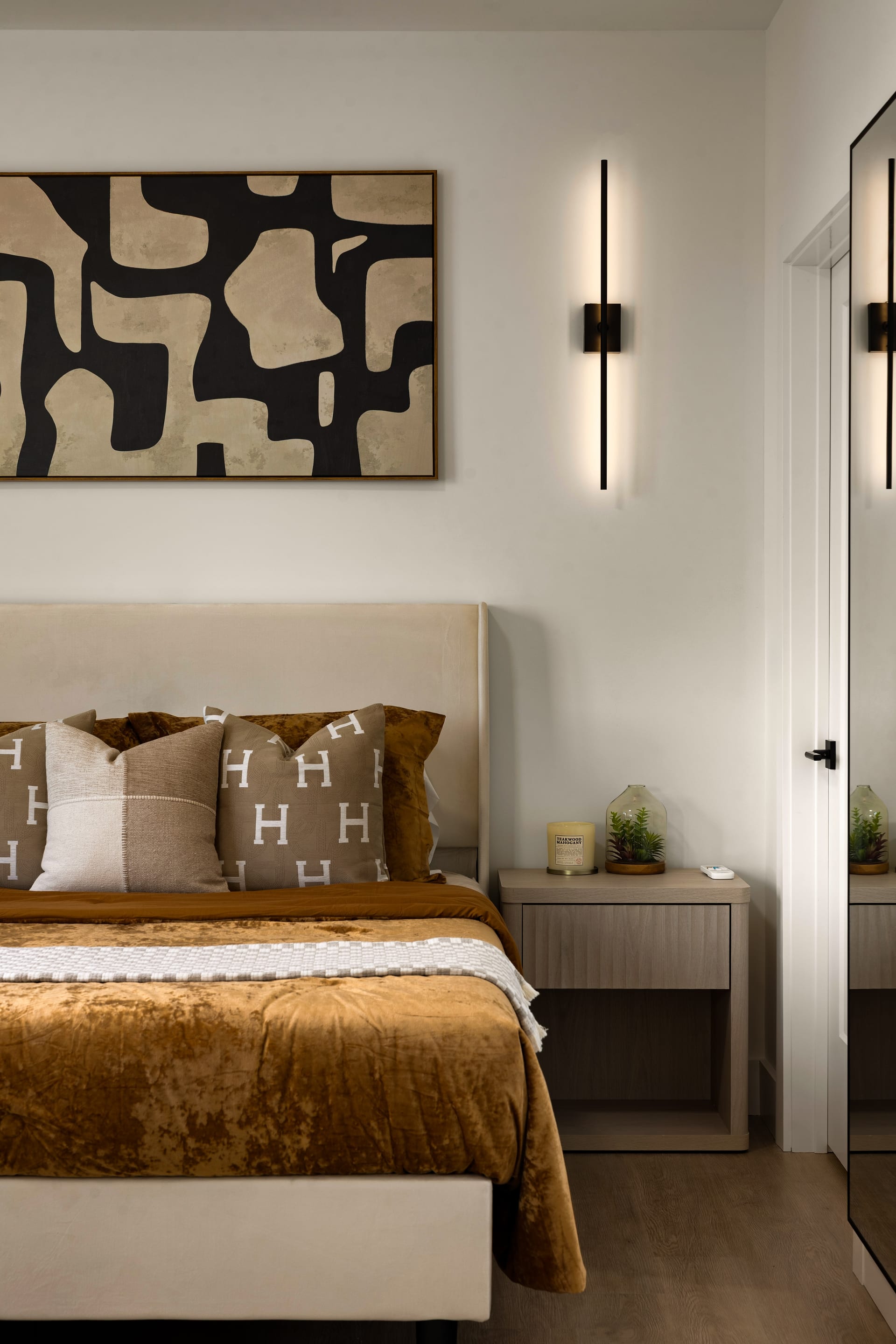
- A book, a glass, or a folded throw introduces intimate scale in a detail shot.
These anchors work best when they feel inevitable rather than staged. A styling decision that places a single object with intention will do more for a sense of scale than a room crowded with props. This is where interior photography and considered styling meet: the objects that make a space believable are usually the ones a good designer would have chosen anyway.
Viewpoint and the Height of the Camera
Camera height is quietly decisive. Positioned too high, a room flattens into a floor plan and loses its sense of enclosure. Positioned too low, ceilings loom and furniture dominates. The most natural results usually come from a viewpoint near the eye level of a seated or standing occupant, because it mirrors how the space is actually experienced.
Corner compositions, where two walls converge, tend to convey volume more convincingly than a flat, straight-on view. The receding lines give the eye a path into depth, and depth is inseparable from our perception of size.
Verticals, Convergence, and Honesty
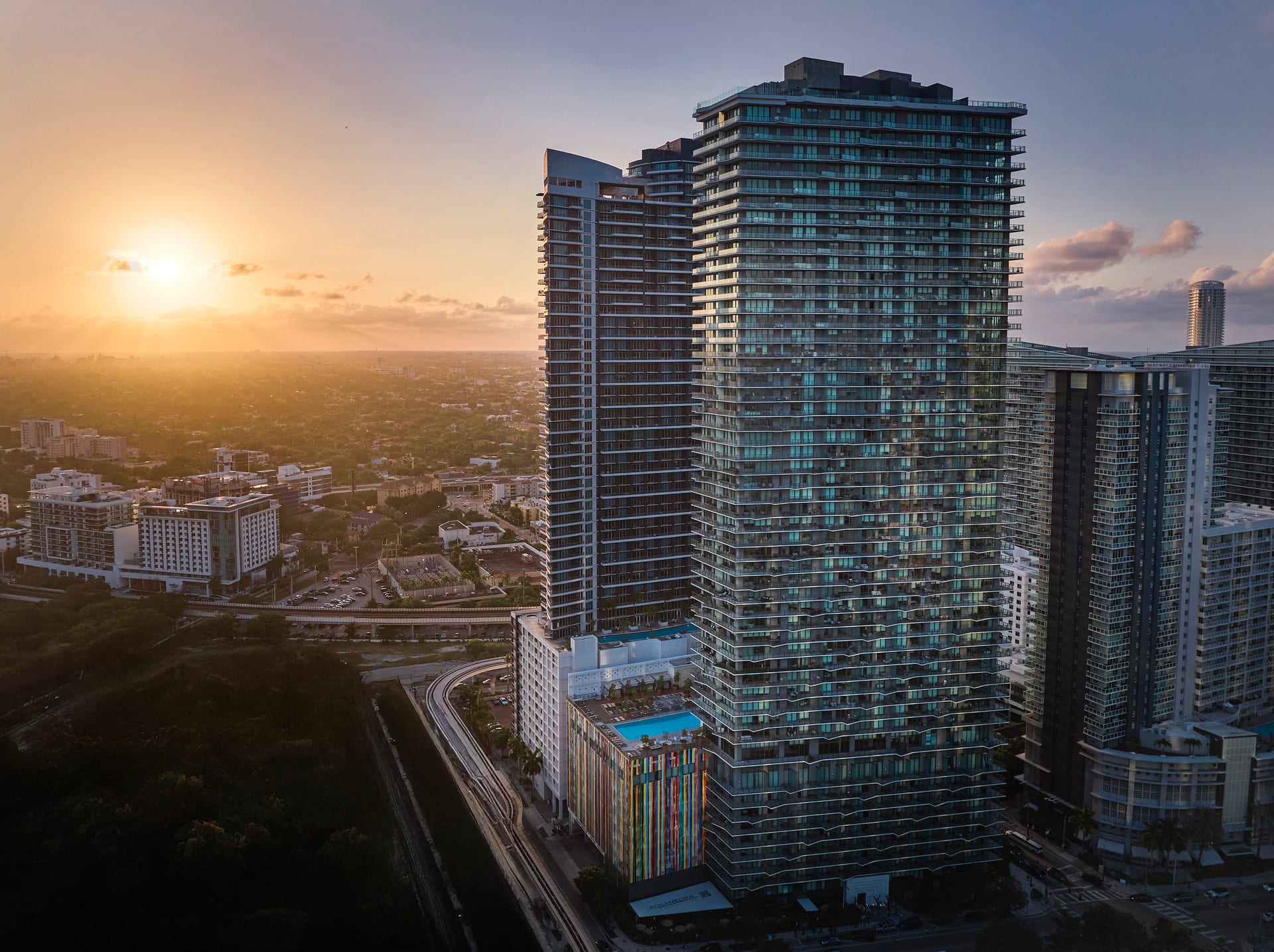
Few things undermine a sense of scale faster than tilting walls. When a camera is angled upward, vertical lines converge and a building appears to fall away from the viewer. In architectural photography, keeping verticals true is a hallmark of craft, achieved through tilt-shift lenses or careful correction. Straight verticals allow the eye to trust the image, and a trusted image reads at its true dimensions.
Straight lines are not a stylistic preference; they are the grammar that lets a viewer read a building without doubt.
For exteriors especially, correct verticals separate professional work from casual documentation. A boutique hotel facade, a residential extension, or a civic building all depend on the viewer accepting the geometry as real before they can appreciate the design.
Light as a Descriptor of Space
Light does more than illuminate; it describes. The way daylight falls across a floor reveals the depth of a room. Shadows in the corners of a vaulted ceiling communicate height. A shaft of low sun crossing a corridor gives it length. When light is flat and even, scale flattens with it. When light is shaped and directional, it maps the volume for the viewer.
This is why the timing of a shoot is a scale decision as much as a mood decision. The angle of the sun determines which surfaces are modelled and which recede, and modelled surfaces are the ones that tell us how far away a wall stands.
Sequencing Images to Build Understanding
No single frame can fully convey a complex space. A considered sequence does the work that one image cannot. An establishing wide view sets the overall volume; a mid-range image clarifies how areas relate; a detail shot confirms material and craftsmanship at intimate scale. Read together, these images let the viewer assemble an accurate mental model of the space.
For a portfolio or a listing, this sequencing is what turns a collection of pretty pictures into a coherent account of a place. It respects the viewer’s need to understand before they can admire.
Briefing Your Photographer for Scale
When commissioning a shoot, you can help protect the sense of scale in the final images:
- Identify the spaces whose generosity or intimacy is central to the design intent.
- Note which proportions clients most often misread, so they can be clarified in the frame.
- Discuss whether human presence or lifestyle context would strengthen certain rooms.
- Agree on a mix of wide, mid, and detail views rather than relying on wide shots alone.
These conversations cost nothing and prevent the most common disappointment: images that are beautiful yet somehow do not feel like the space you built or designed.
If you would like images that convey your spaces at their true scale and quiet character, we would be glad to hear from you at Matthew Lekker Photography.