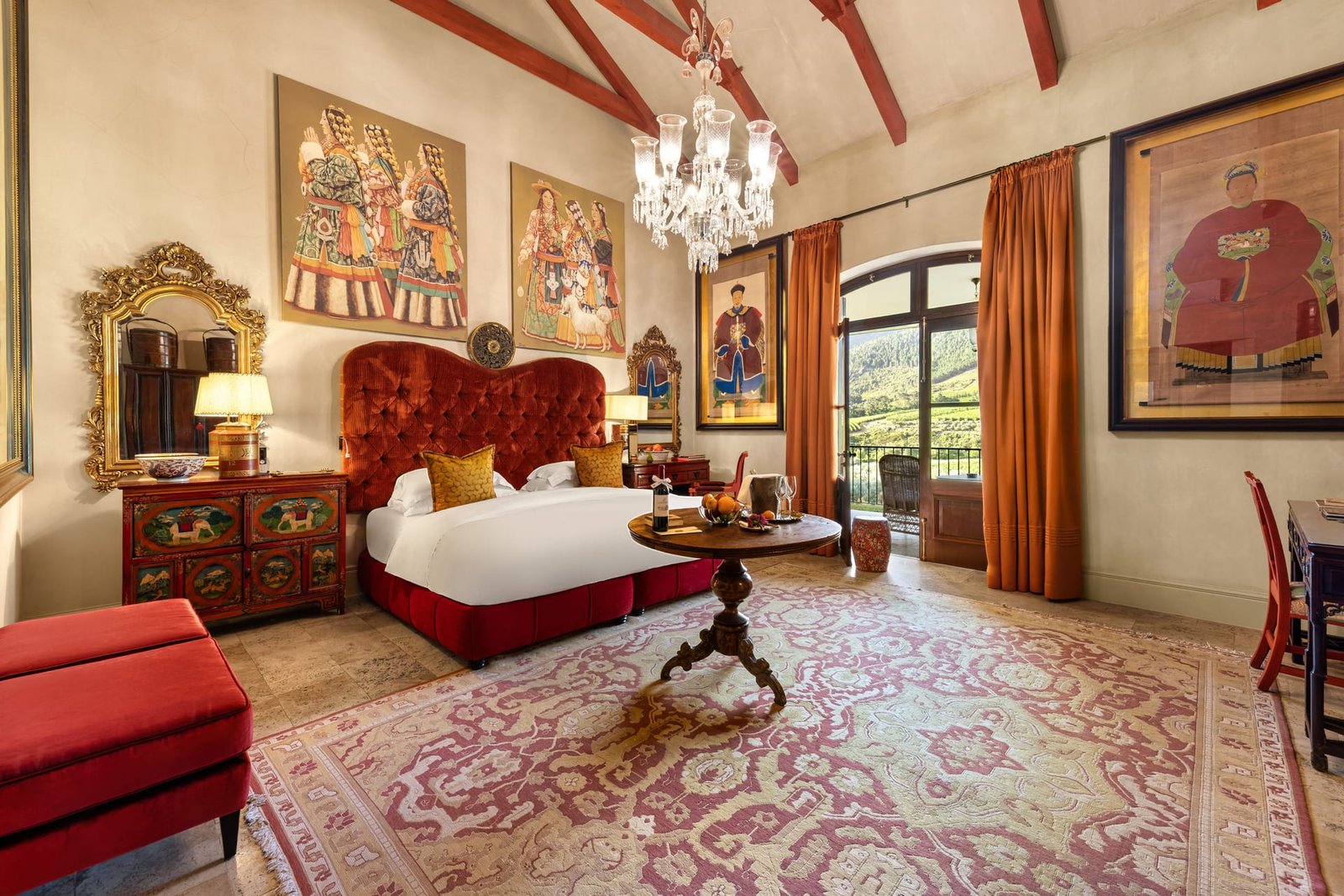
Of all the decisions made on a shoot, the choice of focal length is among the least visible and most consequential. It rarely announces itself in the finished image, yet it governs how a room feels, how proportions read, and whether a space appears generous or contorted. For architects, interior designers, builders, and hoteliers, understanding this quiet variable offers a clearer language for collaborating with a photographer and a sharper eye for the work that represents your name.
What Focal Length Actually Does
Focal length, measured in millimeters, describes the angle of view a lens captures and the way it renders depth. A wide lens takes in more of a room and exaggerates the distance between near and far objects. A longer lens narrows the view and compresses that distance, drawing elements together. Neither is inherently correct. Each tells a different truth about the same space.
In architectural photography, this matters because a room is not a fixed fact. It is an experience of proportion, sightline, and rhythm. The focal length a photographer selects determines which of those qualities the viewer receives.
A room is not a fixed fact, but an experience of proportion, and the lens decides which version of that experience reaches the viewer.
The Wide End and Its Temptations
Wide-angle lenses are the default assumption for interior photography, and for good reason. They allow a modest bedroom or a tight hotel bathroom to be shown in full, capturing context that a narrower view would sacrifice. When a space is genuinely small, a wide lens is often the only way to communicate its layout honestly.
The danger lies in going too wide. Pushed to extremes, a wide lens stretches the edges of the frame, bends verticals, and inflates foreground objects until a sofa looms like furniture in a funhouse. The room appears larger than it is, but at the cost of believability. Design professionals are quick to sense when an image flatters dishonestly, and so are their clients.
- Moderate wide angles preserve a sense of enclosure without distortion.
- Extreme wide angles suit only the most deliberate compositions, used sparingly.
- Distortion at the frame edges undermines the very proportions a designer worked to achieve.
The Case for Standard and Longer Lenses
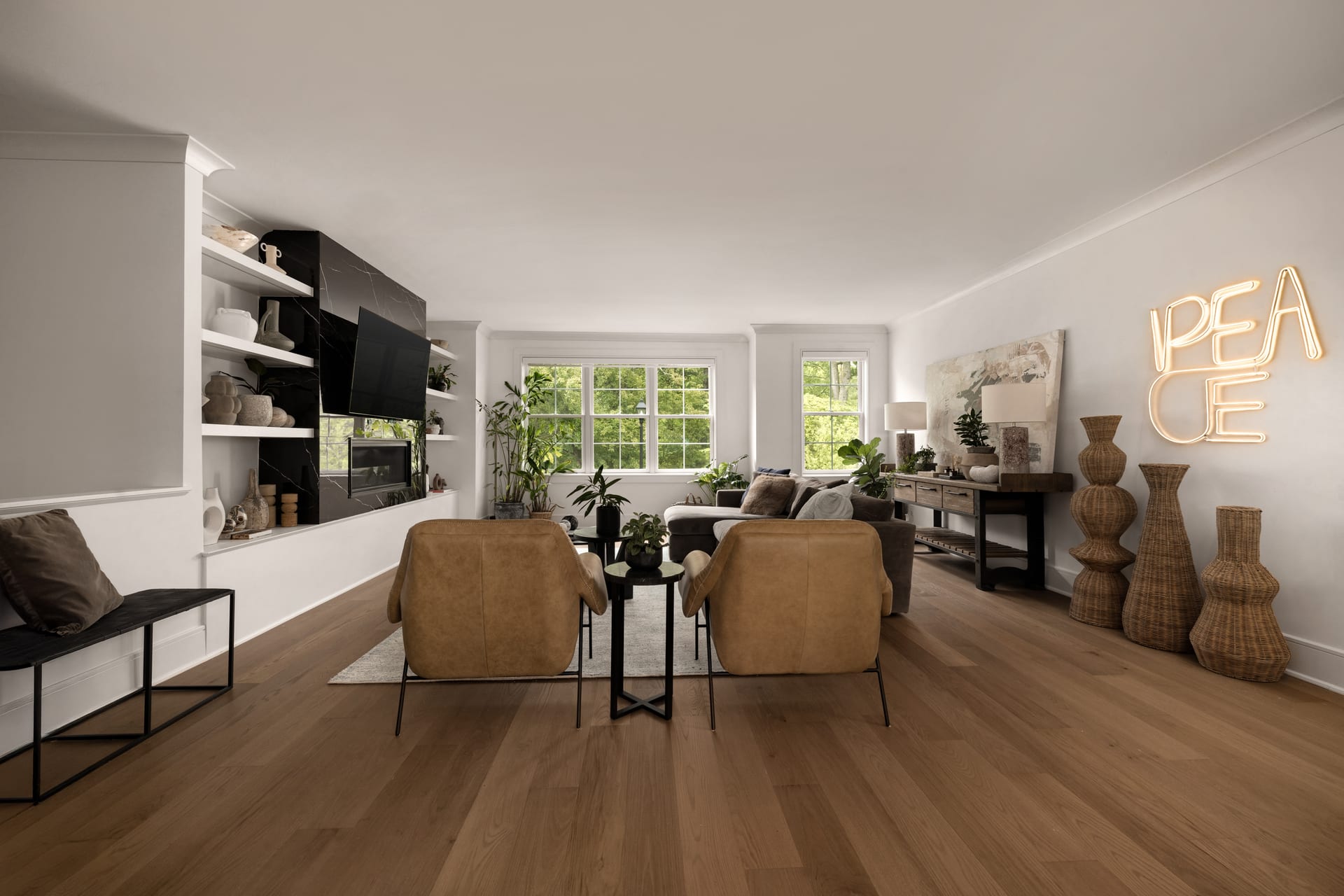
A standard focal length renders a space much as the eye perceives it. Proportions stay honest, and the image carries a natural calm. This is often the most flattering treatment for a well-resolved interior, because it lets considered design speak without exaggeration.
Longer lenses, used less often indoors, reward patience. By compressing depth, they layer foreground, middle, and background into a single quiet plane. A vignette across a hotel lobby, a tablescape read from across the room, a corridor gathered into a rhythm of doorways: these belong to the longer end. The result feels intimate and composed, the visual equivalent of a chosen detail rather than a full accounting.
Reading the Space Before Reaching for a Lens
The most useful habit is not memorizing which lens to use, but learning to read what a space asks for. A grand double-height atrium and a compact study call for entirely different treatments, and the right focal length follows from the question the image is meant to answer.
Before a single frame is made, it helps to ask what the photograph is for. A realtor needs to communicate flow and scale so a buyer can orient themselves. An architect wants to convey the discipline of a facade or the logic of a plan. An interior designer cares about texture, palette, and the relationship between objects. A hotelier is selling a feeling as much as a floor plan. Each purpose points toward a different lens.
The right focal length is never a technical preference; it is the answer to the question the photograph was created to ask.
How Focal Length Shapes Perceived Scale
Scale is one of the most delicate qualities to render, and focal length is the primary tool for controlling it. Wide lenses can make grand spaces feel vast and intimate spaces feel deceptively open. Longer lenses restore a truer sense of measure, which is why they often suit spaces where craftsmanship, not square footage, is the selling point.
For a boutique hotel, this distinction is strategic. A wide view of a suite establishes the offer, but a longer, compressed frame of a reading nook or a bath detail communicates the quality of the stay. The two work together, each carrying part of the story.
Consistency Across a Set
A single image lives or dies on its own merits, but a photo set must hold together. Wild swings in focal length between frames create a visual unease that readers feel even if they cannot name it. A considered set tends to establish a dominant focal range and use extremes as deliberate punctuation rather than habit.
This is where sequencing and lens choice meet. Interior and architectural photography that reads as coherent usually reflects a photographer thinking about the whole story, not simply capturing each room as an isolated task. Rooms photographed at compatible focal lengths feel like they belong to one building, one vision, one hand.
What Design Professionals Can Watch For
You do not need to carry a light meter to evaluate whether focal length is serving your work. A few observations reveal a great deal:
- Do the vertical lines stand straight and true, or do the walls lean?
- Does the furniture in the foreground feel proportionate to the room?
- Does the space feel like the one you designed, or a stretched approximation of it?
- Across the full set, do the images feel like a single considered narrative?
When these hold, the lens choices behind them were sound, even if invisible.
The Quiet Discipline Behind the Frame
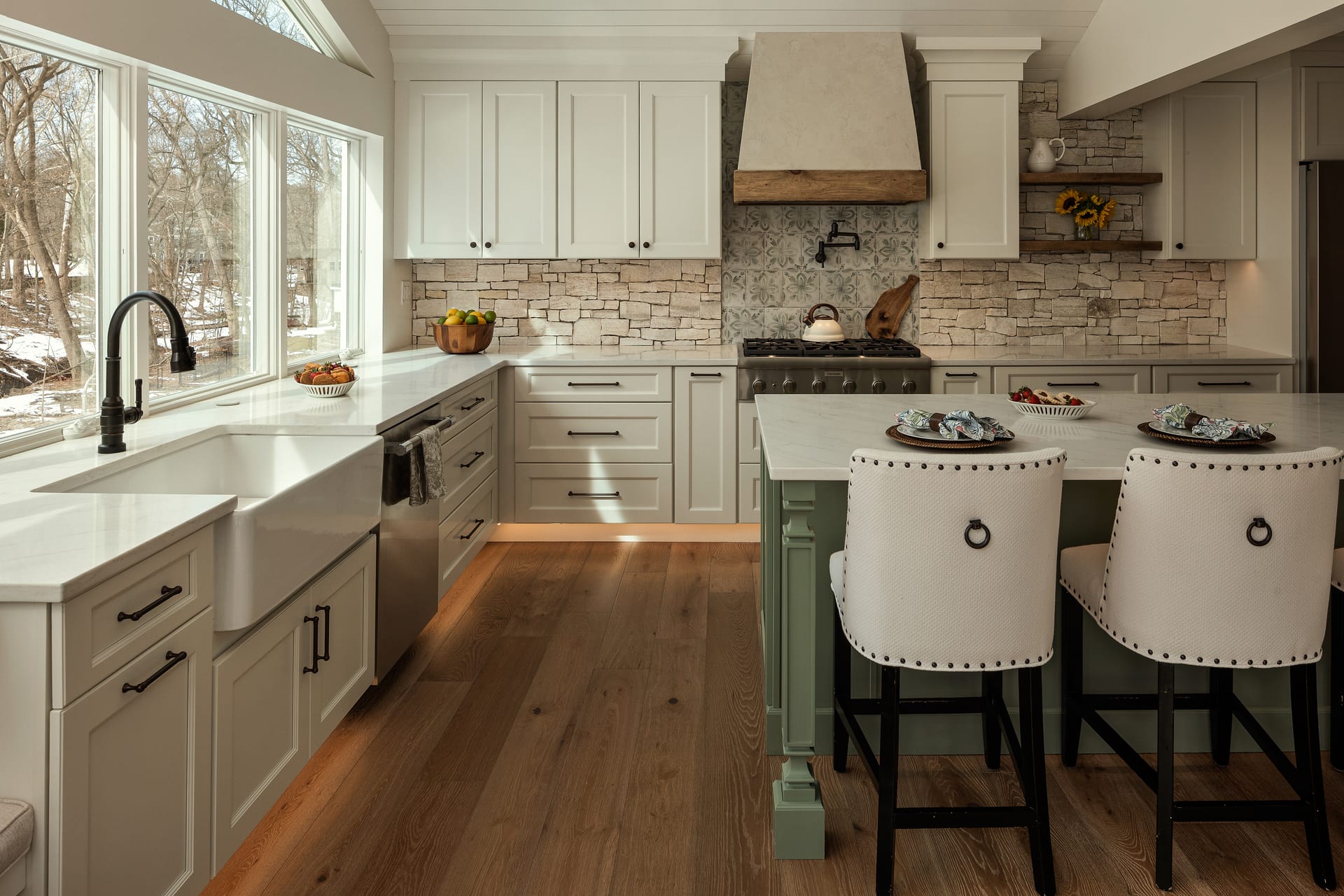
The best architectural and interior photography rarely draws attention to its own mechanics. A viewer should feel the generosity of a room or the precision of a detail without registering the technical decisions that produced those impressions. Focal length is a large part of that invisible work. Chosen well, it disappears into the honesty of the image. Chosen carelessly, it leaves a faint distortion that no amount of editing can fully correct.
For those who commission photography of their spaces, this understanding is worth carrying into every project. It clarifies conversations, sets realistic expectations, and helps you recognize the difference between images that merely document a space and images that genuinely represent it.
If you would like to discuss how thoughtful lens work can serve your next project, Matthew Lekker Photography would welcome the conversation.