Where One Space Becomes Another
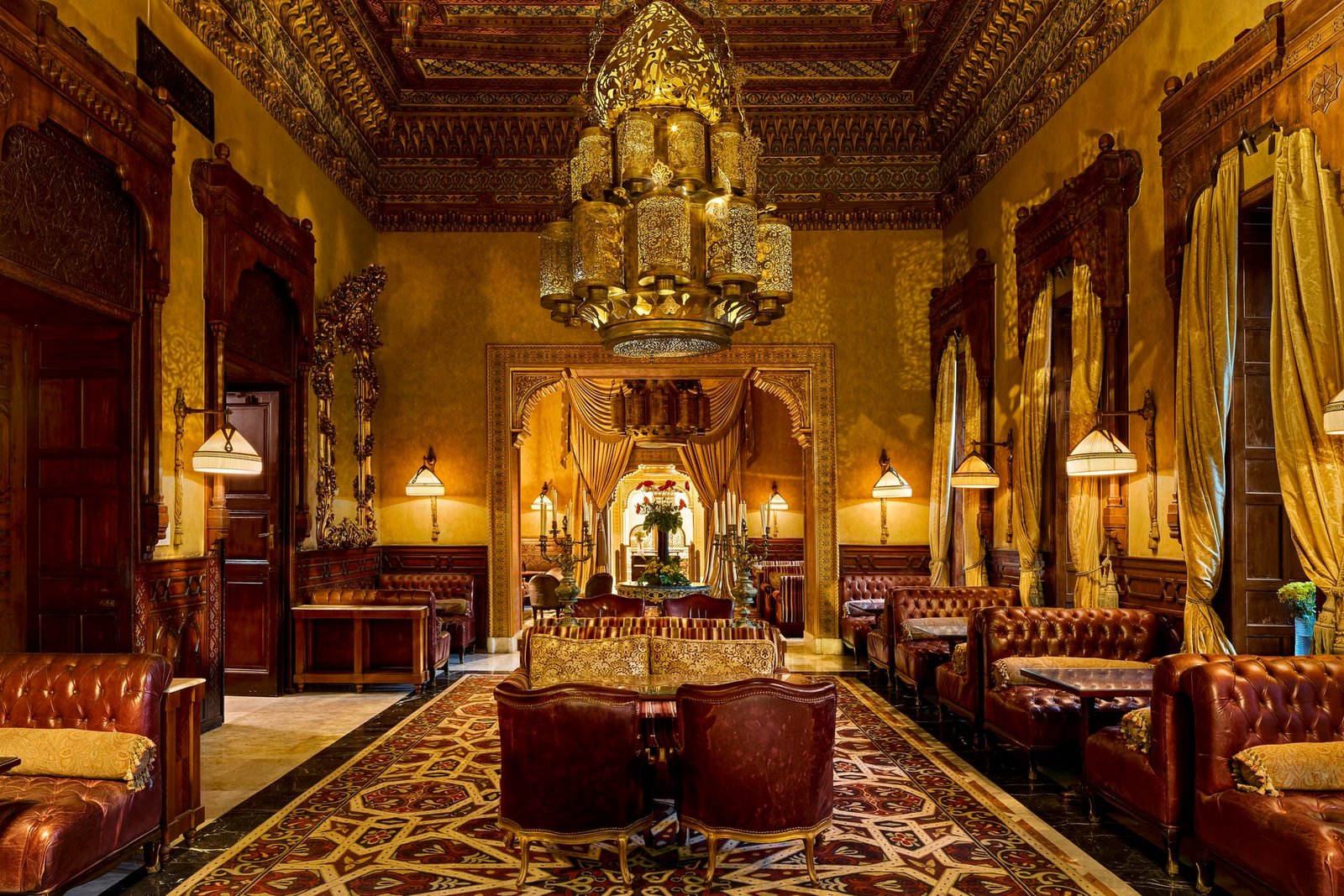
Every building is a sequence of rooms, but the rooms are not where a building reveals its intelligence. That happens at the thresholds: the doorway, the arch, the change of floor level, the narrowing of a corridor before it opens into light. These are the moments of transition, and in architectural photography they are among the most expressive frames available to us. A threshold holds two rooms at once. It lets the viewer stand in one space while looking into another, and in that overlap the story of a building begins to move.
For architects and interior designers, the threshold is rarely an afterthought. It is where proportion is negotiated, where materials change hands, where the designer decides how one experience should yield to the next. A photograph that honors the threshold honors that decision. It shows not just two rooms, but the relationship between them.
Why the Threshold Deserves the Frame
Most interior photography is organized around the room as a unit. We photograph the kitchen, then the living room, then the primary suite, as though each were a self-contained object. This is useful for documentation, but it flattens the experience of actually moving through a space. Buildings are not viewed as a gallery of separate rooms. They are walked.
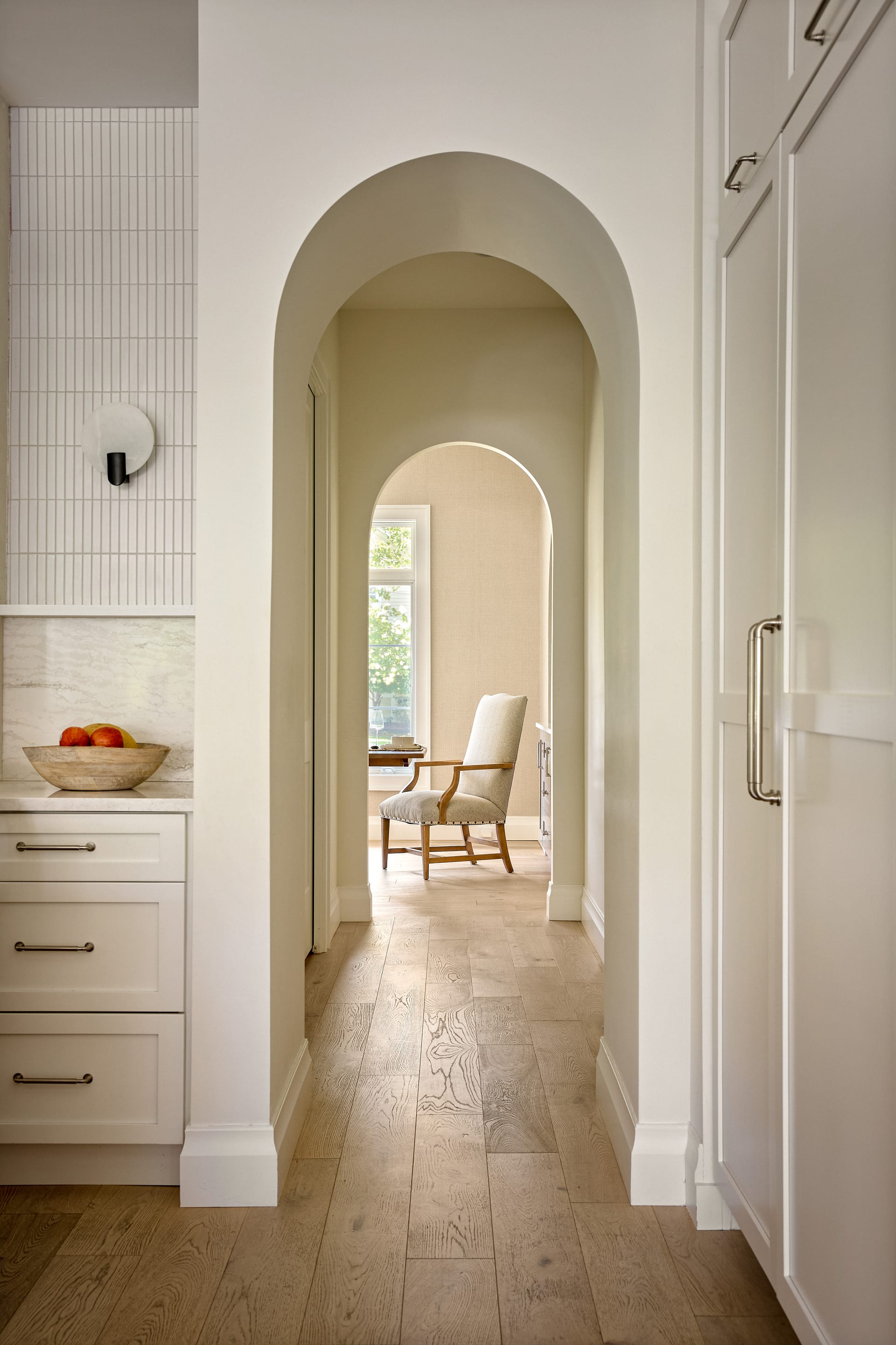
The threshold image restores that sense of movement. When the camera stands in one room and looks through an opening into the next, it gives the viewer a position and a direction. It implies a path. The eye is invited to travel, and the architecture becomes something you pass through rather than merely observe.
A threshold holds two rooms at once, and in that overlap the story of a building begins to move.
This matters commercially as well as aesthetically. A realtor marketing a home wants a buyer to imagine walking the floor plan. A hotelier wants a guest to feel the unfolding of an arrival sequence, from lobby to corridor to suite. A builder wants to show that the flow of a project was considered, not accidental. The threshold photograph does all of this in a single frame.
Reading the Transition Before You Shoot
A good threshold image begins with observation, not with the camera. Before setting up, walk the passage yourself. Pay attention to what changes as you move from one room to the next.
- Light. Thresholds almost always mark a shift in light. A dim hallway opening into a sunlit room, or a bright entry giving way to a shaded study. This contrast is the raw material of the image.
- Material. Flooring often changes at a threshold, as does wall treatment or ceiling height. Note where one material ends and another begins.
- Proportion. Openings compress and release space. A narrow doorway before a tall room creates drama. Watch for that rhythm of tightening and expansion.
- Framing geometry. The opening itself is a frame within your frame. Its shape and position will organize everything behind it.
Once you understand what the transition is doing, you can decide what the photograph should emphasize. A threshold between two contrasting rooms asks for a composition that lets both read clearly. A threshold that builds anticipation, such as a corridor leading toward a view, asks for a composition that withholds and then rewards.
Composing Through the Opening
The central challenge of the threshold image is balance. You are composing two spaces simultaneously, and both must earn their place in the frame. If the foreground room dominates, the opening becomes a small window and the second space is lost. If the far room dominates, the foreground is merely a dark border with no purpose.
Place the Opening With Intention
The opening should rarely sit dead center unless the architecture is strictly symmetrical and you are honoring that symmetry. More often, an offset opening creates a more natural sense of discovery. Let one side of the foreground room carry some weight, a wall, a piece of furniture, a column, so the eye has somewhere to begin before it travels through.
Use the Foreground as a Frame
The edge of a doorway, the underside of an arch, the vertical of a jamb: these elements frame the deeper room and give the image depth. They remind the viewer where they are standing. A sliver of the near wall at the edge of the frame often does more for a photograph than another foot of visible floor.
A sliver of the near wall at the edge of the frame often does more than another foot of visible floor.
Keep the Verticals True
Because threshold images stack rooms in depth, any convergence of vertical lines becomes doubly distracting. The doorway, the far wall, and the furniture beyond all compound the error. A level camera and careful attention to the vertical plane keep the passage feeling grounded and credible.
Managing the Light Across the Transition
The contrast between a darker foreground and a brighter far room is often the most compelling feature of a threshold, but it is also the most technically demanding. The camera cannot hold both extremes as easily as the eye.
The goal is not to erase the difference in brightness. That difference is the point. The goal is to keep detail and texture in both zones so the eye can rest comfortably in either. This usually means working with careful exposure blending, allowing the foreground to stay richer and quieter while the far room glows without burning out. A threshold where the second room is a blown white rectangle loses everything that made it worth photographing.
Time of day plays a role here. When the far room faces the strongest daylight, the contrast may be too severe to render gracefully. Photographing the same transition when the light has softened often preserves the mood while making the exposure far more manageable.
The Threshold in a Sequence
Threshold images are also connective tissue when building a set of photographs. Between two room-focused frames, a transition image acts as a hinge, telling the viewer how those spaces relate. For a project narrative, this is invaluable. It prevents a portfolio from reading as a list and lets it read as a journey.
For hospitality and residential work especially, consider photographing the key thresholds deliberately: the entry into the main living space, the passage from public to private areas, the moment a corridor opens onto a view. These are the transitions a guest or buyer will remember, and they are the ones a design professional most wants understood.
A Quiet Discipline
Photographing the threshold rewards patience and restraint. It asks you to slow down, to stand in the overlap between two rooms, and to notice how a building choreographs movement. Done well, it produces images that feel less like records and more like invitations, frames that let the viewer imagine stepping forward into the next space.
If you are preparing to photograph a project where the passage between spaces carries real meaning, we would welcome the opportunity to talk with you at Matthew Lekker Photography.
Add us as a preferred source on Google
Add as preferred source