The Case for the Empty Room
There is a moment in the life of every interior when it holds nothing but light. The furniture has not arrived, the styling has not begun, and the space exists in its purest architectural state. Most photography treats this as a phase to move through quickly. In truth, the empty room deserves its own consideration, because it reveals things a fully dressed space can only hint at.
For architects and builders, the unfurnished interior is often the clearest record of the work itself. Proportion, joinery, the fall of daylight across a wall, the meeting of floor and skirting, the honesty of a ceiling line. When a room is full, these qualities compete with objects for attention. When it is empty, they speak plainly. In architectural photography, this is a rare chance to document the building rather than the life staged within it.
An empty room is not a room waiting to be finished; it is architecture speaking without interruption.
What the Empty Frame Asks of You
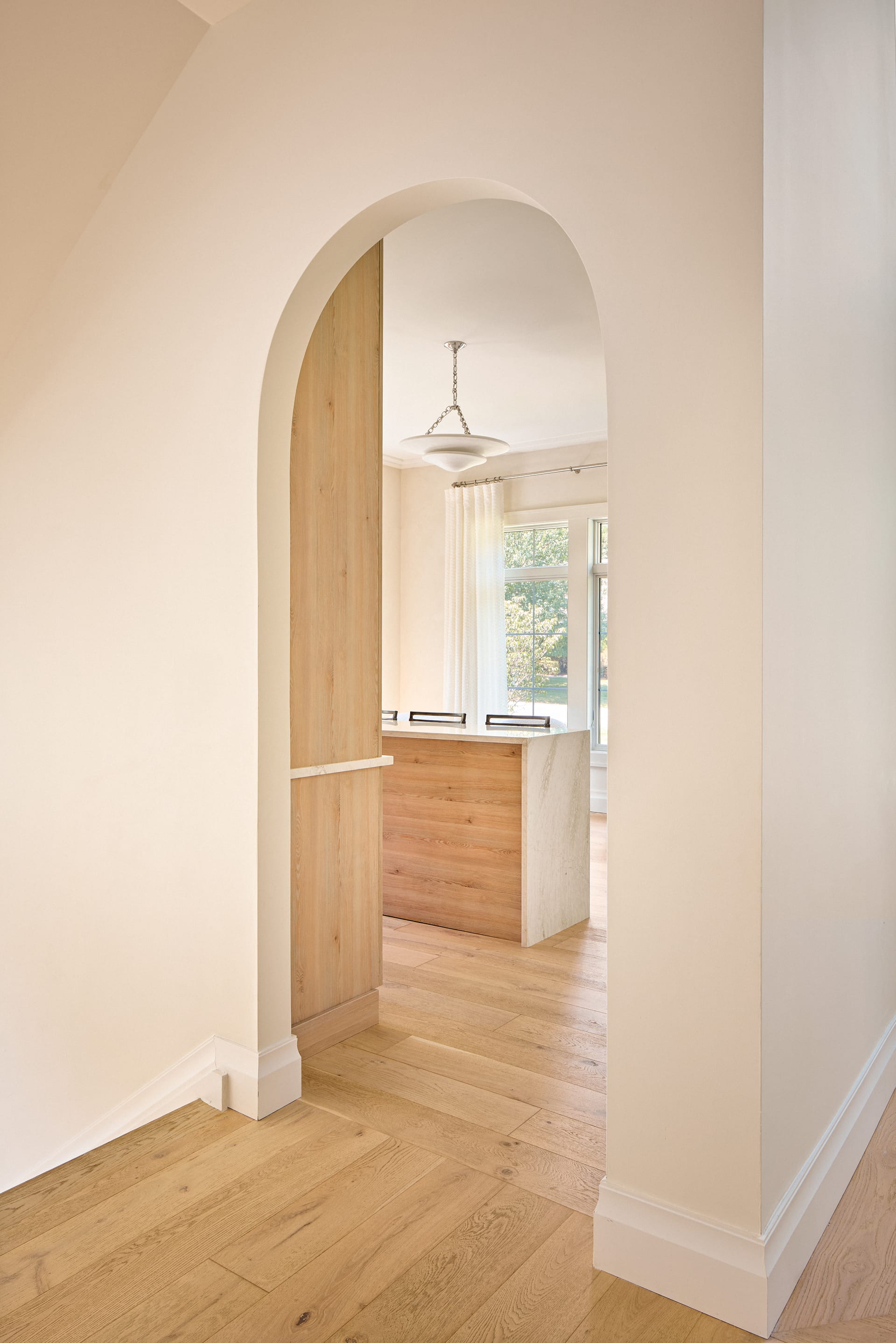
Photographing an empty interior is deceptively difficult. Without furniture to anchor the composition, the frame has nowhere to hide. Every misalignment, every uneven tone, every awkward proportion becomes visible. The absence of objects removes the usual crutches, and the photographer must find structure in the room’s own geometry.
This is why the empty room is such an instructive subject. It forces a return to fundamentals: where the horizon sits, how verticals hold true, where the eye enters and where it comes to rest. The discipline it demands carries forward into every other kind of interior photography you undertake.
Finding Composition Without Furniture
In a furnished room, a sofa or a table gives the composition an obvious foreground. In an empty room, that role passes to the architecture itself. Look for the elements that give the space its rhythm:
- The intervals between windows and the light they cast on the floor
- The line where two planes meet, and how it leads the eye
- A change in material or level that creates a natural threshold
- The shadow architecture leaves on its own surfaces
These become the actors in the frame. The task is to arrange them so the room reads as intentional rather than vacant. A well-composed empty interior should feel poised, not abandoned.
Working With Light in an Unfurnished Space
Light behaves differently in an empty room. With no soft furnishings to absorb it, the space can feel harder, more reflective, and more prone to hot spots on bare floors and walls. This is not a problem to be solved so much as a character to be understood.
Bare surfaces show the direction and quality of daylight with unusual clarity. A shaft of morning light crossing an empty floor can carry an entire image. The absence of clutter lets you treat light itself as the subject, tracing its movement through the room across the hours. For interior photography, few conditions are as honest as an empty room lit only by the windows the architect placed.
When the Empty Room Serves the Client
Different professionals draw different value from these frames, and it helps to know what each is looking for before the shoot begins.
For Architects and Builders
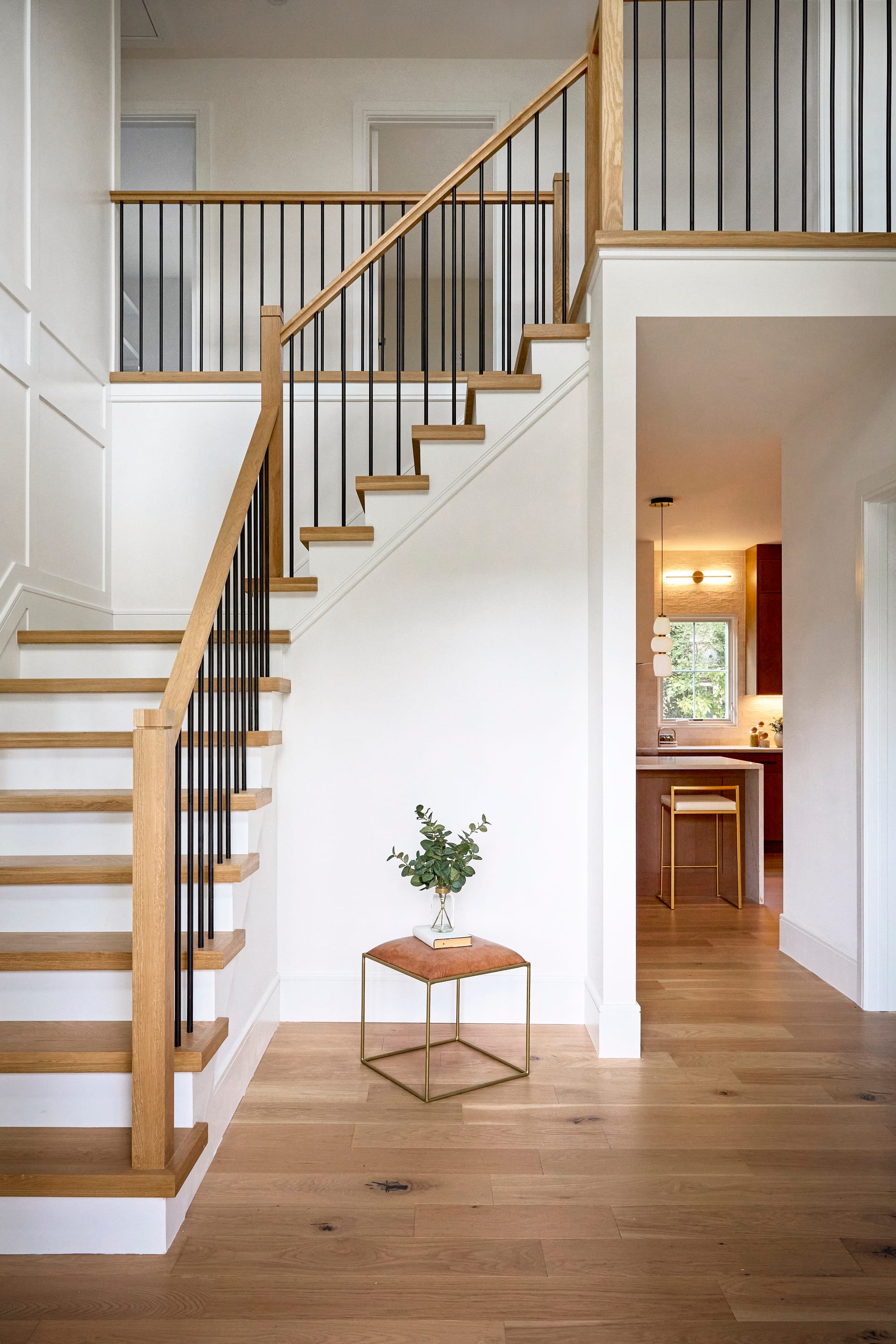
The unfurnished interior is often the truest portfolio image. It shows craftsmanship without the distraction of decor, and it credits the maker rather than the stylist. A clean frame of a well-detailed staircase, a considered window reveal, or a plastered wall meeting a timber floor speaks directly to the quality of the build. These images age well because they are not tied to a passing trend in furniture.
For Interior Designers
For designers, the empty room can serve as a before, a foundation, or a study of the envelope they are about to transform. Documenting the bare space alongside the finished scheme tells a story of intent and resolution. It shows what was given and what was made of it, which is often the most compelling narrative a designer can present.
For Realtors and Developers
An empty property must sell on its architecture alone. Here the challenge is to make vacancy feel like possibility rather than absence. A carefully lit, precisely composed empty room invites a viewer to imagine their own life within it. Sloppy framing does the opposite, making the space feel forgotten. The difference is entirely in the discipline of the photography.
Vacancy read poorly is emptiness; vacancy read well is possibility.
The Craft of Making Emptiness Intentional
The line between a considered empty interior and a dull one is thin, and it comes down to intention at every stage.
Prepare the Space
An empty room is rarely truly clean. Dust gathers on new floors, protective film clings to glass, paint marks and construction residue linger in corners. These read loudly when there is nothing else to look at. Before any frame is taken, the room should be brought to a genuinely finished state, or the imperfections addressed thoughtfully in the edit.
Choose the Angle With Care
Without furniture to define a natural viewpoint, angle selection becomes a matter of architectural judgement. Seek the vantage that reveals the most about how the space is organised: the relationship between rooms, the reach of daylight, the proportion of the volume. Often this means shooting from a threshold, where the eye can travel through the space and understand its depth.
Let the Room Breathe
Resist the temptation to fill the frame edge to edge. Negative space is the empty room’s natural language, and a composition that allows for stillness will feel more assured than one that crowds every corner. The quiet of an unfurnished interior is a quality to be honoured, not corrected.
A Record Worth Keeping
There is something valuable in photographing a space at the one moment it will never occupy again. Once furniture arrives and life settles in, the room becomes a home, an office, or a suite. The pure architectural version disappears. Capturing it is an act of documentation as much as promotion, a record of the work at its most legible.
For anyone who makes buildings and interiors for a living, these images become a quiet archive of what was achieved before the world moved in. They hold their worth long after the styling has changed, because they show the thing itself.
If you have a space at that rare unfurnished moment and want it recorded with the care it deserves, I would be glad to talk with you.
Add us as a preferred source on Google
Add as preferred source