The Plane Closest to Us
Most conversations about photographing a space begin with the subject: the staircase, the fireplace, the view framed by a wall of glass. We think about what sits at the center of the frame, and we arrange the room to serve it. Yet the part of the photograph that often decides whether an image feels flat or alive is not the subject at all. It is the foreground, the plane nearest the lens, the inches of space between the camera and everything beyond it.
In architectural photography and interior photography, the foreground is the quiet negotiator of depth. A room is three-dimensional, but a photograph is not. The flattening that happens when space is translated to a single plane is the medium’s central problem, and the foreground is one of our most reliable tools for solving it. When something sits close to the camera, the eye reads the distance between it and the rest of the room, and the image gains dimension it would otherwise lose.
Why Depth Matters to Design Professionals
For architects, builders, and interior designers, a photograph is a translation of intent. A space was conceived in three dimensions, experienced in motion, and understood through the shifting relationships of near and far. When an image collapses all of that into a flat rectangle, the work is misrepresented. The proportions may be accurate and the color faithful, yet the photograph still feels lifeless because it has lost the sense of moving through the room.
A photograph without a foreground asks the viewer to stand outside the room rather than step into it.
The foreground invites entry. It gives the eye a starting point, a place to stand before it travels inward. A corner of a dining table, the edge of a doorway, the curve of a chair arm caught at the frame’s lower edge: each of these establishes where the viewer is positioned and how far the rest of the space extends from there. The result is an image that feels occupied rather than observed.
The Difference Between Clutter and Depth
It is worth drawing a careful line here. A strong foreground is not the same as a busy one. The goal is not to fill the lower third of the frame with objects, but to place a single considered element close enough to register as near. One is composition; the other is noise.
The distinction usually comes down to intention. A foreground element earns its place when it does one of the following:
- Establishes scale by giving the eye a familiar object to measure against
- Creates a layer the eye must pass through to reach the subject
- Frames the subject, drawing attention inward rather than scattering it
- Adds material contrast, so a soft texture up close sets off a hard surface beyond
If an object does none of these things, it is merely occupying space, and the image is often stronger without it.
Finding Foreground in an Empty Room
The challenge sharpens when a space is sparse. Minimal interiors, newly completed builds, and unfurnished properties offer little to work with, and the temptation is to shoot from the doorway and accept the flatness. There are better options.
Use Architecture Itself
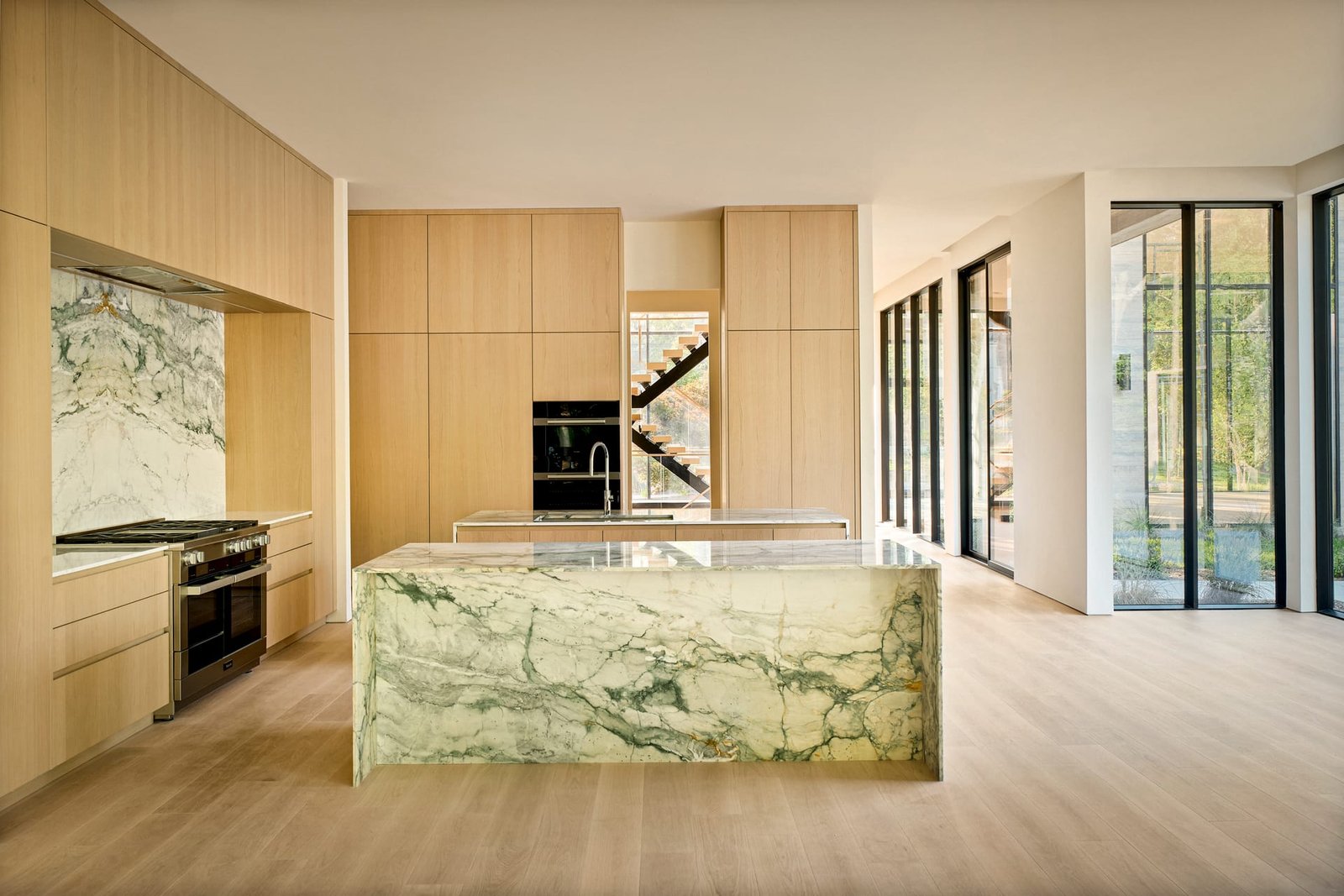
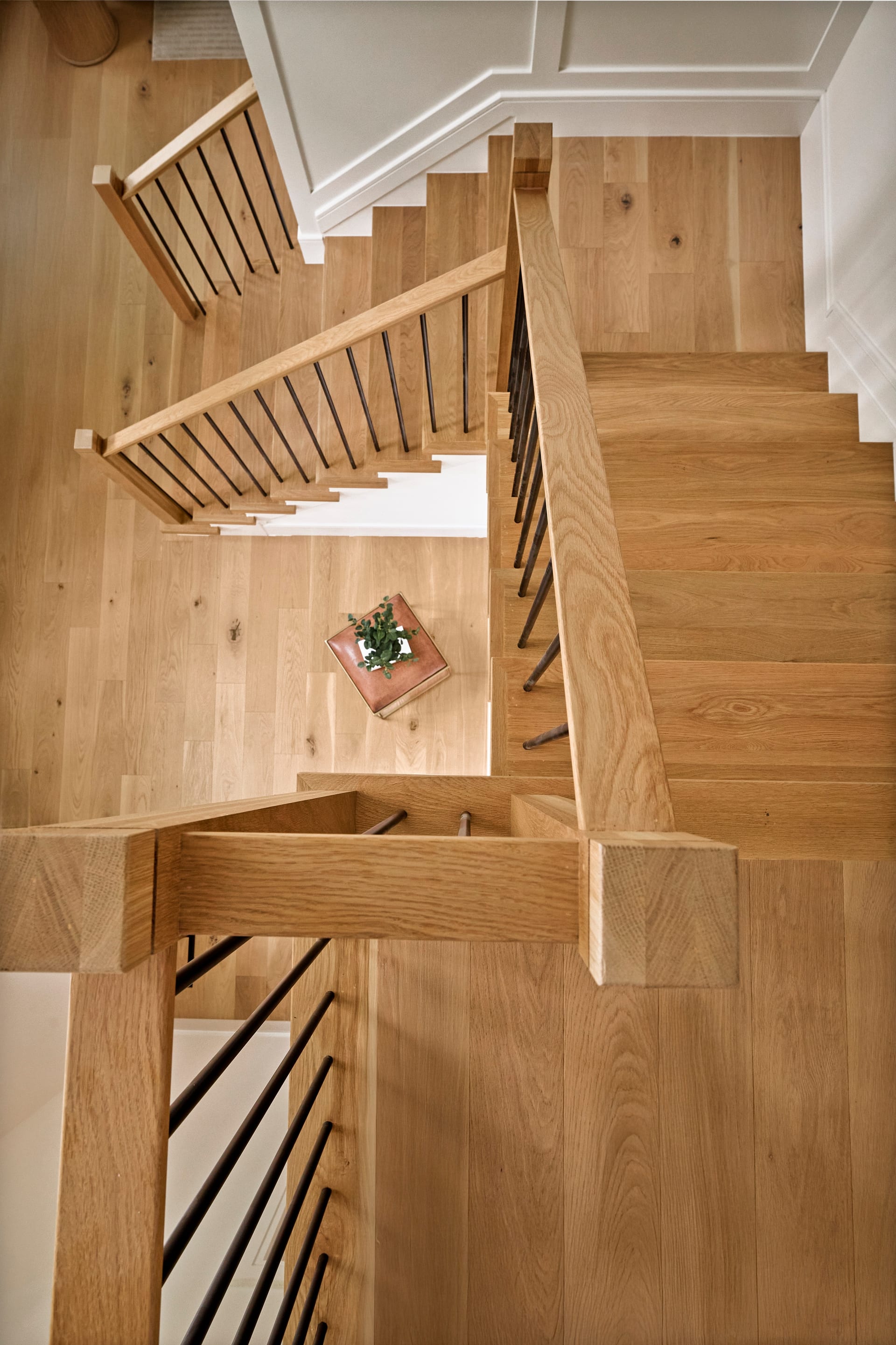
The building provides foreground long before the furniture does. A column, a wall return, the reveal of a deep window, the lip of a kitchen island, the rise of a stair tread: these are architectural elements that live in the near plane. Positioning the camera so one of them enters the frame creates immediate depth without adding a single prop. For builders and architects, this approach has the added virtue of celebrating the structure rather than the styling.
Shoot Through a Threshold
Composing from inside one room, looking into another through a doorway, turns the frame of the opening into a natural foreground layer. The darker edges of the near room hold the eye briefly before releasing it into the lit space beyond. This layering is one of the most dependable ways to suggest the sequence of a plan and the way rooms relate to one another.
Let Light Fall Near
A pool of light or a cast shadow in the immediate foreground can anchor an image as effectively as any object. A rug of sunlight across the floorboards closest to the camera gives the eye something to read before it moves deeper. Here the foreground is not a thing at all but an event of light, and it costs nothing to arrange beyond patience.
The nearest plane is where a photograph decides whether it will be a document or an invitation.

The Height and Angle of the Camera
Foreground is as much about camera position as it is about what sits in the frame. Lowering the camera brings the floor plane forward and increases the presence of anything resting on it. Raising it pushes the foreground down and opens the view across the room. Neither is correct in the abstract; each serves a different reading of the space.
For interiors, a camera height around the level of a seated person often balances the two, giving the foreground enough weight to establish depth while keeping the proportions of the room honest. In hospitality photography, where the aim is to convey atmosphere and the feeling of arrival, a slightly lower vantage can make a lobby or lounge feel more enveloping, placing the viewer within the space rather than above it.
Keeping the Foreground Sharp
Depth only works when the near plane is rendered clearly. A foreground that drifts out of focus can read as an accident rather than a decision. In architectural and interior work, where sharpness across the frame is the standard, this usually means a smaller aperture and careful attention to the plane of focus. The foreground should feel deliberate, present, and resolved, not like something the lens happened to catch.
A Discipline of Looking
Learning to see foreground is largely a matter of attention. Before setting the tripod, it helps to ask what sits closest to the camera and whether it is doing any work. Often a small shift, a step to the side, a few inches lower, a slight turn of the frame, brings an overlooked element into the near plane and transforms a flat composition into a layered one.
For design professionals reviewing a set of images, the foreground is a useful diagnostic. When a photograph feels distant or inert, the cause is frequently an empty near plane. Naming the problem makes it solvable, and the solution is almost always already present in the room.
If you are preparing to photograph a completed project or a space you want seen with depth and intention, we would be glad to talk it through with you at Matthew Lekker Photography.
Add us as a preferred source on Google
Add as preferred source