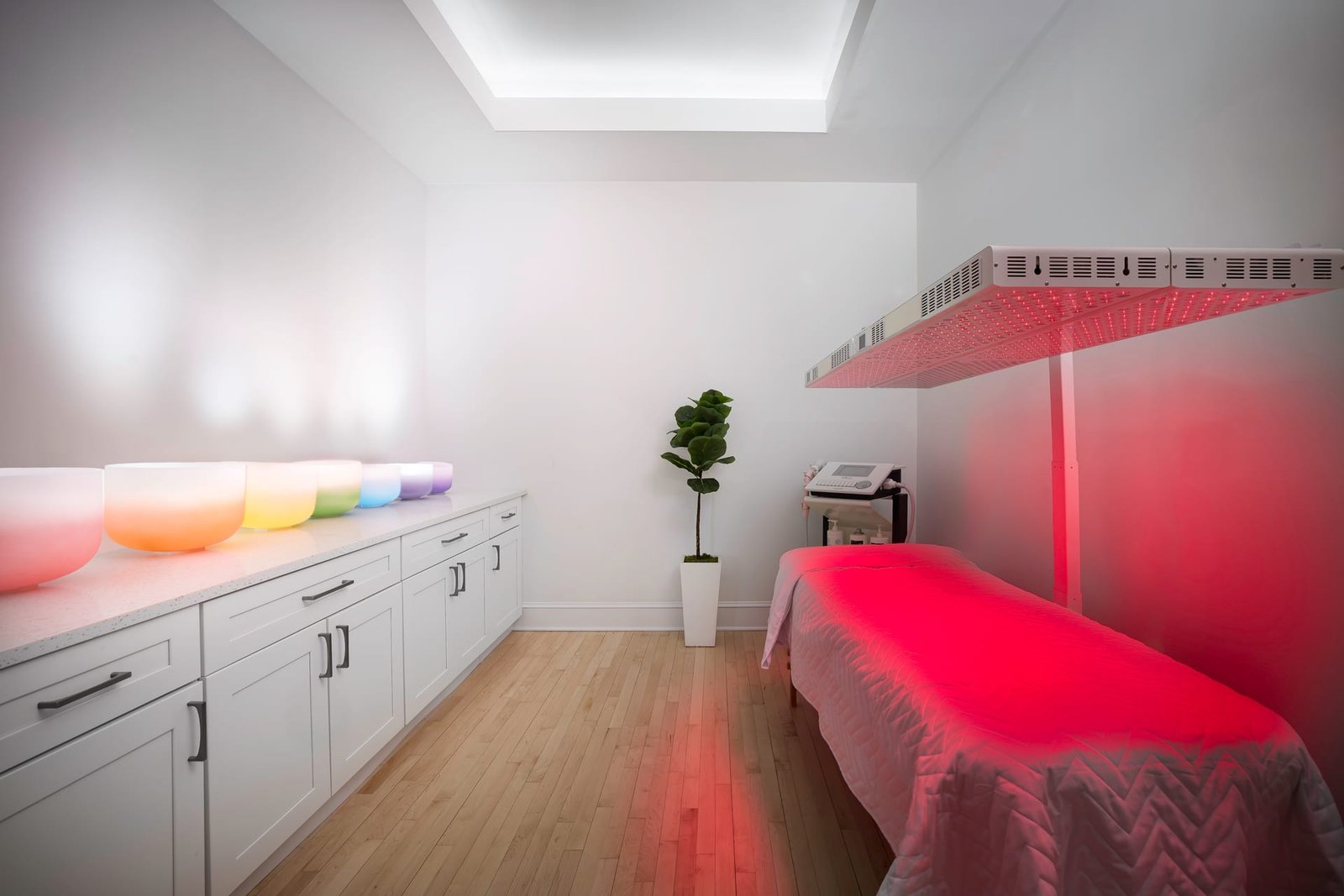
Where Two Materials Agree
Every considered interior is a conversation between materials. Stone meets timber, brass meets plaster, polished concrete gives way to wool. These meetings are rarely accidental. They are the places where a designer’s judgment is most exposed, where a builder’s craft is tested, and where the character of a room is quietly decided. In architectural photography, the junction between two materials is often more telling than either material on its own.
We tend to photograph surfaces as fields: a wall, a floor, a counter. But the eye, in a real room, is drawn to transitions. It settles on the line where the oak cabinet meets the marble top, on the reveal where plaster steps back from steel. These edges carry information about proportion, intention, and tolerance. Learning to see and frame them is a discipline worth developing, whether you commission photography or create the spaces being photographed.
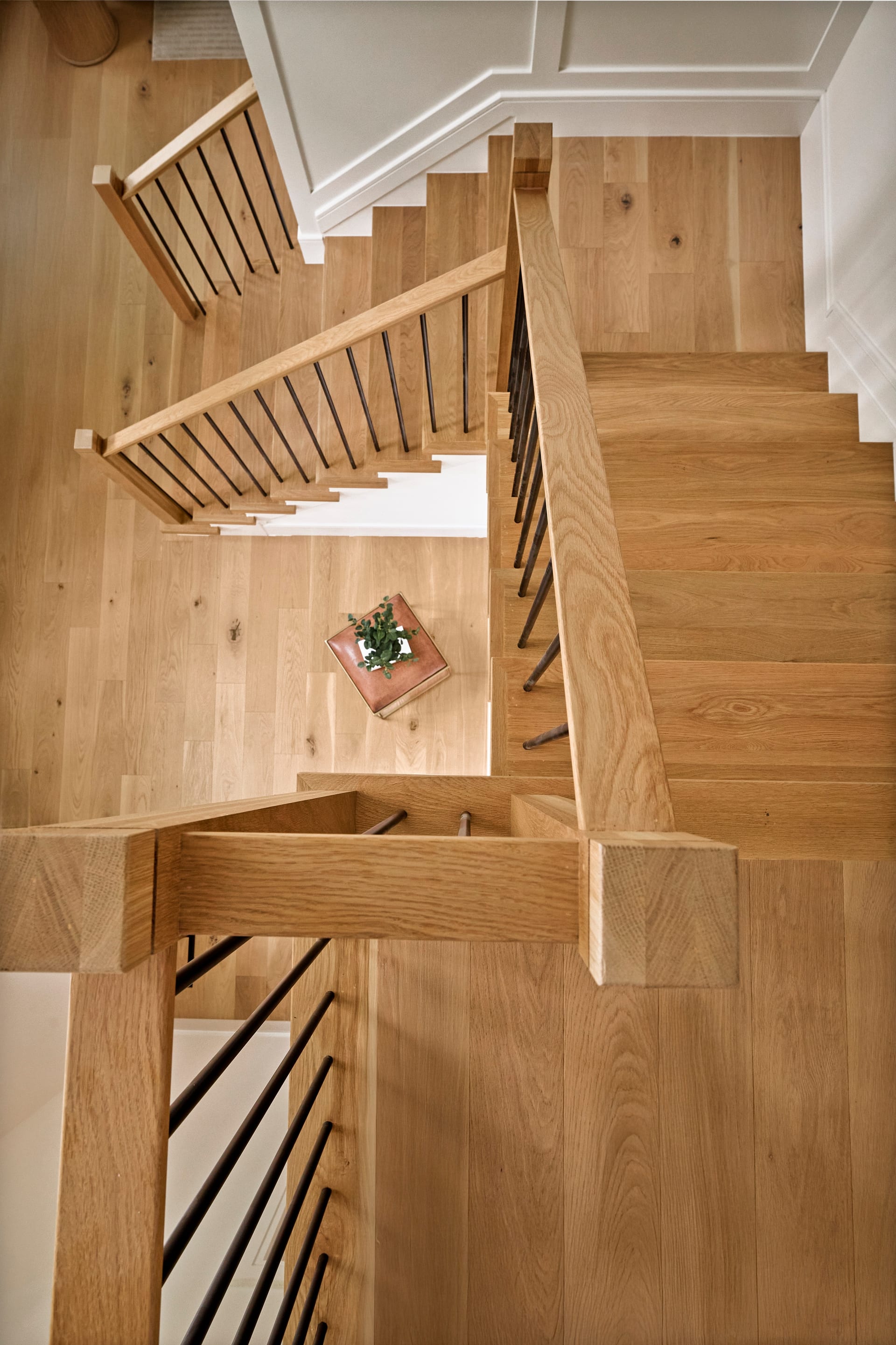
Why Junctions Matter More Than Surfaces
A single material can be beautiful, but it says little about design. It is the relationship between materials that reveals decisions. A generous shadow gap signals confidence. A mitred corner speaks of precision. A flush threshold between two floor finishes suggests budget and care were spent where they would be felt rather than merely seen.
For design professionals, these details are the argument. When an architect specifies a particular detail at a junction, that choice is the whole point of the drawing. When a photograph ignores it, the work is represented but not understood.
The junction between two materials is often more telling than either material on its own.
This is why interior photography benefits from a photographer who reads a space the way its maker did. The question is not simply what is in the room, but how the pieces were brought together, and whether the camera can make that legible to someone who was never on site.
The Three Kinds of Meeting
Most material junctions fall into one of three categories, and each asks for a different photographic response.
- The flush meeting, where two surfaces sit in the same plane. Here the drama is in the line itself—its straightness, its tightness, the slight difference in reflectance between the two materials.
- The stepped meeting, where one material sits proud of another, creating a reveal or shadow gap. This junction lives on light; the gap only reads when the illumination rakes across it.
- The overlapping meeting, where one material laps or returns over another, as in a stone countertop with a thick mitred edge. This junction has mass and depth, and benefits from an angle that shows its thickness.
Identifying which kind of junction you are photographing determines everything that follows: the direction of light, the choice of lens, the distance of the camera.
Light Is the Real Subject
Materials announce themselves through light. Matte plaster absorbs it. Polished stone returns it. Brushed metal scatters it in one direction. Wood holds it warmly and reveals its grain only at certain angles. When two materials meet, their differing relationships with light are what make the junction visible.
This has a practical consequence. Flat, frontal light tends to erase junctions, flattening the distinction between surfaces and collapsing the shadow gaps that give a detail its character. Raking light, arriving at a low angle across the surface, does the opposite. It lifts texture, deepens reveals, and separates one material from its neighbor.
The craft lies in finding the angle of light that honours both materials at once. Light that flatters the stone may deaden the timber. The photographer’s task is to balance these demands, sometimes with the natural light available, sometimes by shaping it, so that neither material is lost and the line between them stays honest.
On Reflectance and Honesty
There is a temptation to make every surface sing—to push the gloss, deepen the grain, and heighten the contrast until the materials look richer than they do in person. This serves no one. A designer who sees a photograph that overstates a finish will be disappointed on site, and so will their client.
A photograph that overstates a finish betrays the very craft it was meant to celebrate.
The goal is fidelity: a rendering of how the materials actually behave in the room’s own light. A good photograph of a material junction should feel like standing close to the detail, not like a product advertisement. For boutique hotels and residential clients alike, this honesty is what builds trust over time.
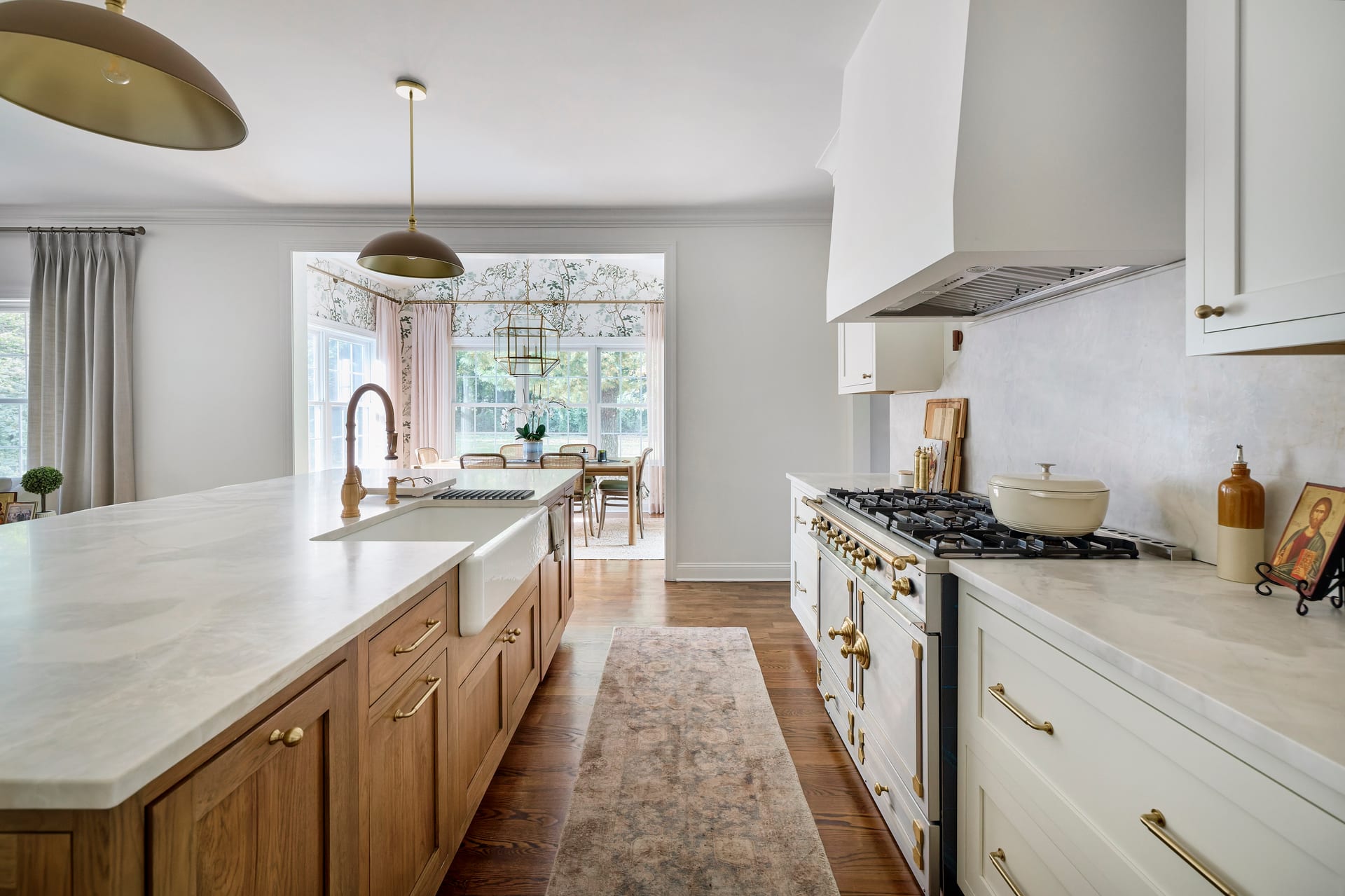
Composing the Junction
Once you have seen the meeting and understood its light, the composition becomes a question of emphasis. A few principles help.
- Let the junction lead the frame. Where two materials meet, the line they form is a natural compositional axis. Align it deliberately—running it along a third of the frame, or letting it travel from one corner toward another—rather than leaving it to land by accident.
- Give each material room to be itself. A junction read in isolation can feel abstract. Including enough of each surface allows the viewer to identify the materials before appreciating their meeting.
- Mind the depth. Overlapping and stepped junctions have thickness. A slight angle, rather than a dead-on view, lets that depth register and keeps the image from flattening.
- Consider the scale of the detail. A wide frame tells the room’s story; a close frame tells the maker’s. A thoughtful set of images often needs both, moving from the general to the particular.
What This Asks of the Space
Photographing junctions well begins before the camera arrives. A dusty shadow gap, a smeared mitre, or a misaligned reveal will be magnified by close attention. For builders and designers preparing a space for architectural photography, the detail shots reward the same care given to the overall staging.
It helps to walk the space in advance and note the junctions you are most proud of—the places where the work resolved beautifully. These are the moments worth protecting during the final clean and worth flagging to your photographer. A junction that took three site visits to get right deserves to be photographed as if it mattered, because it did.
The Quiet Reward
Clients rarely ask for photographs of where materials meet. They ask for the kitchen, the lobby, the master suite. Yet it is often the detail of a junction that lingers, the image that makes a prospective client lean in and understand that this was a space made with intention. These photographs do quiet work, establishing credibility through evidence of care.
Reading how finishes meet is a way of reading the whole project in miniature. The discipline that governs a single junction tends to govern the entire space, and a photograph that captures one well suggests everything else was handled with the same attention.
If you have a project where the meeting of materials deserves to be seen clearly, I would welcome the chance to photograph it with you.
Add us as a preferred source on Google
Add as preferred source