The Plane Nearest the Camera
Most conversations about composition begin with the subject and work backward. We talk about the room, the facade, the view through the window. Yet the part of an image that often decides whether a space feels inhabited or merely documented is the one closest to the lens. The foreground is the first thing a photograph offers the eye, and it quietly sets the terms for everything behind it.
In architectural photography and interior photography alike, the foreground does more than fill the lower edge of the frame. It establishes where the viewer stands. It tells us how large the room is, how far the eye must travel, and whether we are being invited in or held at a respectful distance. A photograph with a considered foreground feels like a place you could walk into. One without it can feel like a surface pressed flat against the glass.
The foreground is the first thing a photograph offers the eye, and it quietly sets the terms for everything behind it.
Why the Front of the Frame Matters
Depth in a two-dimensional image is an illusion, and the foreground is one of the most reliable tools for building it. When the eye can read a near element, a middle distance, and a far plane, the brain assembles them into space. Remove the nearest layer and the image collapses toward the background, flattening the very dimensionality that makes a room feel real.
For design professionals, this matters because depth is what communicates the experience of a space rather than its mere inventory. A client does not simply want to know that a lobby contains a reception desk and a seating group. They want to feel the distance between the two, the generosity of the floor, the way the ceiling carries overhead. The foreground is where that journey begins.
Three Things a Foreground Can Do
- Establish scale. A chair, a table edge, or a doorway near the lens gives the eye a known quantity against which to measure everything beyond it.
- Create invitation. A visible threshold or a leading object draws the viewer into the frame rather than stopping them at its surface.
- Add material interest. A textured surface close to the camera rewards attention and signals craft before the eye has even reached the main subject.
Finding the Foreground in an Interior
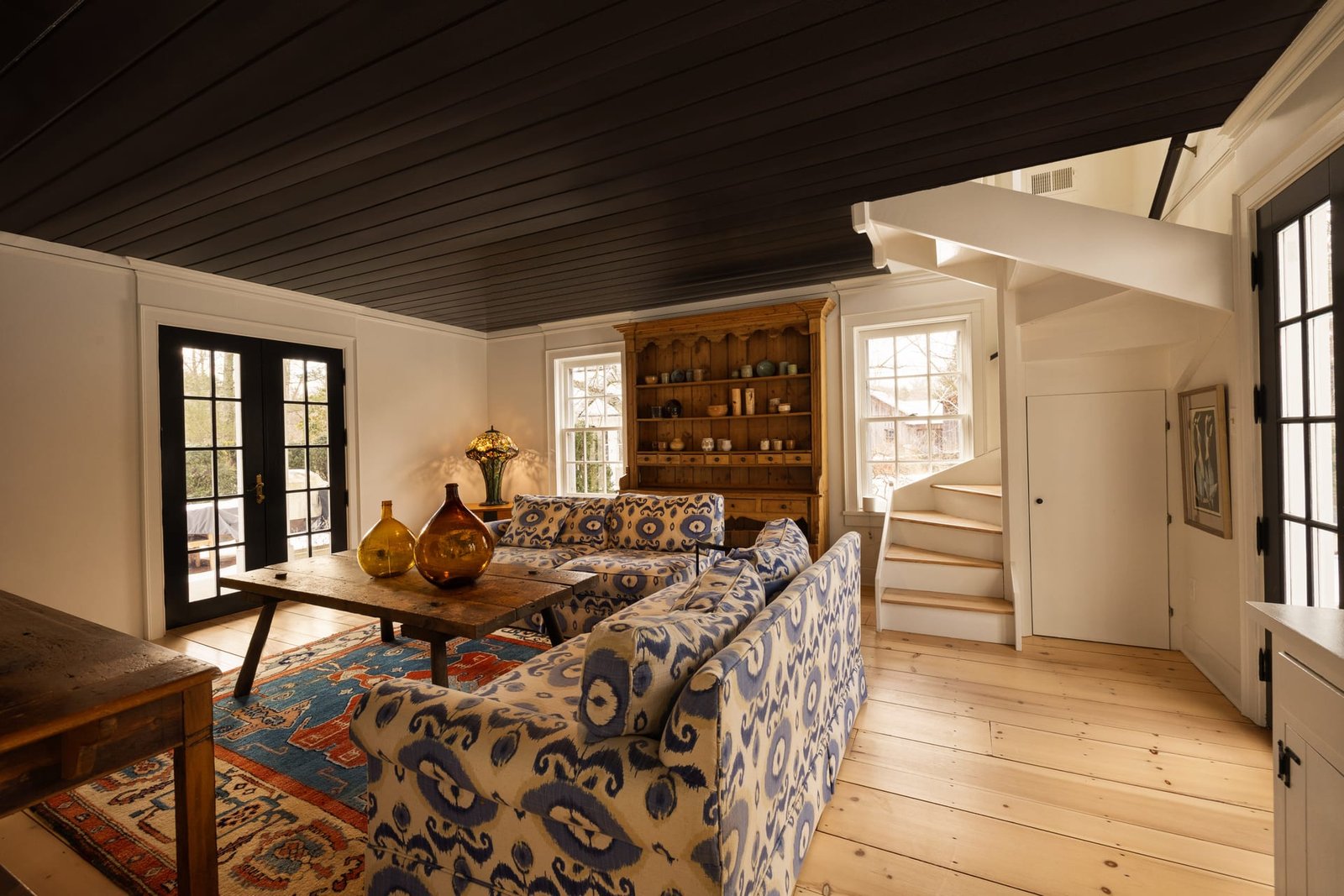
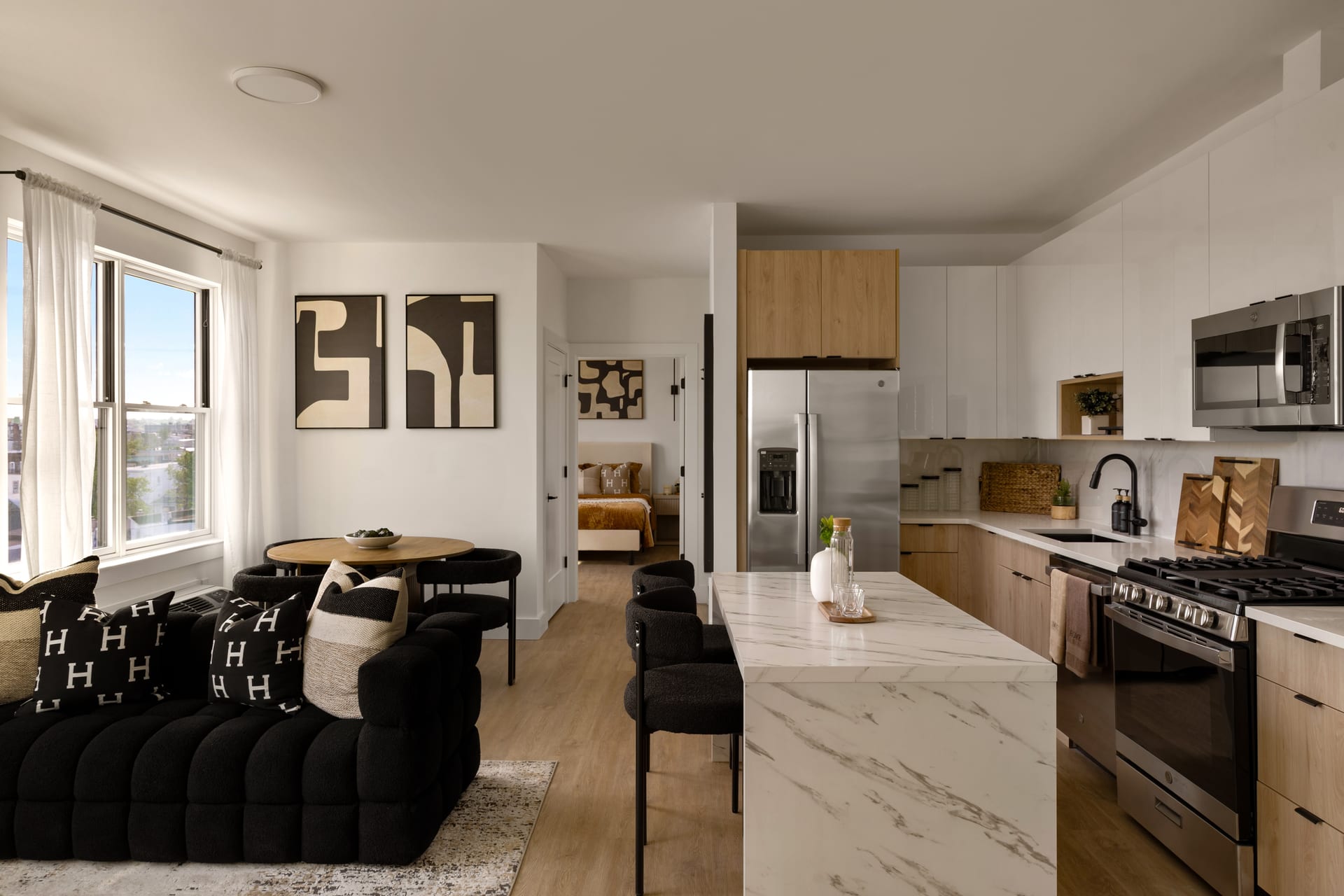
Interiors are generous with foreground opportunities, though the best ones rarely announce themselves. The corner of a dining table, the arm of a sofa, the edge of a kitchen island, the first tread of a staircase: these are the quiet anchors that give a room its sense of arrival. The goal is not to clutter the front of the frame but to let one or two elements establish the plane nearest the viewer.
There is a discipline here that design professionals will recognize from their own work. Just as a well-composed room needs a point of entry and a sense of hierarchy, a well-composed photograph needs a clear first note. The foreground should lead, not compete. When a near object overwhelms the subject behind it, the image loses its reason for being. When it supports the subject, the whole frame gains dimension.
A Note on Styling
The foreground is often where styling earns its keep. A stack of books, a bowl of fruit, a vase placed slightly off-center near the lens can transform a flat composition into one with layers. The caution is restraint. Styling at the front of the frame is amplified by proximity, so a prop that reads as thoughtful in the room can read as staged in the photograph. The most convincing foregrounds tend to be architectural rather than decorative: a column, a sill, a change in flooring, the geometry that was already there.
The Exterior Foreground
In architectural photography, the foreground often lives outside the building entirely. A paved approach, a low planting bed, a reflecting pool, or a boundary wall can carry the eye toward the facade while giving the structure room to be understood. The land in front of a building is part of its argument, and a photograph that acknowledges this reads as more complete than one that crops straight to the elevation.
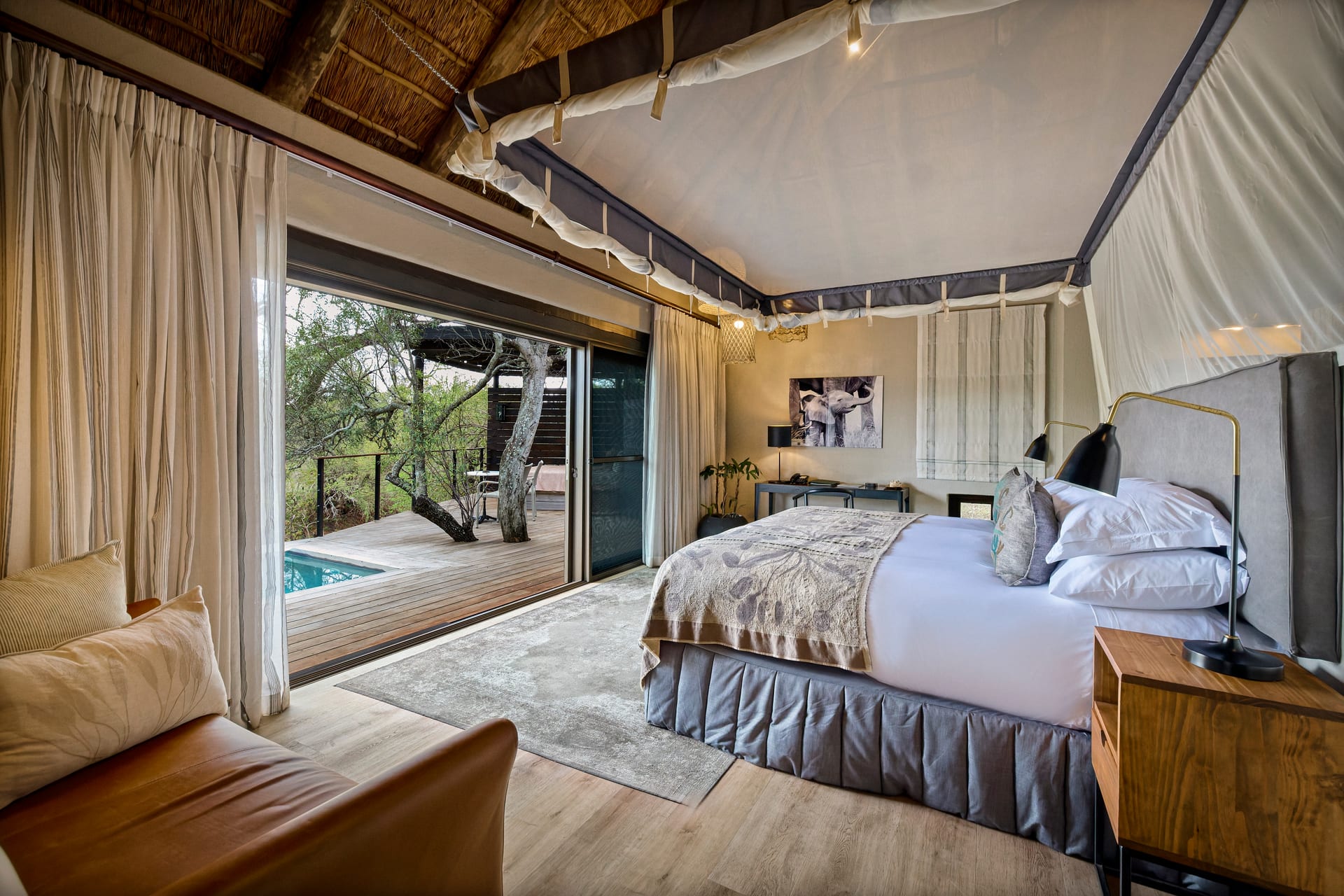
Landscape elements also soften the transition between the viewer and the architecture. A tree branch arcing into the top of the frame, a hedge grounding the lower edge, a path converging toward the entrance: each of these establishes the near plane and lends the building a sense of place. For builders and architects, this context is not decoration. It is the evidence that a structure belongs to its site.
Depth Without Distraction
The risk in foreground work is overreach. A busy front plane can fracture an image, pulling attention away from the subject and leaving the viewer unsure where to look. The remedy is hierarchy. One foreground element, clearly subordinate to the main subject, almost always outperforms several competing for the same attention.
One foreground element, clearly subordinate to the main subject, almost always outperforms several competing for the same attention.
It also helps to consider focus. A foreground rendered slightly softer than the subject can imply depth while keeping the eye where it belongs. In interior and architectural work, where sharpness across the frame is often the goal, this is a subtle decision rather than a dramatic one. A small softening at the very front can suggest distance without sacrificing the clarity that clients expect from a finished photograph.
Questions to Ask at the Camera
- What is the first thing the eye lands on, and is that intentional?
- Does the foreground give the viewer a sense of scale, or does it merely occupy space?
- Is the near element leading into the frame or blocking entry to it?
- Would the image feel flatter without this foreground, or simply cleaner?
The Foreground as a Form of Hospitality
For hoteliers in particular, the foreground carries an emotional charge. The front of the frame is where a guest imagines themselves standing. A warm, legible foreground in a lobby or suite does the work of invitation, making the viewer feel they have already crossed the threshold. This is less a technical matter than an experiential one, and it is where thoughtful composition earns its place in a marketing image that must sell a feeling as much as a room.
Across every discipline, the lesson is the same. The foreground is not the leftover space beneath the subject. It is the entrance to the photograph, the place where depth, scale, and invitation are all decided in the first inch of the frame.
If you are preparing to photograph a project and want images with genuine depth and considered composition, we would be glad to hear from you at Matthew Lekker Photography.
Add us as a preferred source on Google
Add as preferred source