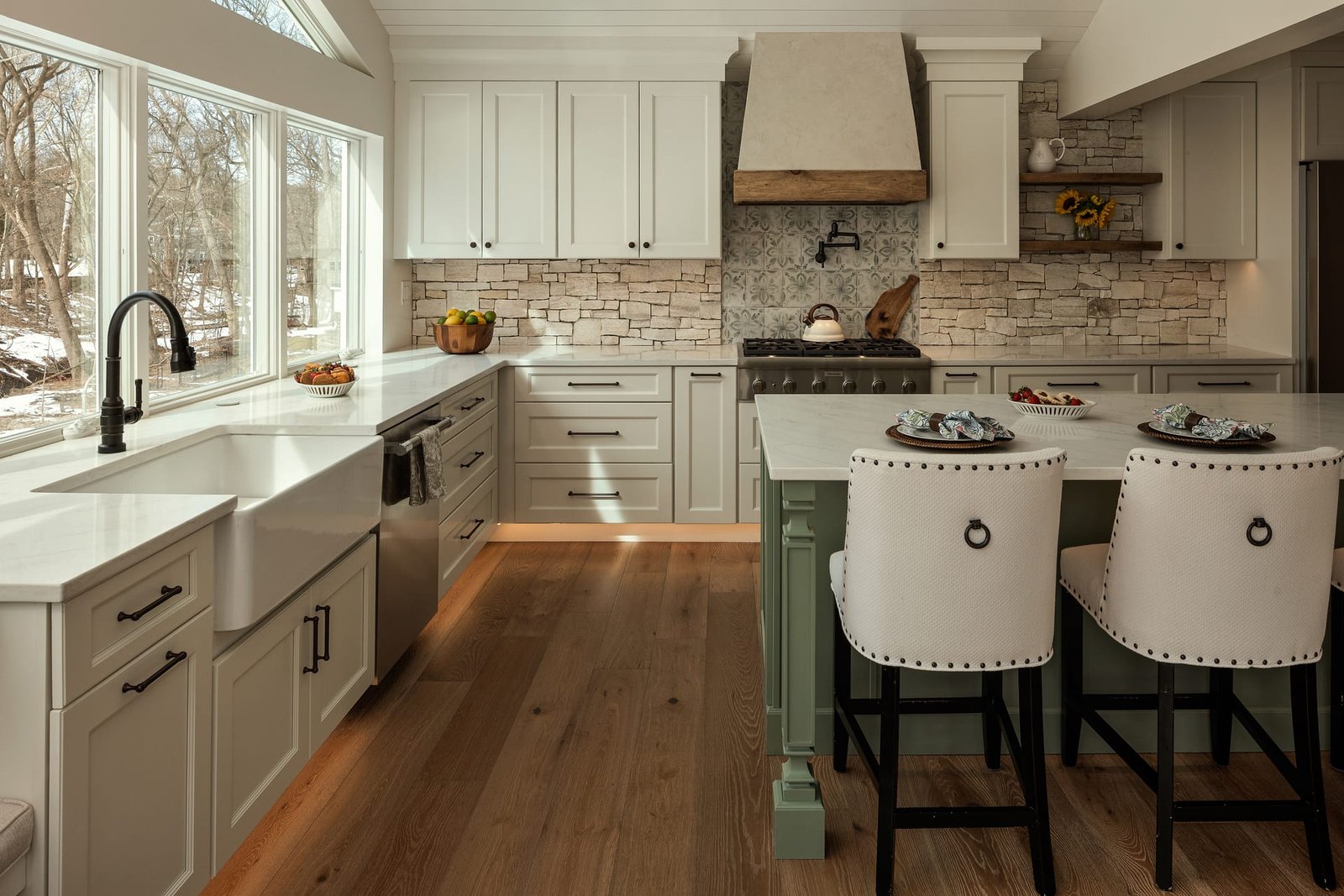
The Reflection: Working With Glass and Mirror
Few surfaces test a photographer the way glass and mirror do. They are among the most desirable materials in contemporary design, prized for the way they open a room, borrow light, and dissolve the boundary between inside and out. Yet in front of the lens they behave unpredictably. A mirror can double a room or expose the camera and everyone standing behind it. A glazed facade can vanish into sky or turn opaque with glare. For architects, interior designers, and hoteliers whose work depends on these materials, understanding how reflection reads in a photograph is not a technical footnote. It is central to whether the finished image honours the space.
This is a subject where the difference between a competent frame and an accomplished one is often invisible until you look closely. Good architectural photography treats reflection as a design element to be composed, not a problem to be avoided.
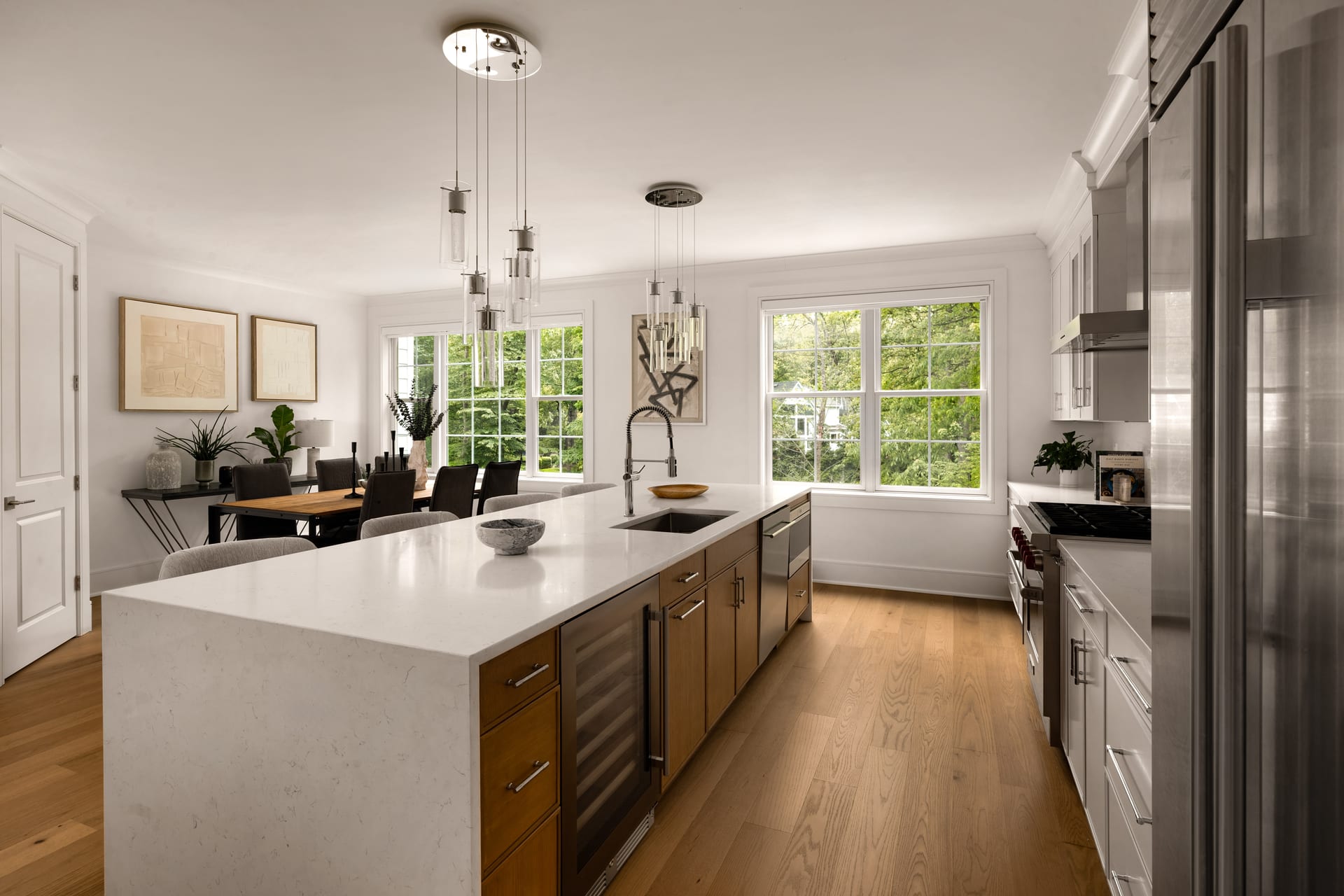
Why Reflective Surfaces Are Difficult
Glass and mirror do not have a fixed appearance. Their look depends entirely on the angle of view and the light falling on them at that moment. A window that appears crystal clear from one position becomes a wall of reflected trees from another. This mutability is what makes them beautiful in a building and demanding in a photograph.
Three challenges recur across almost every shoot involving reflective materials:
- The camera appears in the frame. Point a lens at a mirror or a dark pane and, more often than not, the camera and tripod stare back.
- Glare overwhelms detail. A bright reflection can blow out a surface entirely, erasing the texture of a bathroom tile or the depth of a glazed corridor.
- The eye loses the plane. Without careful handling, glass reads as ambiguous. The viewer cannot tell whether they are looking through a window, at a reflection, or at a solid surface.
A mirror can double a room or expose the camera and everyone standing behind it.
None of these are reasons to shy away from reflective spaces. They are reasons to approach them with intention.
Composing to Control the Reflection
Choosing the angle first
The single most effective tool for managing reflection is the position of the camera. Before adjusting a light or reaching for the software, the photographer moves. A slight shift in height or lateral position changes what a mirror shows and how a glazed surface catches the light. In interior photography, this often means finding the angle where a mirror reflects something worth seeing, an adjacent window, a considered vignette, a run of cabinetry, rather than the tripod or an untidy corner.
With large mirrors in particular, the goal is to make the reflection contribute to the composition. A well-placed mirror can reveal a part of the room the main frame cannot reach, deepening the sense of space. That only works when the reflected content has been chosen as deliberately as everything else in the frame.
Reading glass against its background
Glazed facades and internal glass partitions behave according to the balance of light on either side. When the interior is brighter than the exterior, glass turns transparent and shows what lies behind it. When the exterior dominates, the same glass becomes a mirror of the sky. Controlling this balance is essential to architectural photography of contemporary buildings, where glass often defines the entire elevation.
This is one reason twilight shoots work so well for glazed structures. As exterior light falls, interior lighting takes over, and windows shift from reflective to revealing. The building begins to glow from within, and the glass finally does what the architect intended, connecting inside and out rather than hiding one from the other.
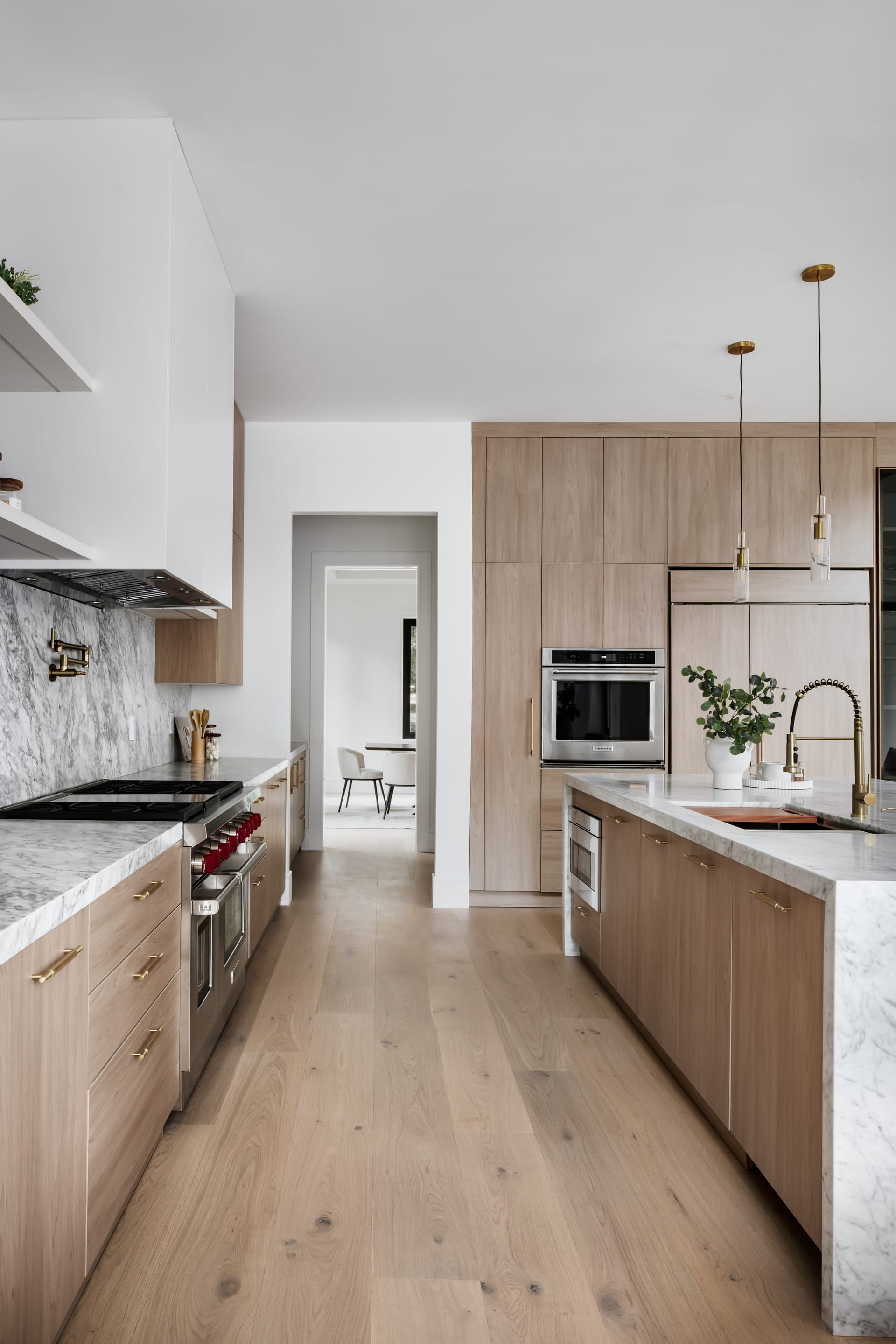
Light and the Reflective Surface
Managing reflection is inseparable from managing light. A polished floor, a lacquered surface, a framed artwork under glass, all of these are minor mirrors, each capable of catching a light source and throwing it back into the frame as a distracting hot spot.
The considered approach is to light indirectly wherever possible. Bouncing light off a ceiling or wall softens its reflection and spreads it evenly, rather than leaving a sharp point of glare. When a direct source is unavoidable, its position is chosen so that any reflection falls outside the frame or lands where it reads as intentional highlight rather than accident.
Good architectural photography treats reflection as a design element to be composed, not a problem to be avoided.
For interior designers, this has a practical consequence worth noting. The materials that photograph most gracefully are often those with a degree of texture or a satin finish rather than a full gloss. This is not an argument against high-gloss specification, which has its own justified place, only a reminder that such surfaces ask more of the photography and benefit from being shot with care.
Mirrors as a Design Story
In hospitality and residential interiors, mirrors are frequently the most expressive element in a room. A large statement mirror above a fireplace, a mirrored bar back, a run of reflective panelling in a lobby, these are deliberate design gestures, and the photography should treat them as such.
The most effective images of mirrored spaces do two things at once. They show the mirror as an object, framed and lit as a feature, and they use its reflection to tell a fuller story of the room. A single frame can then hold both the direct view and its reflected counterpart, giving a sense of the whole interior that a straight-on shot could never achieve.
What to watch for
- Continuity of tone. The reflected portion of a frame should sit comfortably within the exposure of the whole, neither noticeably darker nor brighter.
- Honest representation. Reflections should never distort the geometry of a space in a way that misleads. The image must remain true to how the room feels to stand in.
- Clean edges. Where a mirror meets a wall or ceiling, the join should read cleanly, so the eye understands the plane it is looking at.
A Note for Realtors and Builders
For property photography, reflective surfaces are often unavoidable and frequently unflattering when handled casually. Bathrooms, in particular, combine mirrors, glazed shower screens, and polished tile in a small space, a difficult trio. The solution is rarely to hide these features. It is to photograph them from angles that keep the camera out of the mirror, control the glare on the screen, and let the finish of the tile read as an asset. Done properly, a reflective bathroom becomes one of the most compelling images in a set rather than the weakest.
Turning Difficulty Into Advantage
Reflection rewards patience. The surfaces that are hardest to photograph are often the ones that make a space memorable, and the images that handle them well carry a quiet authority. A mirror used to extend a room, a glazed wall caught at the moment it turns transparent, a polished floor lit to gleam without glare, these are the marks of photography made with attention rather than haste. For anyone whose work relies on glass and mirror, that attention is what allows the material to speak on its own terms.
If you have a project where reflective surfaces are central to the design, I would be glad to discuss how to photograph it well, so please get in touch with Matthew Lekker Photography.
Add us as a preferred source on Google
Add as preferred source