The Line That Holds Everything Together
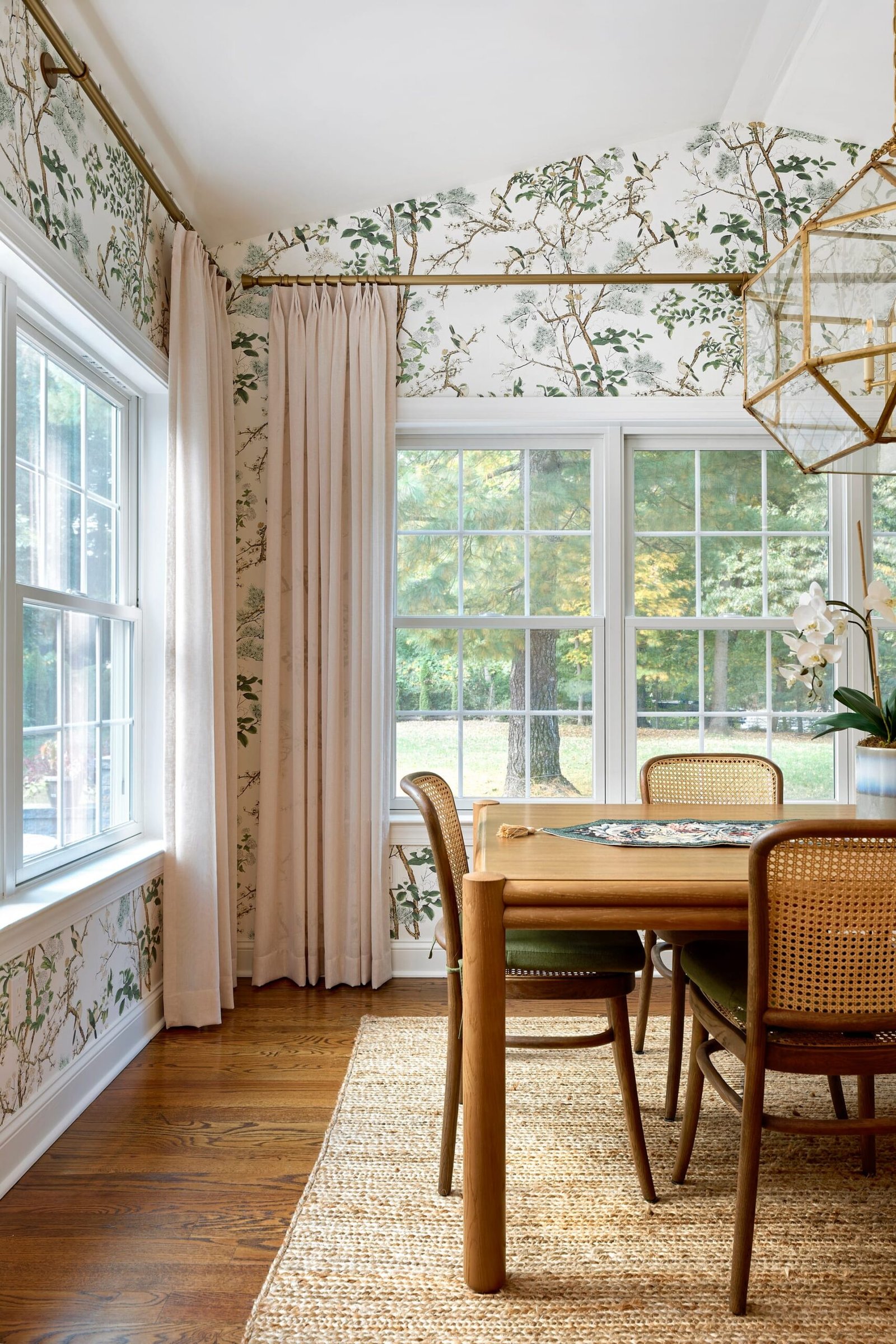
There is a quality in the strongest architectural photography that most viewers feel before they can name it. A building stands upright on the page. Walls rise cleanly. Doorframes read as parallel, columns hold their bearing, and the whole image carries a sense of stability that mirrors the structure itself. This quality rarely announces itself, and that is precisely the point. When vertical lines are true, they disappear into the composition. When they lean, the entire frame quietly loses its footing.
For architects, interior designers, and builders, this is not a technical curiosity. It is the difference between an image that honours the discipline of a design and one that undermines it. A carefully proportioned facade photographed with converging verticals looks as though it is toppling backward. A well-considered room shot with tilted walls feels unsettled, no matter how beautiful the furnishings. The line is doing structural work in the photograph, just as it does in the building.
Why Verticals Converge
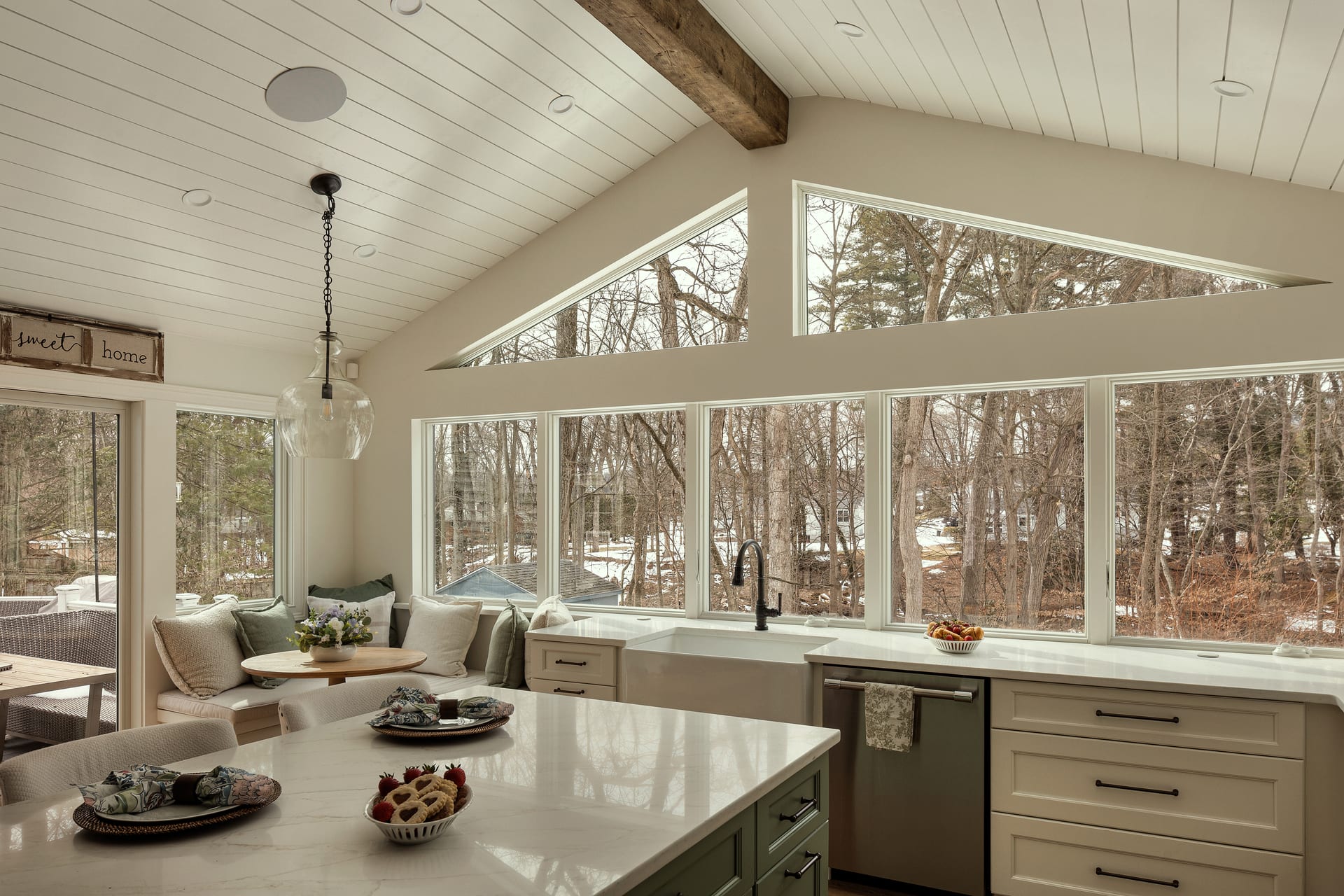
The problem begins with the simple act of pointing a camera upward. When a lens tilts to take in the top of a building or the height of a ceiling, the sensor is no longer parallel to the surface being photographed. Lines that are genuinely vertical begin to lean toward one another, meeting at an imagined point somewhere beyond the frame. The taller the subject and the closer the camera, the more dramatic the convergence.
This is a matter of geometry rather than skill, which is why it catches so many well-intentioned photographs. A phone held up to capture a tall entrance, a wide shot taken from a doorway to show a full room, a facade recorded from the pavement below: each invites the same distortion. The eye, generous and forgiving, tends to correct for this when we stand in a space. The camera does not.
When vertical lines are true, they disappear into the composition; when they lean, the entire frame quietly loses its footing.
The Craft of Keeping Lines True
Correcting for convergence is one of the defining habits of considered architectural and interior photography. There are several approaches, and the best work often combines them with restraint.
Keeping the Camera Level
The most reliable method is also the most disciplined: keep the camera’s sensor perfectly vertical, parallel to the face of the building or wall. When the camera is level, verticals stay vertical. This often means positioning the camera at roughly the midpoint of the subject’s height, so that the frame captures top and bottom equally without tilting. In interiors, this frequently places the camera lower than instinct suggests, which has the added benefit of giving floors and furniture a natural, grounded presence.
Shifting Rather Than Tilting
When a subject is too tall to fit with the camera level, the refined solution is to shift the perspective rather than tilt the whole camera. Tilt-shift lenses and technical cameras allow the lens to move relative to the sensor, raising the field of view without changing the camera’s angle. This keeps verticals true while still including the upper reaches of a facade or a soaring ceiling. It is a slower, more deliberate way of working, and it rewards buildings whose proportions deserve to be recorded faithfully.
Correcting in Post-Production
Perspective can also be adjusted after the fact, and used judiciously this is entirely legitimate. Modern software can straighten converging verticals with precision. The caution here is one of proportion: aggressive correction stretches the upper portion of an image and can leave a building looking unnaturally elongated or a room strangely compressed. The most convincing results come when the frame is captured close to correct and post-production refines rather than rescues it.
When to Let a Line Lean
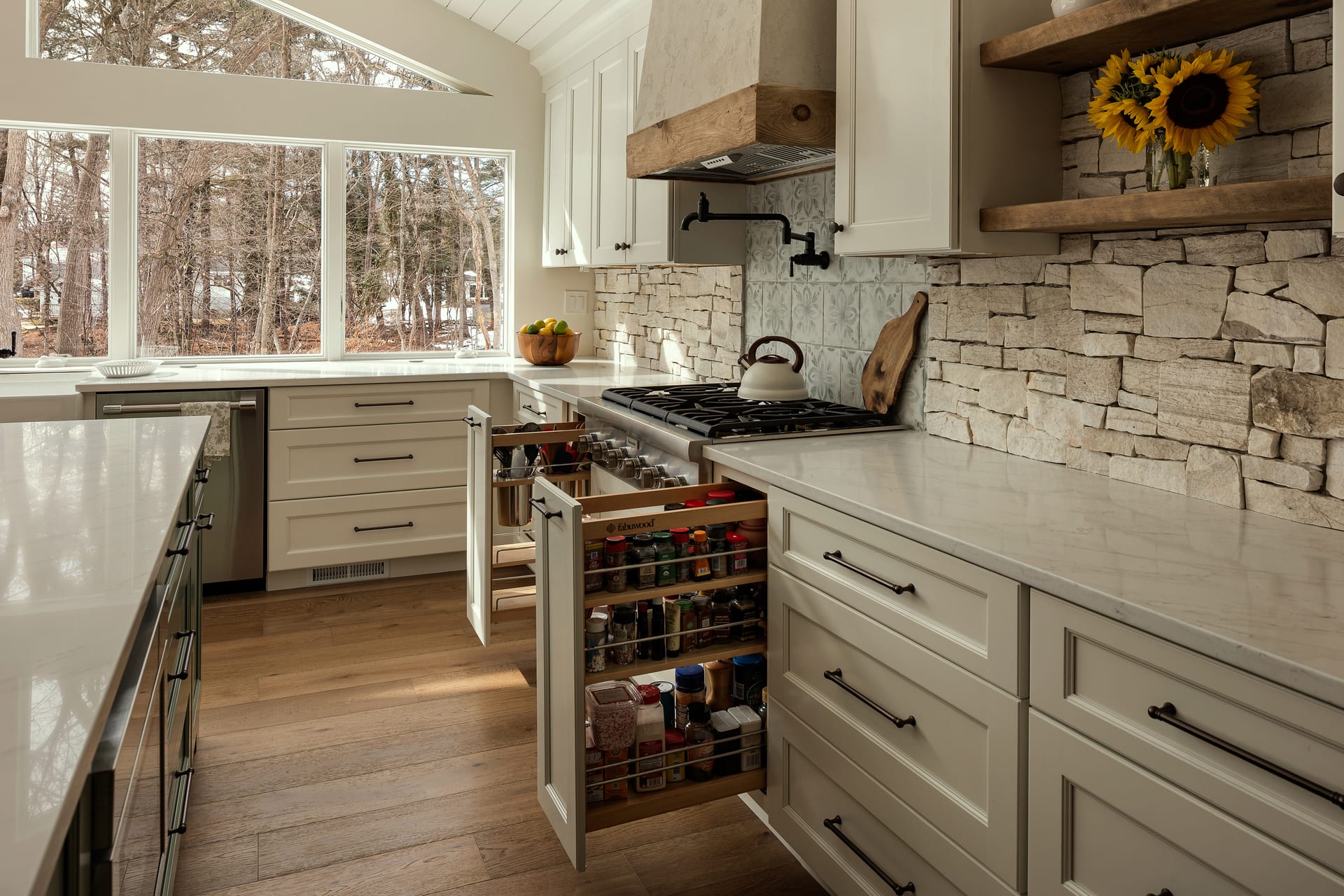
Discipline is not dogma. There are moments when converging verticals serve the image rather than betray it. A deliberate upward view of a stairwell, a dramatic look along the underside of a cantilever, a composition that celebrates height by leaning into it: these can be powerful precisely because they abandon the level plane with intent. The distinction is between distortion that happens by accident and perspective chosen for effect.
The professional judgement lies in knowing which is which. A leaning line that looks like a mistake reads as carelessness. A leaning line that clearly belongs to a bold, considered angle reads as confidence. The former weakens a portfolio; the latter can anchor it.
The distinction is always between distortion that happens by accident and perspective chosen with intent.
What This Means for Design Professionals
Understanding vertical discipline changes how you evaluate the images made of your work, and how you brief a photographer to make them. When reviewing a set of photographs, it is worth training the eye to check the edges of the frame, the door jambs, the window mullions, the corners where walls meet. If these lines run true, the image carries authority almost automatically.
A few practical considerations are worth carrying into any commission:
- Tall or narrow spaces, such as atriums, stairwells, and slender facades, demand particular attention to vertical correction and often benefit from shift technique.
- Interiors photographed to sell or let, from residential listings to boutique hotel rooms, look markedly more considered when walls stand upright rather than lean into the frame.
- Wide shots that show a full room are the most vulnerable to convergence, because they tempt the camera to tilt in order to include more.
- Post-production correction is a tool, not a cure, and the strongest results begin with a camera positioned thoughtfully in the space.
For hoteliers and realtors in particular, the stakes are commercial as much as aesthetic. A guest or a buyer forms an impression in seconds, and a subtly toppling wall introduces a note of unease that no amount of styling can fully settle. Keeping lines true is a quiet form of trust: it tells the viewer that the space is exactly as steady and well made as it appears.
The Discipline Behind the Calm
What makes vertical control worth discussing at length is how invisible it is when done well. Nobody looking at a finished photograph should think about the geometry that holds it upright. They should simply feel that the building is dignified, that the room is composed, that the design has been treated with respect. That feeling is the accumulated result of dozens of small decisions made before the shutter ever opens: where to stand, how high to place the camera, whether to shift or to level, how far to carry a correction.
In architectural and interior photography, the vertical line is the spine of the image. Attend to it, and everything else, light, styling, composition, has something honest to stand on.
If you are preparing to photograph a project and want images built on lines that stand true, I would welcome a conversation with Matthew Lekker Photography.
Add us as a preferred source on Google
Add as preferred source