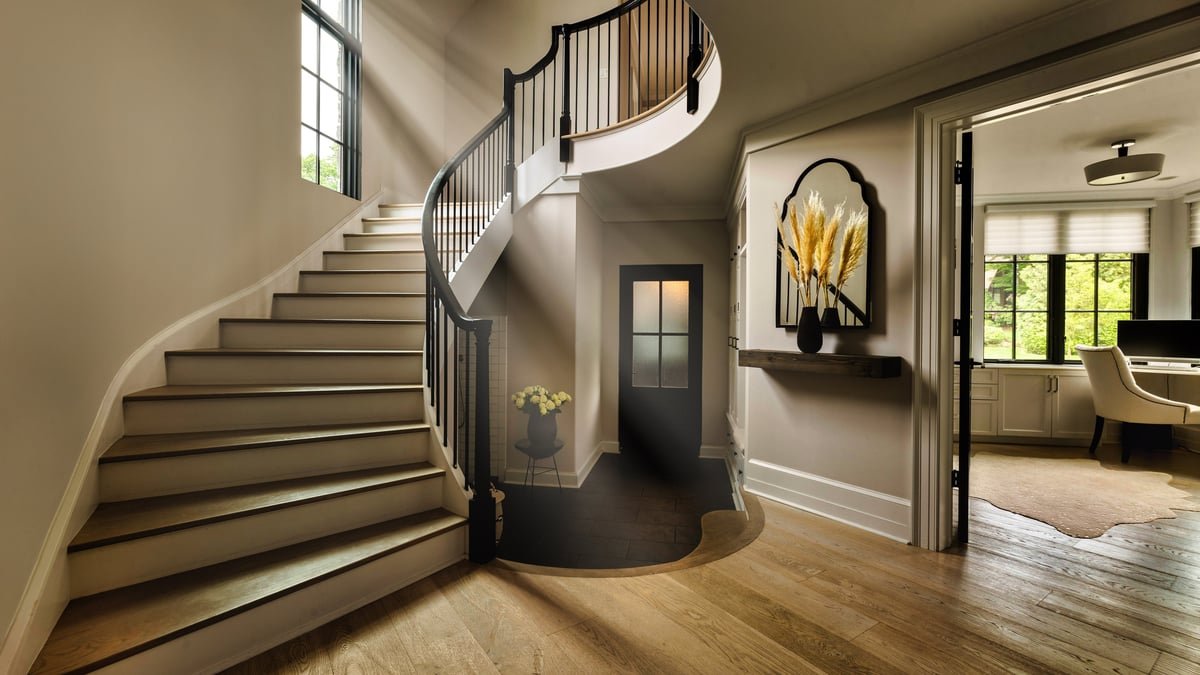
Every design project ends the same way: the last chair is placed, the final light fixture is adjusted, and the room settles into its intended stillness. For most designers, that moment marks completion. In truth, it is the beginning of the work’s second life, the life it will lead in portfolios, proposals, and pitches. How that room is captured determines how convincingly it will speak to the next prospective client. This is where professional interior photography quietly becomes one of the most valuable investments a design practice can make.
Your Work Is Only as Persuasive as Its Documentation
Prospective clients rarely experience a completed space in person before hiring you. They meet your work through images, on your website, in a printed portfolio, across social platforms, and within the proposals you send. In each of these settings, the photograph is standing in for the room itself. If the image is flat, dim, or hastily shot on a phone, it undersells months of thoughtful decisions. If it is considered and precise, it communicates competence before a single word is spoken.
Professional interior photography does more than record a space. It translates spatial experience into a two-dimensional frame, preserving the proportion, light, and atmosphere that made the project succeed. That translation is a craft in itself. An experienced architectural photographer understands how a room reads through a lens, how to manage the balance between window light and interior lighting, and how to keep vertical lines true so the architecture feels grounded rather than distorted.
Trust Is Built Before the First Meeting
Design is a relationship built on trust. A client is inviting you into their home, their business, or their hospitality venture, and they are asking you to make decisions that carry real financial and emotional weight. Long before you sit across from them, they are forming impressions of whether you can be trusted with that responsibility.
Polished imagery signals a certain standard. When your portfolio is consistent, well lit, and carefully composed, it suggests that the same rigor extends to your process, your detailing, and your project management. Clients read professionalism in the photography and extend that assumption to the work itself. Inconsistent or amateur images do the reverse, introducing doubt that no amount of talent on the page can fully overcome.
What Clients Notice, Even Unconsciously
- Whether the images feel cohesive as a body of work or assembled from mismatched sources
- Whether spaces appear balanced and true, or subtly warped and off-kilter
- Whether the mood of a room comes through, or the photograph feels clinical and empty
- Whether the detailing you labored over is actually visible and celebrated
These signals rarely rise to conscious critique. They register as a feeling, a sense that a practice is either serious and established or still finding its footing. Interior photography shapes that feeling with remarkable efficiency.
Better Images Attract Better Clients
The quality of your visual presentation does not only affect whether you win clients. It affects which clients you win. Refined, editorial photography tends to attract projects and budgets that match its level of care. When your work is presented with restraint and precision, you naturally draw clients who value those qualities and are prepared to pay for them.
This is a form of positioning. A designer whose portfolio reads like the pages of a design magazine invites comparison to that tier of practice. The images set an expectation of scale, taste, and investment. Over time, strong interior photography helps a studio move upmarket, not by claiming to be more established, but by looking and feeling more established in every touchpoint.
Photography Extends the Value of Every Project
A single project represents an enormous investment of time and creative energy, yet it can serve your business for years if it is documented well. Professional images become assets that work across every channel of your practice.
Where the Images Earn Their Keep
- Portfolio and website: the foundation of how new clients discover and evaluate you
- Proposals and presentations: visual proof that supports your fees and your vision
- Editorial submissions: publications require professional-grade architectural photography before they will consider a feature
- Social media: consistent, high-quality imagery builds an audience and keeps your work visible
- Print collateral: monographs, lookbooks, and brochures that leave a lasting impression
Editorial exposure deserves particular attention. Design publications, both print and digital, maintain strict standards. A beautifully realized project will simply be declined if the photography does not meet those standards. Commissioning professional interior photography opens a door to press coverage that can raise a studio’s profile far beyond its immediate network, generating the kind of credibility that no advertising can buy.
The Difference for Different Practices
The value of professional imagery holds across disciplines, though it expresses itself differently depending on the work.
Interior designers rely on photography to convey atmosphere, material, and the intangible quality of a finished space. Styling and light are everything, and a photographer attuned to interiors knows how to make textiles, joinery, and layered lighting read with depth.
Architects depend on architectural photography to communicate form, structure, and the relationship between a building and its site. Accurate perspective and disciplined composition are essential to representing spatial intent honestly.
Builders use imagery to demonstrate the quality of their craftsmanship and to distinguish their finished results from competitors relying on renderings or amateur snapshots.
Hoteliers understand that guests book with their eyes. Photography sets the expectation of an experience and drives direct reservations, making it one of the highest-return investments in hospitality marketing.
Realtors know that well-photographed properties command attention, generate more interest, and often support stronger pricing in a competitive market.
Photography as a Business Decision, Not an Afterthought
Too often, photography is treated as the small line item at the end of a project, arranged in a hurry once budgets are nearly spent. The more strategic view treats it as marketing infrastructure. A single professional shoot can inform your client acquisition for years, elevate your positioning, and generate returns well beyond its cost.
The most persuasive design studios understand this. They plan for photography early, they schedule it while the space is pristine, and they treat the resulting images as a long-term asset rather than a final chore. In doing so, they ensure that the quality of their built work is never lost in translation, and that every prospective client sees their practice at its considered best.
If you would like to discuss how thoughtful interior and architectural photography can strengthen your next project and the work that follows it, we would be glad to hear from you at Matthew Lekker Photography.