Architecture That Moves
A staircase is the one element in a building designed to carry you somewhere. Where most surfaces hold still and wait to be seen, a stair implies motion even when no one is on it. For the architect and interior designer, it is often the most sculptural gesture in a project, a place where structure, material, and craft converge in full view. For the photographer, it is one of the richest subjects in architectural photography, and one of the most demanding to frame well.
Stairs reward patience because they ask you to think in three dimensions at once. They rise, they turn, they connect. A photograph that captures only their footprint misses the point entirely. The task is to show how a stair organizes vertical space, how it leads the eye, and how it belongs to the rooms on either end of it.
Reading the Geometry
Every staircase is built on a repeating unit: the tread, the riser, the baluster, the string. Photographed carelessly, these repetitions read as visual noise. Photographed with intention, they become rhythm. The first decision is whether to emphasize that rhythm or subdue it.
A stair seen head-on flattens into a stack of horizontal lines. A stair seen from an angle reveals its three-dimensional logic, the way treads step back into space and risers catch light differently than the surfaces they join. For interior photography, the angled view almost always carries more depth, because it lets the geometry unfold rather than collapse.
A staircase photographed well does not show steps; it shows the idea of ascent.
Working With the Spiral
A spiral or helical stair is a gift and a trap. Its central void, seen from directly above or below, produces one of the most recognizable compositions in architecture: a nautilus of curving edges drawing the eye to a bright or dark center. The image is striking, but it can become a cliche if it is the only frame you make.
Use the overhead spiral sparingly, and earn it. Pair it with an eye-level view that shows how the stair meets the floor, how a hand would reach the rail, how the curve relates to the room it occupies. The dramatic shot gains meaning when it sits beside a grounded one.
Light on the Rise
Stairs are among the most light-sensitive features in any interior. Because treads and risers face different directions, a single source rakes across them to produce a gradient of tones, often the clearest reading of light you will find in a building. This is why a staircase can look transformed between morning and afternoon.
Watch for the moment when light grazes the treads at a low angle. That raking light separates each step from the next and gives the stair its sculptural weight. Flat, overhead light does the opposite, erasing the distinction between surfaces and leaving the structure looking soft and undefined.
- Side light defines the edges of treads and reveals the stair’s three-dimensional structure.
- Backlight through a stairwell window can silhouette the balustrade into a graphic pattern.
- Soft reflected light suits a minimalist stair where the material, not the shadow, is the subject.
In many projects the stairwell is also a light well. A skylight or tall window dropping illumination down through several floors is one of the most photogenic conditions in architectural photography. The exposure challenge is real, because the brightness at the top can be several stops above the shadows at the bottom, but the payoff is a photograph that shows how light itself travels through the building.
The Connective Role
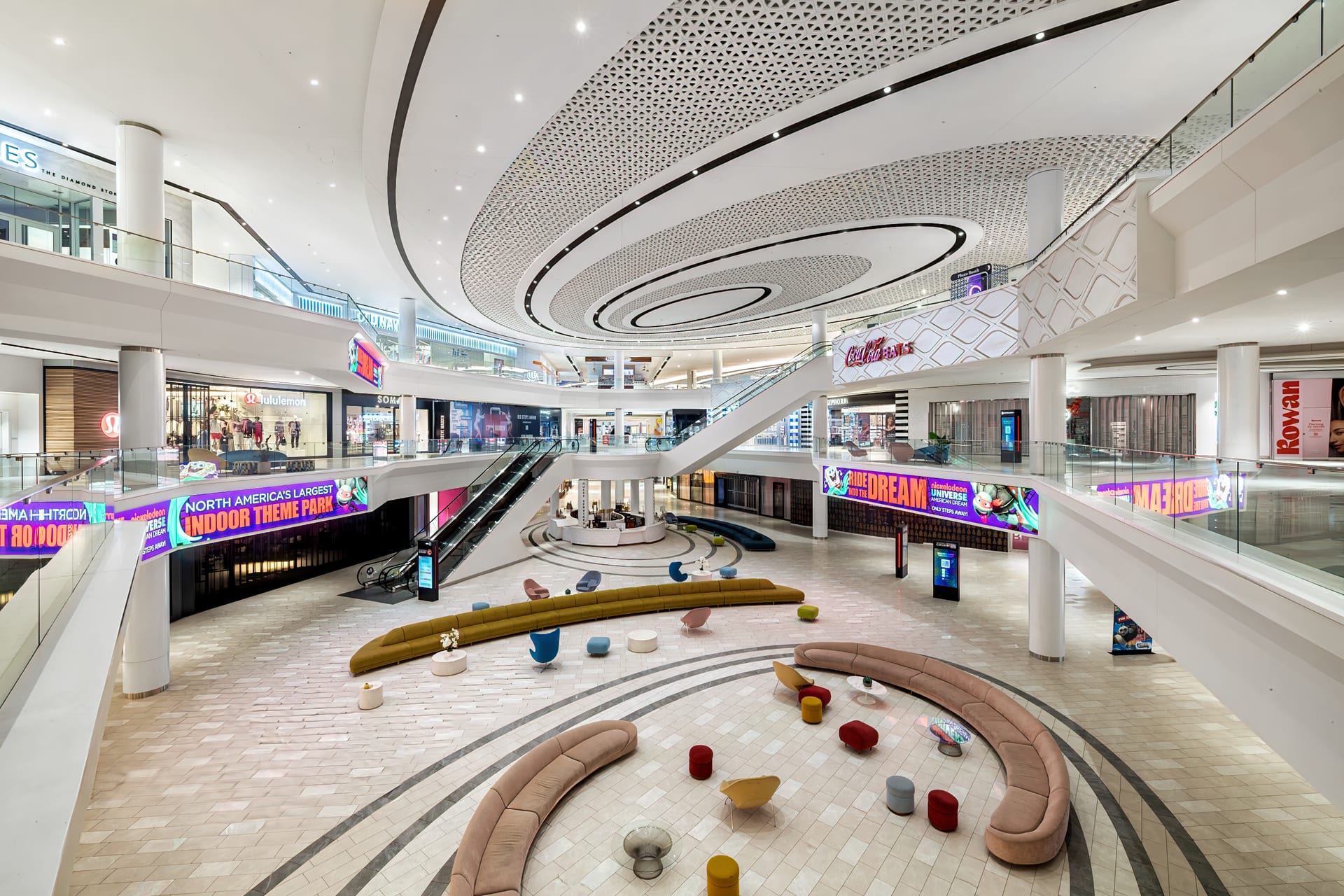
A staircase is never only an object. It is a joint between rooms, a transition the way a threshold is a transition. The most useful images for a design professional show the stair doing its job: carrying the eye from a public living space up toward private rooms, or linking a hotel lobby to a mezzanine that overlooks it.
The stair belongs to two floors at once, and the best photograph lets you feel both.
For hoteliers in particular, a staircase is often the hinge of the guest experience, the moment of arrival that sets the tone before a room is ever seen. Photograph it in a way that includes the space it opens onto. A frame that catches the stair in the foreground and the destination beyond gives a viewer the sense of movement through the building, which is precisely what still photography usually struggles to convey.
Scale and the Human Measure
Because treads are sized to the human body, a stair carries built-in information about scale. A viewer reads the height of a riser almost unconsciously and uses it to measure everything else in the frame. This makes the staircase a reliable anchor for communicating the true proportions of a space. A soaring stair hall feels soaring precisely because the familiar size of a step tells us how far up the ceiling really is.
You can strengthen this reading with careful composition rather than with figures. A handrail at a known height, a landing sized for a pause, a doorway at the top, all of these give the eye something to measure against.
Practical Notes for the Shoot
A staircase rewards preparation, because the good vantage points are often few and awkward to reach.
- Keep verticals true. Leaning lines are forgiven in many subjects, but a tilted balustrade reads immediately as an error.
- Scout the stair from above, from below, and from the landings. Each level offers a different reading of the same geometry.
- Mind the handrail’s line. It is often the strongest diagonal in the frame, and it should lead the eye deliberately, not run off into a dead corner.
- Clear the treads. A single stray object on a step draws attention and breaks the rhythm you are working to reveal.
- Consider the underside. The soffit of a stair, especially a cantilevered or folded-plate design, is frequently the most sculptural view available.
Above all, decide what the staircase is saying in the project. Is it an engineering feat meant to appear weightless? A warm, crafted object in timber and brass? A quiet, utilitarian connector that should recede? The photograph should argue for one of these readings rather than record all of them at once.
A Subject Worth Slowing Down For
In a portfolio of interior photography, a well-made staircase image often becomes the one people remember. It combines line, rhythm, light, and the implication of movement in a single frame, and it demonstrates an understanding of how a building is used, not just how it looks. For the design professional presenting a project, that is a persuasive thing to have.
If you have a staircase or a building you would like photographed with this kind of attention, Matthew Lekker Photography would be glad to hear from you.
Add us as a preferred source on Google
Add as preferred source