
The Plane We Forget to See
Most people experience a room by looking straight ahead. We register the furniture, the walls, the view through the window. The ceiling, meanwhile, does its work quietly overhead, rarely entering conscious thought. Yet it governs the proportion of a space more decisively than almost any other element. A low ceiling gathers a room inward and makes it intimate. A soaring one releases it upward and lends ceremony. In architectural photography, the ceiling is the plane that completes the envelope, and photographing it well is often what separates a competent interior image from one that feels true to the space.
For architects and interior designers, the ceiling carries a great deal of intention. Coffers, beams, vaults, coves, skylights, exposed structure, acoustic treatment, the quiet geometry of a plaster reveal. These are deliberate decisions, frequently expensive ones, and they deserve to be seen. When a photograph crops the ceiling away or lets it dissolve into a flat white band, that intention is lost, and the room reads smaller and more ordinary than it is.
The ceiling governs the proportion of a space more decisively than almost any other element.
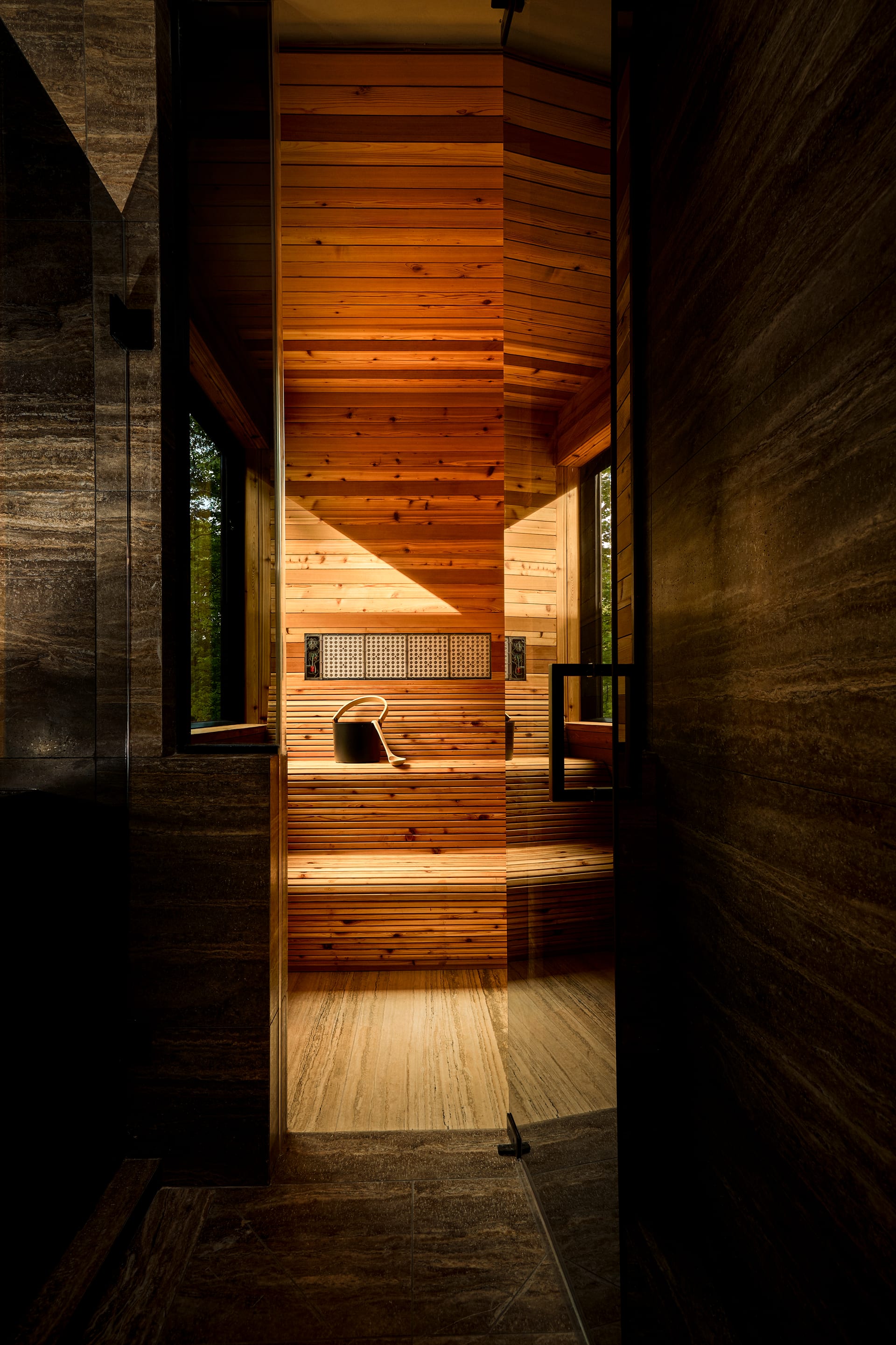
What the Ceiling Does in an Image
Consider how the overhead plane behaves in a frame. It is the surface that defines vertical volume, and volume is what people feel when they describe a room as generous or confined. Including the ceiling gives the viewer a sense of how much air sits above the furniture, and air is a quality clients pay for.
The ceiling also controls light in ways that are easy to miss. A pale ceiling bounces daylight back down into the room, softening shadows and lifting the whole interior. A dark or timber ceiling absorbs light and concentrates attention lower in the space. Where light fixtures are recessed or suspended, the ceiling becomes the stage on which the lighting design performs. To photograph the fixtures without showing the plane they live in is to show the actors without the set.
Three roles worth naming
- Boundary. The ceiling closes the volume and tells the eye where the room ends.
- Reflector. Its colour and finish shape the quality of ambient light below.
- Signature. Beams, vaults, and coffers often carry the architectural character of the entire project.
Deciding How Much to Include
The honest question on every interior shoot is not whether to show the ceiling, but how much. The answer depends on what the ceiling contributes. In a room with a plain flat ceiling, a narrow sliver at the top of the frame is enough to establish the boundary without drawing attention to an empty surface. In a room with a vaulted roof or exposed trusses, the ceiling may deserve to occupy a third of the composition or more.
A useful discipline is to ask what the ceiling adds to the story of the room before raising the camera. If the answer is proportion, include enough to feel the height. If the answer is craft, frame so the detail is legible rather than glimpsed. If the ceiling adds nothing, let it recede and give the attention to what does.
Ask what the ceiling adds before you raise the camera, and let the answer decide the frame.
The vertical problem
Pointing a camera upward introduces converging verticals, where walls appear to lean inward toward the top of the frame. For architectural work this is usually corrected, either through a tilt-shift lens or careful perspective adjustment in post, so that walls stay true and the room reads with the dignity it has in person. The exception is the deliberate upward shot, framed straight up into a dome, a stairwell, or a dramatic rooflight, where symmetry replaces the horizon entirely and the geometry becomes the subject.
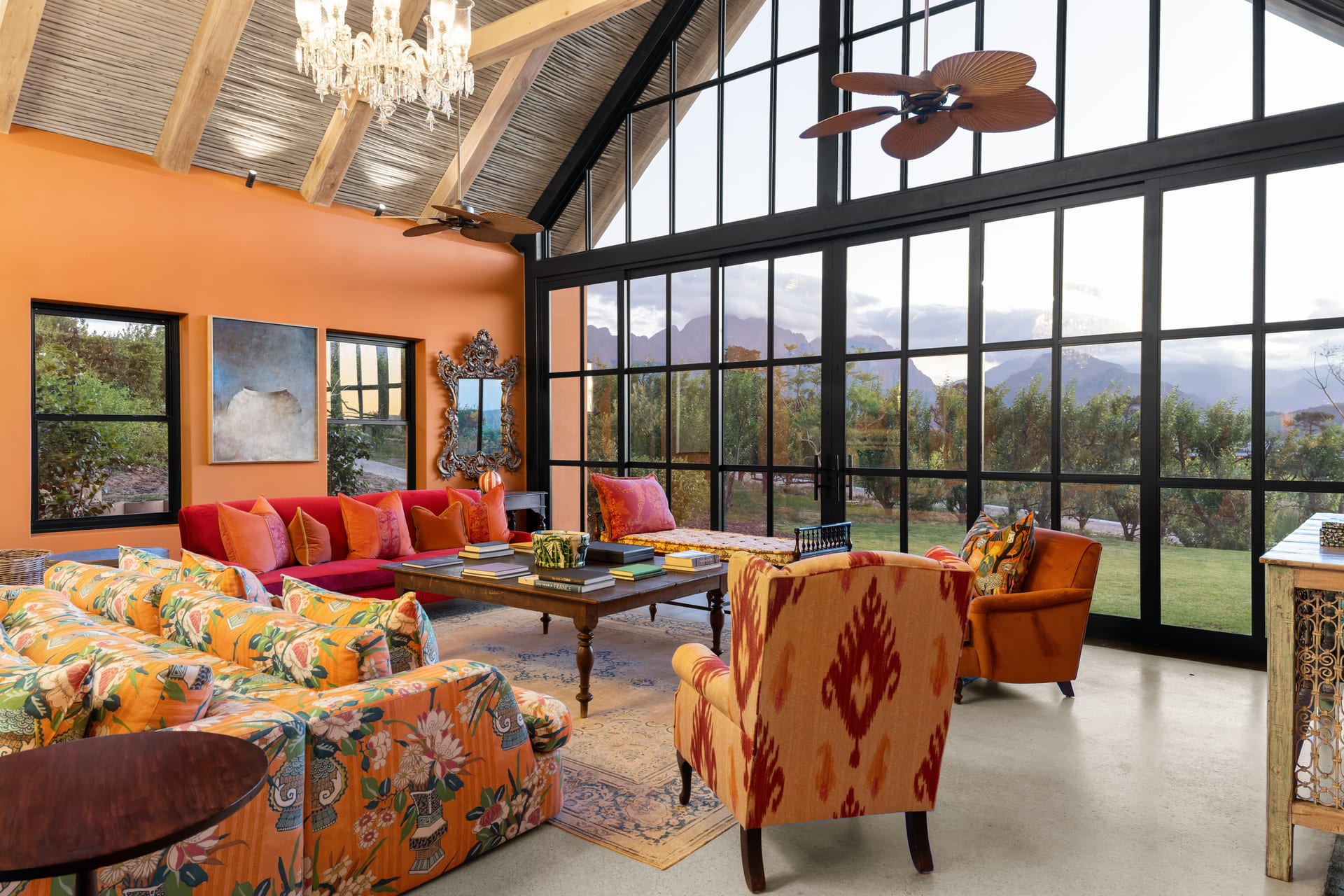
Light and the Overhead Plane
Ceilings reveal the behaviour of light more plainly than any wall. Watch how morning light grazes across a textured plaster finish, picking out every subtle undulation, or how an afternoon beam from a clerestory window lands as a clean rectangle on a coffered surface. These moments are brief and worth waiting for. A ceiling photographed in flat, even light looks like a surface. The same ceiling photographed as light rakes across it looks like architecture.
Artificial light demands equal care. Recessed downlights can scallop a wall below in ways that either flatter or distract. Cove lighting washes the ceiling with a soft glow that defines its form. When photographing a hospitality interior, where lighting is often the primary mood-setter, the ceiling frequently holds the key to the atmosphere the designer intended, and it rewards being read closely rather than brightened uniformly.
Practical Guidance for the Shoot
For professionals preparing a space, a few considerations make the overhead plane photograph well:
- Clean the plane. Smoke detectors, sprinkler heads, vents, and track hardware read loudly in a frame. Where they cannot be removed, composition can often minimise them.
- Check the finish. Patchy paint, visible seams, and uneven sheen are far more obvious overhead than clients expect.
- Coordinate the lighting. Decide in advance whether fixtures should be on, dimmed, or off, and whether their colour temperature agrees with the daylight in the room.
- Protect the symmetry. For straight-up shots, the camera must sit precisely level, and even small misalignments become glaring once the geometry is the subject.
For realtors and builders
In property and construction photography, the ceiling communicates value quickly. Height suggests quality. Exposed beams signal character. A well-resolved ceiling detail tells a buyer that care was taken throughout, even in the places most people never look up to admire. Including the ceiling honestly, without exaggeration, builds trust in the image and in the space it represents.
The Ceiling as a Finishing Gesture
There is a reason the finest interiors treat the ceiling as a fifth wall rather than a lid. It is the surface that holds the room together, and photographing it with intention honours the thinking behind the design. When the overhead plane is given its due, a photograph stops describing a collection of objects and begins conveying a volume, a proportion, a feeling of being inside a considered space.
The best interior photography attends to every plane of a room, including the one we instinctively ignore. The ceiling is rarely the star, but it is almost always the quiet reason an image feels complete, grounded, and true to the architecture it serves.
If you have a project whose spaces deserve to be seen in full, from the floor to the plane overhead, I would be glad to hear from you at Matthew Lekker Photography.
Add us as a preferred source on Google
Add as preferred source