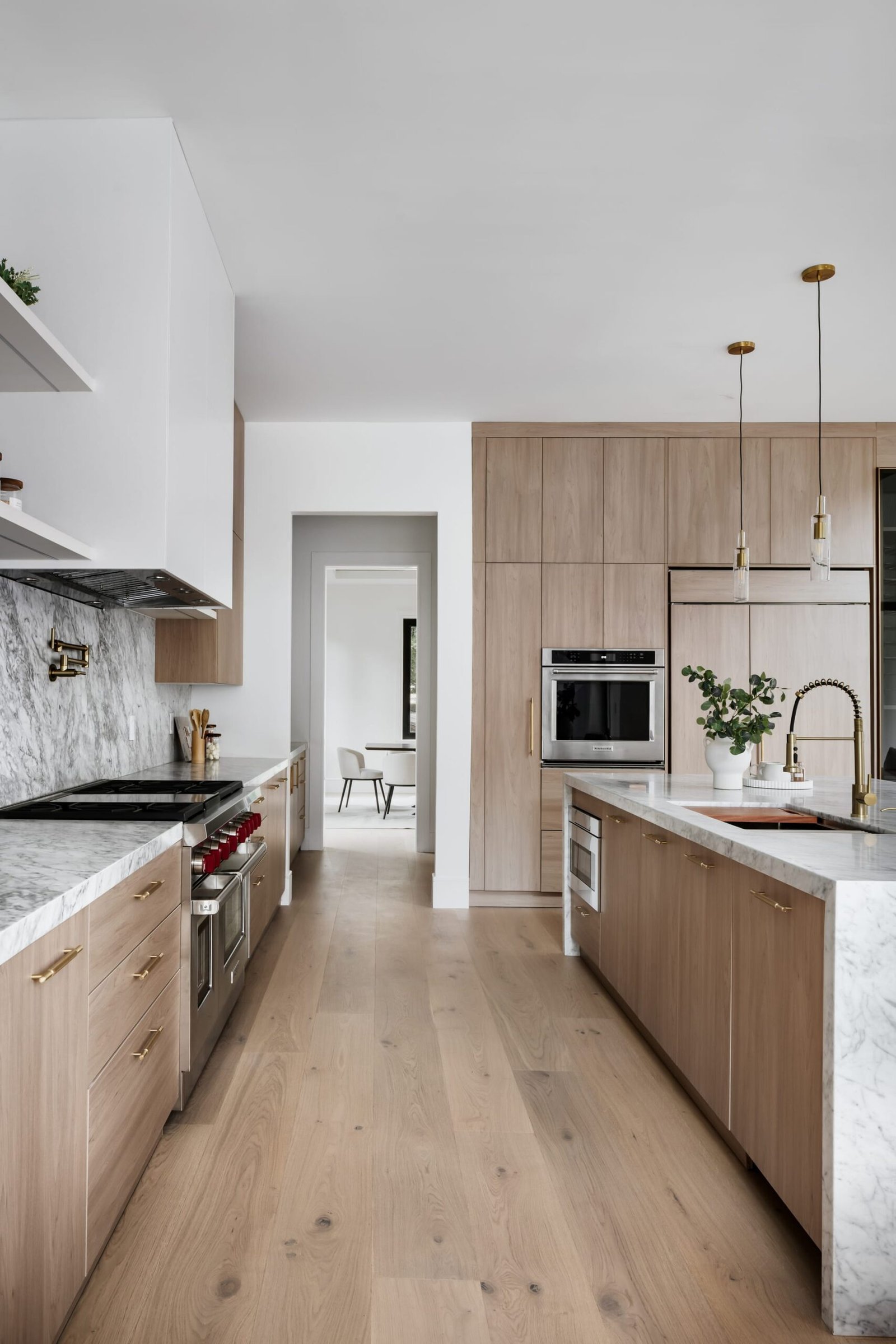
The Edge of Day
There are two moments each day when a building seems to describe itself most honestly. The first arrives before the sun has fully cleared the horizon, when the sky holds a soft, even blue and the first warm light grazes the upper floors. The second comes as the sun departs, when interior lamps begin to glow against a deepening sky and the glass of a façade turns to lantern. These are the edges of the day, and for architectural photography they are among the most productive hours on the calendar.
Design professionals often assume that the best light is the brightest light. In practice, the opposite is usually true. Midday sun is efficient but indifferent. It flattens relief, blows out white surfaces, and casts hard shadows that fight the lines an architect worked carefully to resolve. The edge of day replaces that harshness with direction and mood. Light arrives low, long, and warm, and it reveals form rather than erasing it.
Why Low Light Favors Architecture
When the sun sits close to the horizon, every surface it touches is modeled by the angle of that light. A brick wall shows its texture. A cantilever casts a shadow that explains its reach. A reveal between two materials gains depth. This is the quality that makes dawn and dusk indispensable for exterior work, and it cannot be convincingly manufactured later.
Low light also balances the two competing exposures that define much architectural and interior photography: the brightness of the sky and the brightness of a building’s interior. During the day the gap between them is enormous. At the edges of day it narrows, and for a short window the inside and outside of a structure can be read in a single frame without heavy manipulation.
The edge of day replaces harshness with direction and mood, revealing form rather than erasing it.
The Blue Hour and the Golden Hour
Two distinct windows live within this territory, and it helps to treat them separately.
- The golden hour is the period shortly after sunrise or before sunset, when direct light is warm and raking. It is ideal for emphasizing texture, material, and the sculptural quality of a façade.
- The blue hour is the period just before sunrise and just after sunset, when the sun is below the horizon and the sky glows a saturated, even blue. This is the moment for the illuminated building, where interior lighting and exterior architecture hold equal weight.
For hospitality clients in particular, the blue hour is often the single most valuable window of the day. A boutique hotel photographed at dusk, with warm lamplight spilling from its windows and a reflecting pool catching the last colour of the sky, communicates welcome in a way no daytime frame can match.
Planning a Shoot Around a Brief Window
The difficulty with the edge of day is its brevity. The usable blue hour can last as little as twenty minutes. This places a premium on preparation, and it is where the collaboration between photographer and design professional matters most.
Scouting the orientation of a building in advance determines everything. An east-facing entrance wants morning light; a west-facing terrace belongs to the evening. Knowing where the sun will rise and set, and at what angle, allows a shot list to be built before anyone arrives on site. By the time the light turns, the camera is already placed and the composition already resolved.
When the light lasts only twenty minutes, every decision must be made before it arrives.
Preparing the Interior for Dusk
Interior photography at the edge of day asks for a particular kind of readiness. Because the window of balanced light is short, the room itself must be fully staged well before it opens. That means every lamp switched on, every practical light checked for colour and output, and any mixed sources considered in advance.
Warm tungsten lamps against a cool blue sky create a pleasing contrast, but inconsistent bulbs across a single room can introduce colour casts that undermine an otherwise elegant frame. For interior designers and hoteliers, this is a reminder that lighting design is not only an architectural decision but a photographic one. The fixtures that feel warm and intimate in person are precisely what give a dusk interior its glow.
A short checklist for interior spaces at the edge of day:
- Confirm all lamps and fixtures are working and consistent in colour temperature.
- Stage the room completely before the light begins to change.
- Decide which windows will carry the sky and which will be dressed.
- Keep a note of which views benefit from reflection in glass or polished surfaces.
The Discipline of Working Fast
Shooting at dawn or dusk teaches a kind of economy. There is no time to deliberate once the light arrives, so the deliberation happens beforehand. Compositions are chosen, exposures are tested on the ambient light as it builds, and the sequence of frames is ordered so that the most important view is captured at the exact moment the balance is right.
Often the ideal frame exists for only a minute or two, when the sky and the building hold equal luminance. A photographer who has rehearsed the shot captures it; one who is still searching for the angle watches it pass. This is why the edge of day rewards experience and planning in equal measure.
What the Edge of Day Communicates
Beyond the technical advantages, these hours carry an emotional register that serves design professionals well. A home photographed at dusk feels lived in and welcoming. A commercial building at first light feels composed and deliberate. A restaurant at the blue hour feels like somewhere you want to be seated. The light itself does part of the storytelling.
For realtors and builders, this translates directly into how a property is perceived. The same façade can read as ordinary at noon and memorable at dusk. The difference is not the architecture but the hour in which it was recorded. Choosing to photograph at the edge of day is a decision to present a building at its most considered.
The edge of day is not a trick of timing so much as a respect for how architecture meets light. It asks for patience, planning, and a willingness to work within a narrow window, and it returns images that feel both timeless and alive.
If you are preparing a space for photography and want to make the most of these hours, I would be glad to hear from you at Matthew Lekker Photography.

Add us as a preferred source on Google
Add as preferred source